






Editor’s Note:
This Studio Story was reported the way most of our lives now happen: on a screen, between New York and Montreal. One long conversation over Zoom at the end of August, recorded, followed by a written questionnaire that Stefanie Bitton answered in her own voice and at her own pace over the weeks that followed. I had cancelled on her twice. When we finally spoke I was running on cold medicine, she was running a studio, and neither of us was willing to cancel a third time.
I am glad we did not, because what came through that screen was not a pitch. It was a partner who has spent twenty years inside a studio twice that old, talking about drawings, phone calls, a beaver, a penguin-powered Santa and the people at the desks, with the same steadiness whether the subject was an Oscar or a spreadsheet.
What I did not expect was the candor. Twice in that hour she corrected my premise without apology: no, this is a refresh, not a rebrand, and no, 2D never went anywhere, so there is nothing to bring back. When she did not have an answer she said so, and when we reached the film that still makes her cry she let the pause do the talking. A partner with four decades of studio history behind her and nothing to oversell is a rare interview, and it made this piece a pleasure to write.
We held the story until Tonic’s new website went live. The refresh is the doorway into this piece, and a doorway needs a house behind it. What follows is not a profile of a studio. It is an argument that a company can change its tools, its model and even its name, and remain unmistakably itself, as long as it protects two things: the people and the standard.
It arrives in the month Motionographer turns twenty, about a studio that has been at this for twice as long. I find that comforting. Someone has already walked the road ahead, and they are still walking.

This month, Tonic DNA turned on a new website. The wordmark is spare: TONIC in wide, quiet capitals, dna underneath in lowercase, warm cream on near black, with a jolt of sage green where the studio wants your eye. It is the kind of change a company might be tempted to call a rebrand. Stefanie Bitton will not.
“I call it a refresh more than a rebrand. A rebrand is when a company is changing more than the visual of their logo and their website. They are becoming something new, something different. We are not changing how we operate. We are not changing our model. This is a refresh of our visual guidelines.”
The distinction matters to her because Tonic DNA has already lived through the other kind, and the difference between the two is the whole story of the studio. Tonic DNA is a Montreal studio with roots reaching back about forty years, three or four buildings ago, always downtown. In that time it has been a traditional animation house, an IMAX pioneer, a 3D and hybrid shop, a director-led creative studio, and now a company with an original property in production and an AI pipeline built by its own artists. The thread running through all of it is not a look.
“It’s the refusal to let animation stand still. That’s been part of the studio from the beginning.”
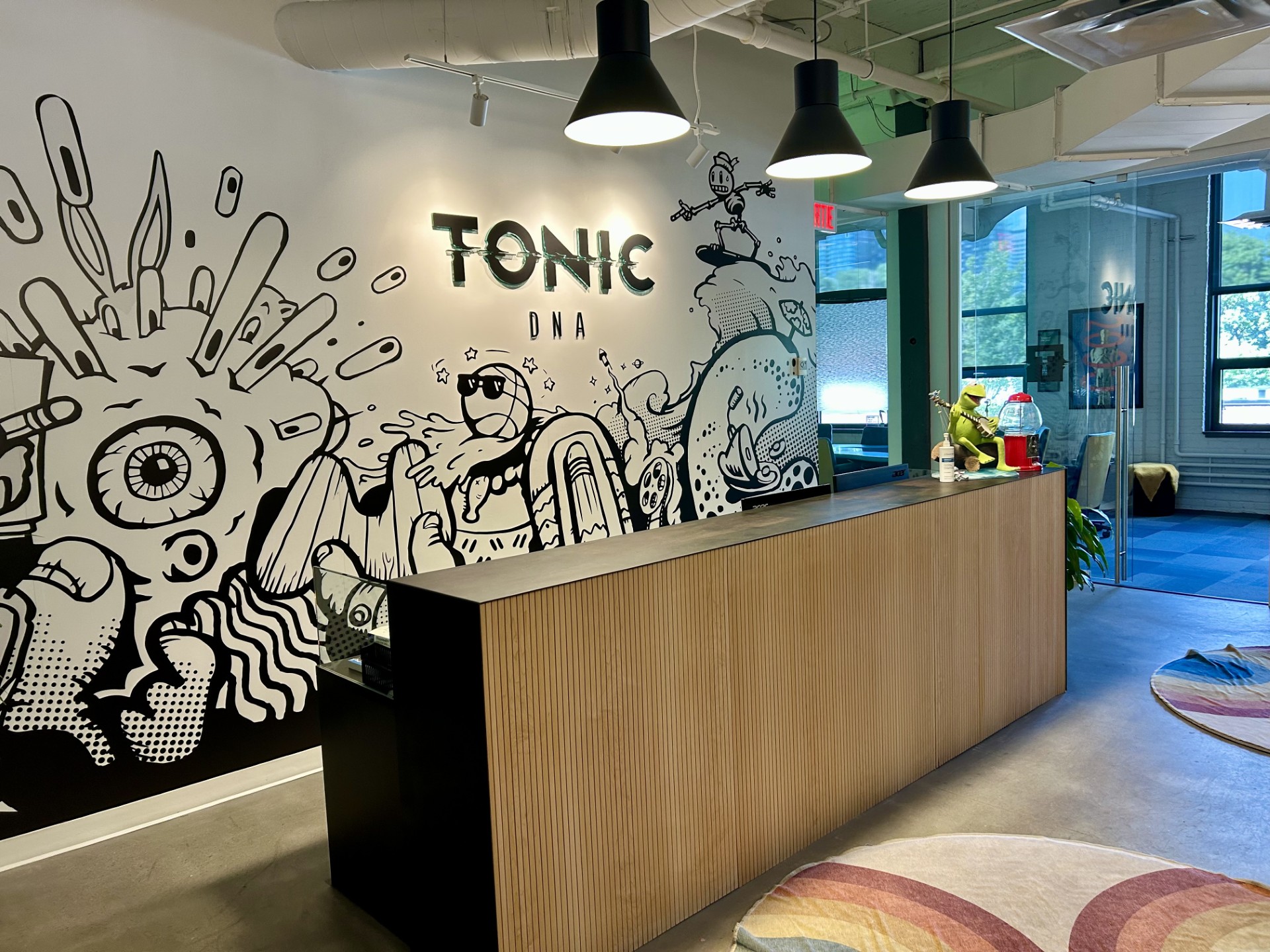
A name that is a job description

Ask what people remembered about the studio for decades and the answer arrives quickly: an Academy Award. The Old Man and the Sea, Alexander Petrov’s adaptation of the Hemingway novella, was painted in oil on glass, frame by frame, and produced for IMAX, which had never been attempted with an animated film. It won the Academy Award for Best Animated Short Film in 2000. “They had created this new kind of camera. Everything about that film was innovative,” Bitton says.
She was not there when the statue came home, but she has watched what it did to the studio’s name ever since. “When everybody would hear our name, they would remember that,” she says. Bernard Lajoie, a founder who remains one of her two partners, is the through line. He produced the IMAX film, then brought 3D into a house built on drawing.
“He’s one of the pioneers when it comes to innovation and technology,” Bitton says. “He’s lived through these transitions, 2D technology, 3D technology. This is something he’s proud of.” The real rebrand came in 2017, when the studio took the Tonic DNA name and, more importantly, a new shape.
“Before, we were a craft studio under one creative vision. Now we’re going towards a director-led vision, where multiple directors lead the creative, and we’re really putting the emphasis on the artists. That was a complete shift. It was a change from what we had been doing the previous twenty years to how we wanted to move forward for the following twenty.”
The name was chosen to sound like what it was for. Tonic, because the partners wanted something energizing and revitalizing, a fresh start with a new model. DNA, because it stood for directors and animators, the people the model was built around. It has since stretched to hold designers and artists, and lately developers and AI, three strands the studio is deliberately growing. The name is a job description that keeps getting longer.
Story first, technique second
“Tonic DNA was built on a simple belief,” Bitton says. “Animation is a storytelling medium, not a technique.” The style comes from what the idea needs, which is why the studio’s identity does not live in a signature look, and why its directors can sound nothing like one another.
“The common thread is that the director leads the vision, the animators shape the performance, and everyone is working in service of the story. That’s where the identity of the studio lives for me.”
It is also why the studio almost never changes technique mid-flight. Pre-production at Tonic is long on purpose, so that every stakeholder understands the designs, the characters and the story before a frame is animated. “Once we release it for production, it’s no longer a surprise,” Bitton says. “They already know what to expect.”
Where the studio does switch techniques is on itself. Jump is an internal research project built around a single character, remade year after year to test tools. One year it was 3D animation dressed in 2D textures and lighting. The next, the same character came back with hyper-realistic surfaces and a first round of AI tools. It is the refusal to be one thing, made literal.
Drawing for people who already know the character
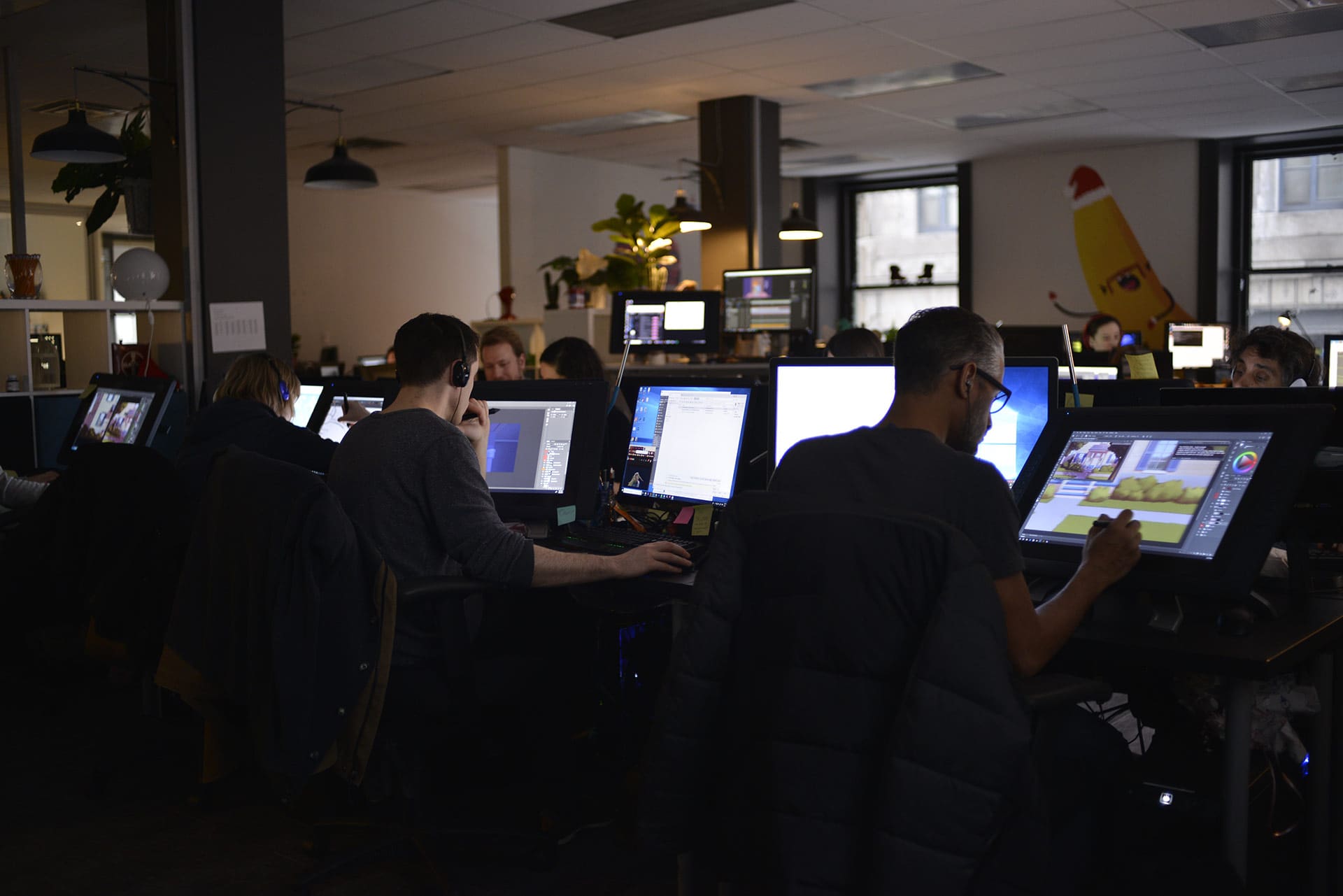
Tonic’s hand-drawn work has been part of 2D animation’s renewed visibility on the big screen, from The Bob’s Burgers Movie to Disenchanted to The Day the Earth Blew Up: A Looney Tunes Movie. Ask Bitton whether that amounts to a renaissance and she rejects the premise.
“A renaissance suggests 2D disappeared. It never did. It’s the foundational form of animation, and there’s something enduring about drawing and bringing those drawings to life that I think will always have a place. What has changed is everything around the craft.”
Animating a character the audience already knows by heart is its own discipline. “First of all, the love of the character,” she says. “A clear understanding of who that character is, what is his personality, how he moves, his history, where he is going. When you say, please animate Bugs Bunny, we have a really good understanding of Bugs Bunny’s character and how he moves and who he is. That is not a simple request for other animators.”
The same care goes into work that never leaves Quebec. The IGA holiday tale is a local tradition now, written and produced entirely by Quebec talent with agency Sid Lee, and Tonic has animated three installments: The Meatloaf in 2022, Mr. Beaver’s Yule Log in 2023 and Paulo’s Wish in 2024. For Mr. Beaver’s Yule Log, directors Kun Chang and Fabien Fulchiron built the story world out of plush children’s toys, CG characters with touch-worn textures and a stop-motion feel, framed as a grandfather’s bedtime tale about a grumpy beaver who learns to share. “Every year it’s such a beautiful story, so beautifully crafted and animated,” Bitton says. “It’s very much part of our Quebec culture, and for us it was so exciting to get the opportunity to produce three of them.”
(un)Hungry, made for the American insurer Highmark’s campaign against food insecurity, is the studio’s CG work at its most handmade. Directors Jamil Lahham and Fabien Fulchiron gave the film a painterly, stop-motion sensibility, painting the characters’ hair in virtual reality and adding brush strokes by hand to the 3D sets, for a story about one little girl’s quest to help that was inspired by a real neighborhood pantry. Fulchiron also co-directed Mr. Beaver’s Yule Log and Paulo’s Wish. The film took a MUSE Platinum this year.
Asked which piece she would run back into a burning building to save, she does not hesitate. Freebird is a five-minute short made for L’Arche Canada that follows forty-five years in the life of a man with Down syndrome, made on a limited budget and a tight schedule. “The creative was just amazing, and the final result, every time I see it,” she says, trailing off.
“Those are my favorite projects, the ones that get me emotional when I look at them. I start tearing up and I think, this project is just too good. Why is this doing this to me?”
The people behind that range are the point. Malcolm Sutherland has directed at the studio for about a decade and is, in Bitton’s telling, the desk you cannot walk past. “He’s constantly reinventing himself, using new tools, developing new styles, coming up with new original content,” she says. “Every time I sit in front of his desk, he has something fun and new to look at.”
Learning animation by selling it
Bitton did not come to animation as an animator. She studied marketing and international business, did an internship in Costa Rica, and came home with Spanish and a sales instinct. In 2005 the studio was looking for someone to develop Latin America from nothing, and she took the job. “My first six months was learn animation,” she says. “What is 2D animation, what is 3D animation, and then learn the business. How do production companies work with advertising agencies and clients? What are the services we’re offering?”
Then she picked up the phone. “I did it the old-fashioned way,” she says. “I would give a call and introduce myself, and the person on the other end of the line was so happy. One, I was from Montreal. Two, I was trying to speak Spanish to them.” Mexico and Colombia were her first markets, and Mexico City taught her a lesson she still runs the studio by: relationships are key. From there came the U.S. Hispanic market, then Europe and Africa.
Partnership followed the growth. The sales she was bringing in were building the studio, so the owners asked her to join them, and she has been a partner ever since. She describes the road from producer to leader to owner as something closer to weather than to milestones.
“There wasn’t one dramatic moment where everything changed. It was more a series of small shifts in responsibility. By the time I looked up, I was already doing the next version of the job.”
What the refresh is for
Under the new mark, the studio runs on two divisions, short form for advertising, branding, content and music videos, and long form for series and features. This year it added a third. Tonic DNA’s latest original property, The Anta Claus of the South Pole, is a 24-minute 2D holiday special directed by Cordell Barker, the two-time Oscar nominee behind The Cat Came Back and Strange Invaders. It is a co-production with the National Film Board of Canada, the studio’s first, made in association with Crave, a division of Bell Media, with the participation of the Canada Media Fund, and it is planned for release this year.
Envious of his northern counterpart, the Anta Claus sets off on a penguin-powered journey to find the secret of a flawless Christmas, and learns that the holiday lives in the community of oddballs he left behind. “It’s been quietly sitting with us for more than fifteen years, so finally bringing it into production feels really special,” Bitton says. She does not see it as a turn away from client work.
“We’ve spent decades helping other people bring their characters and stories to life, and we’re very proud of that work. But there’s also something incredibly rewarding about developing and nurturing an idea that originates inside the studio. I don’t think those two sides compete. If anything, they strengthen one another.”
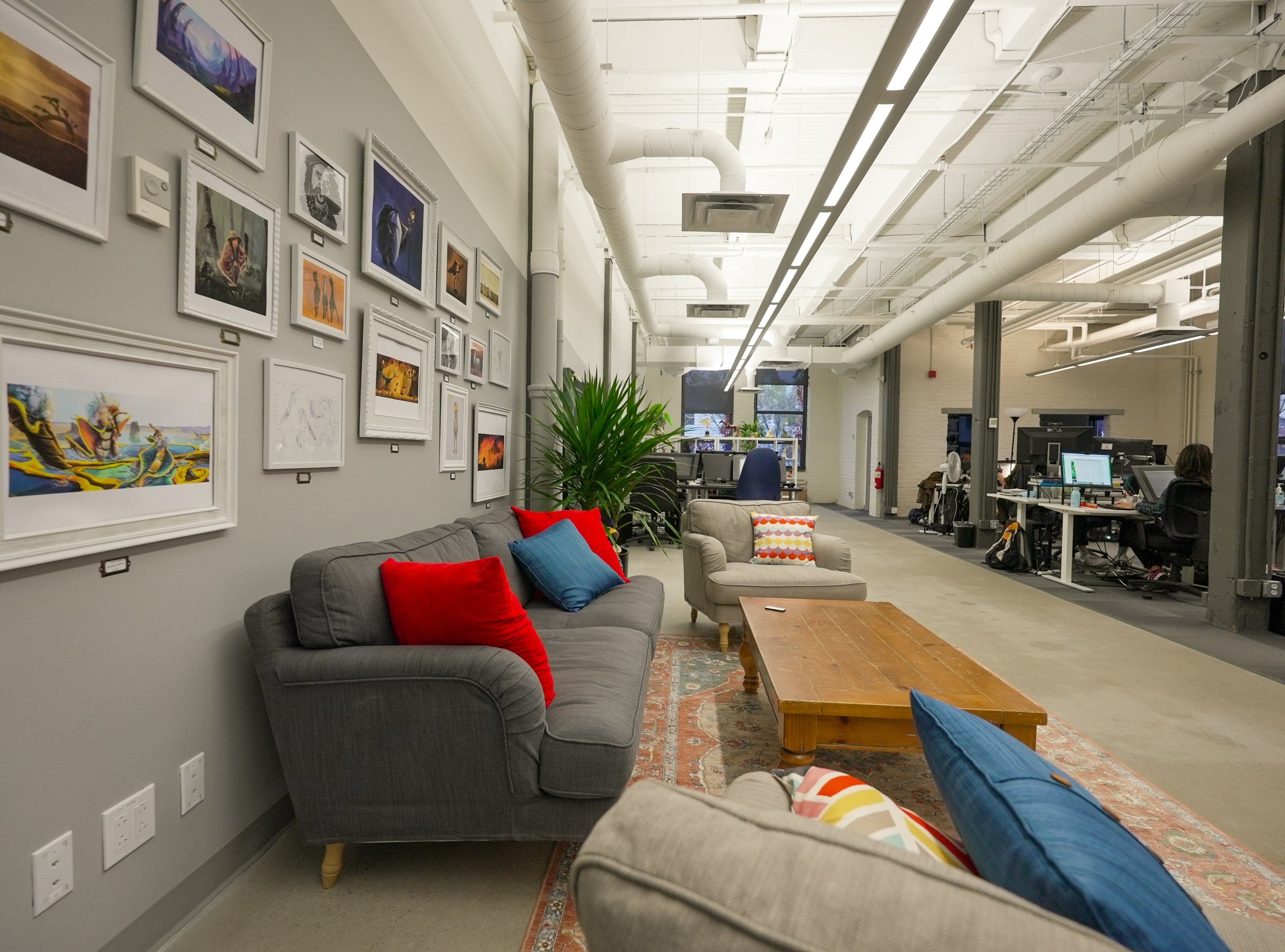
The fourth strand is the one everyone asks about. Tonic has spent two years building its own AI tools, and Bitton calls the approach AI with intention. “One of the biggest changes is how much more we can explore before committing to a direction,” she says. “That doesn’t mean replacing the artist or skipping the craft. It means removing some of the friction around the process so the artists have more room to experiment.” The target is long-form 2D, where the tools let a project attempt ideas that would once have been too slow or too risky for the schedule.
The artists were not sold on day one. “At first there was a lot of resistance,” she says. “But because we’ve been developing our own internal tools, and the artists have all been involved in the development, it’s something they accept. They actually enjoy it, because it’s helping with their own workload.” Her line in the sand is transparency.
“Artists need to understand what tools are being used, how they’re being used, and what that means for their work. Once the technology starts obscuring authorship or bypassing consent, you’ve crossed into a very different territory.”
Independence is what makes that kind of choice possible. Tonic DNA has never belonged to a larger group, and Bitton is clear about what that buys. “Flexibility, and being able to try new things,” she says. “Making new mistakes, learning from them, and evolving into what we choose to be, as opposed to someone else.”
The wall in 2033
In seven years the studio turns fifty, and Bitton already knows what will be on the wall at the party. Not the reel, not the trophies: a slideshow of everyone who has worked there, some of them for twenty and thirty years and still on the floor. Asked to picture the celebration, she filled the room with faces.
That is the refresh, in the end. A new logo, new colors, a new voice and a new site, wrapped around a studio that changed its model once, its tools many times, and its DNA never. Motionographer turns twenty this month. Tonic DNA is twice that, and by its own account only getting started. “We all need to figure it out,” Bitton says. “We all need to reinvent ourselves, because the whole landscape is changing. This is just the beginning.”
Ask her to finish the sentence “Animation will survive every technological disruption because,” and she answers without pause.
“Because the people who make it and the people who love it believe in it.”
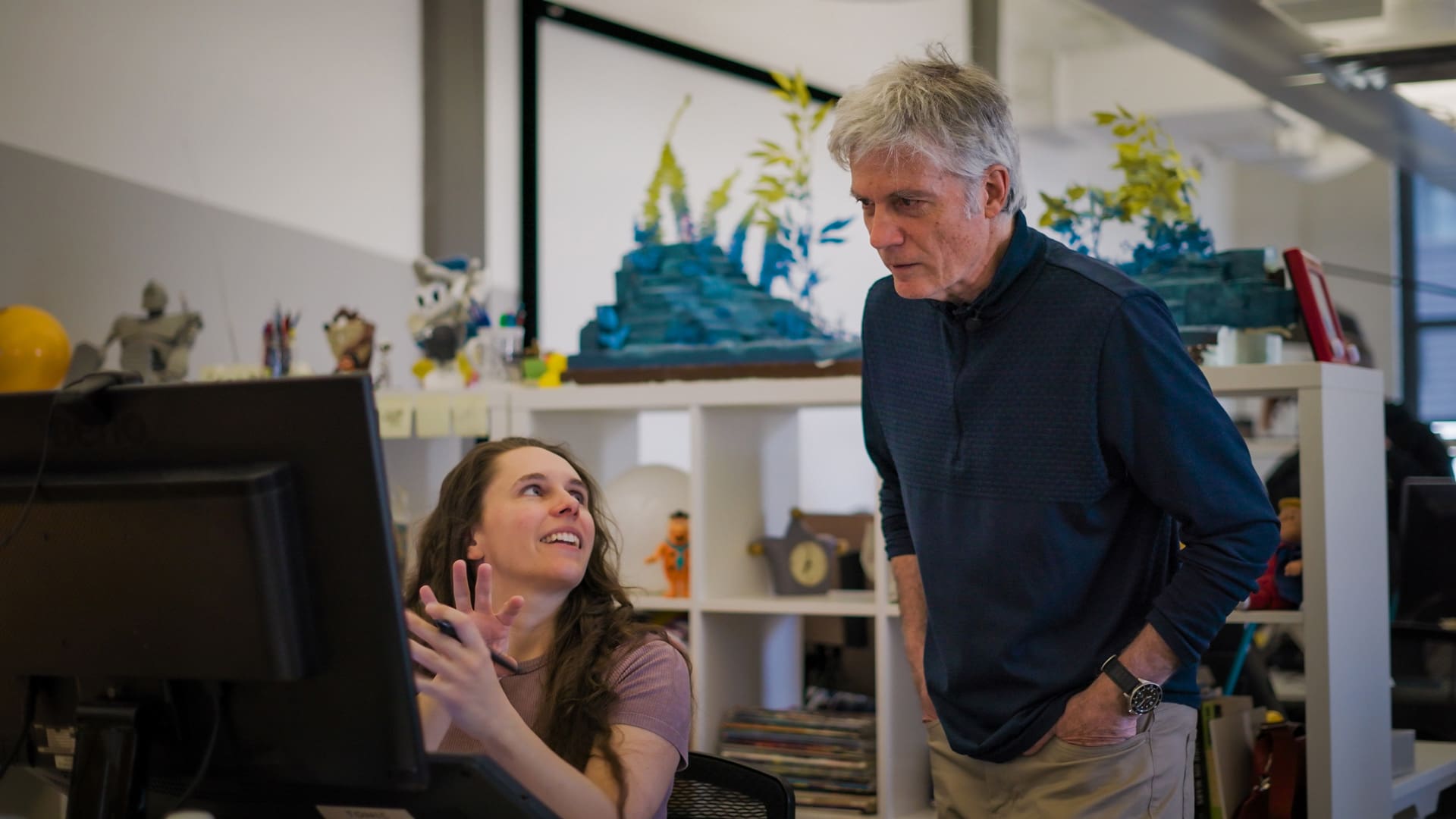
The Tonic DNA Rapid Fire
- Refresh or rebrand: “A refresh. We’re not changing how we operate.”
- What DNA stands for: “Directors and animators. Now designers and artists, and developers and AI.”
- The piece she would run into a burning building for: Freebird. “Every time I see it.”
- What Mexico City taught her: “Relationships are key.”
- The desk you cannot walk past: Malcolm Sutherland’s. “He’s always doing something different.”
- Advice to a twenty-year-old animation student: “Love animation fully. We’re the biggest fans of animation.”
- What being independent buys: “Evolving into what we choose to be.”
- On the wall at the fiftieth, in 2033: “A slideshow of all the people who have worked with us.”
- What she hopes readers feel: “Impressed with what we’ve accomplished, and excited about what’s coming.”
Tonic DNA is a multi-award-winning independent Montreal animation studio with over four decades of love for the craft, committed to innovation and to storytelling that touches the heart, with projects that blend art, humour and depth. Partners: Stefanie Bitton, Howard Huxham and Bernard Lajoie. tonicdna.com
Featured work: Tonic DNA Demo Reel 2026. Freebird, written and directed by Joe Bluhm and Michael McDonald, produced with L’Arche Canada and musician Jordan Hart. (un)Hungry for Highmark, directed by Jamil Lahham and Fabien Fulchiron. Mr. Beaver’s Yule Log for IGA and agency Sid Lee, directed by Kun Chang and Fabien Fulchiron. The Anta Claus of the South Pole, directed by Cordell Barker, a Tonic DNA and National Film Board of Canada co-production in association with Crave, a division of Bell Media, with the participation of the Canada Media Fund, planned for release in 2026.
Photos courtesy of Tonic DNA.