







Pixar alum Connie He on turning insomnia into a six-minute short, tuning a model to her own concept art, and what it took for animators and researchers to speak the same language.
Editor’s note: Dear Upstairs Neighbors had its world premiere as part of Whoopi’s Wonderful World of Animation at the 2026 Tribeca Festival. Motionographer was in the theater for every short in the program, and this article is part of our series dedicated to the films of this year’s lineup, with more on the way.
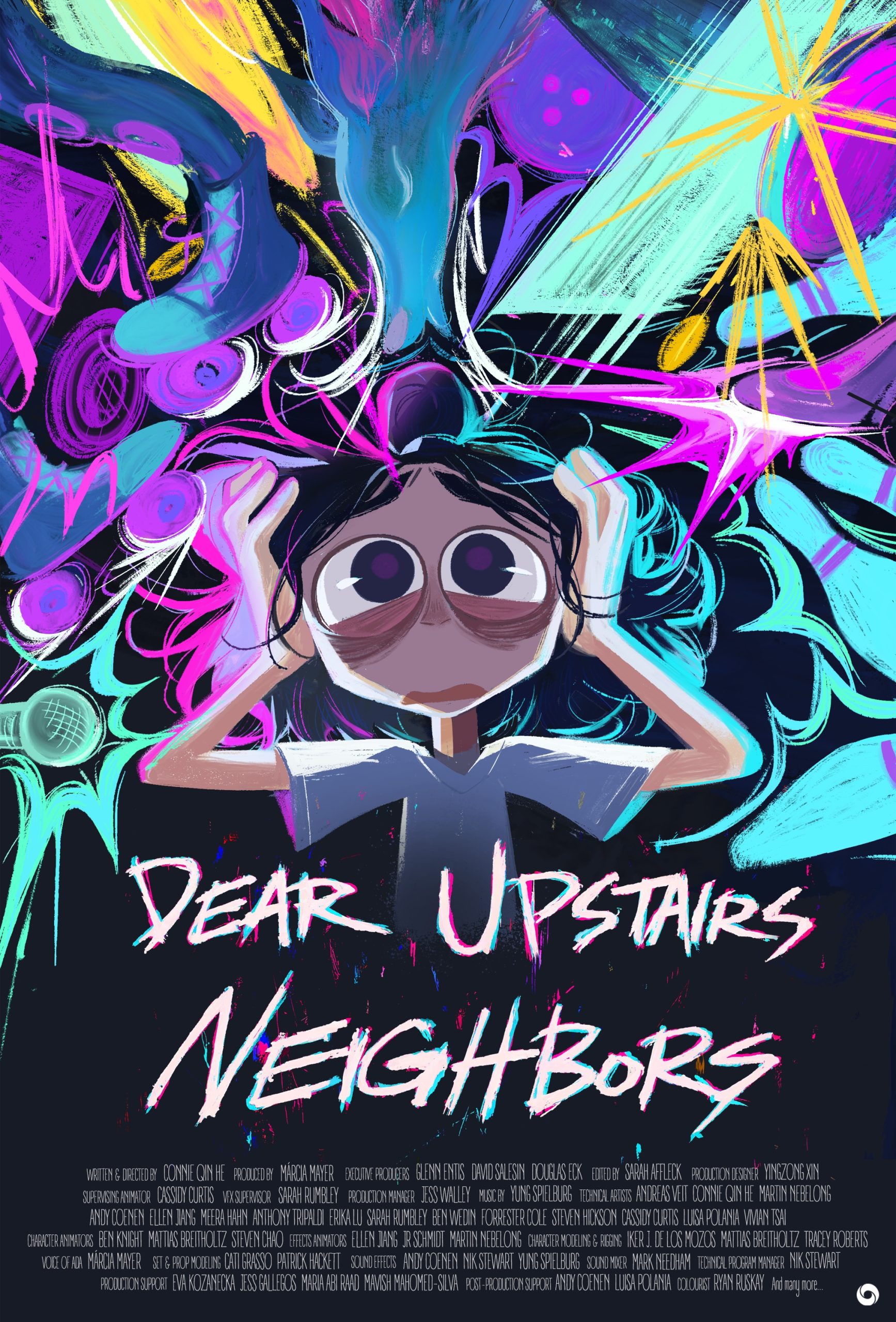
Dear Upstairs Neighbors. Courtesy of the filmmakers
Somewhere in the middle of our conversation, Connie He stopped explaining how she produced and directed Dear Upstairs Neighbors and started marveling at it, as if she were discovering the film for the first time. She was describing the earliest tests she and her team ran on a video model trained on their own concept art. The model picked up a low camera angle nobody had asked for. It picked up the zigzag lines the team drew wherever an object touched the ground, and nobody had told it those lines mattered.
“We’re like, oh my god, it’s picking up on all those patterns that we didn’t even think of. We’re like, okay, I think what we are thinking is actually possible.”

More than anything else she told me, that moment holds the essence of Dear Upstairs Neighbors, the six-minute animated short that previewed at Sundance in January, had its world premiere at the Tribeca Festival in June, and went on to SIGGRAPH in July. The film follows Ada, a woman who cannot sleep because of the noise coming from the apartment above her. The racket summons hallucinations, beautiful and increasingly unhinged, that attack her exhausted mind.
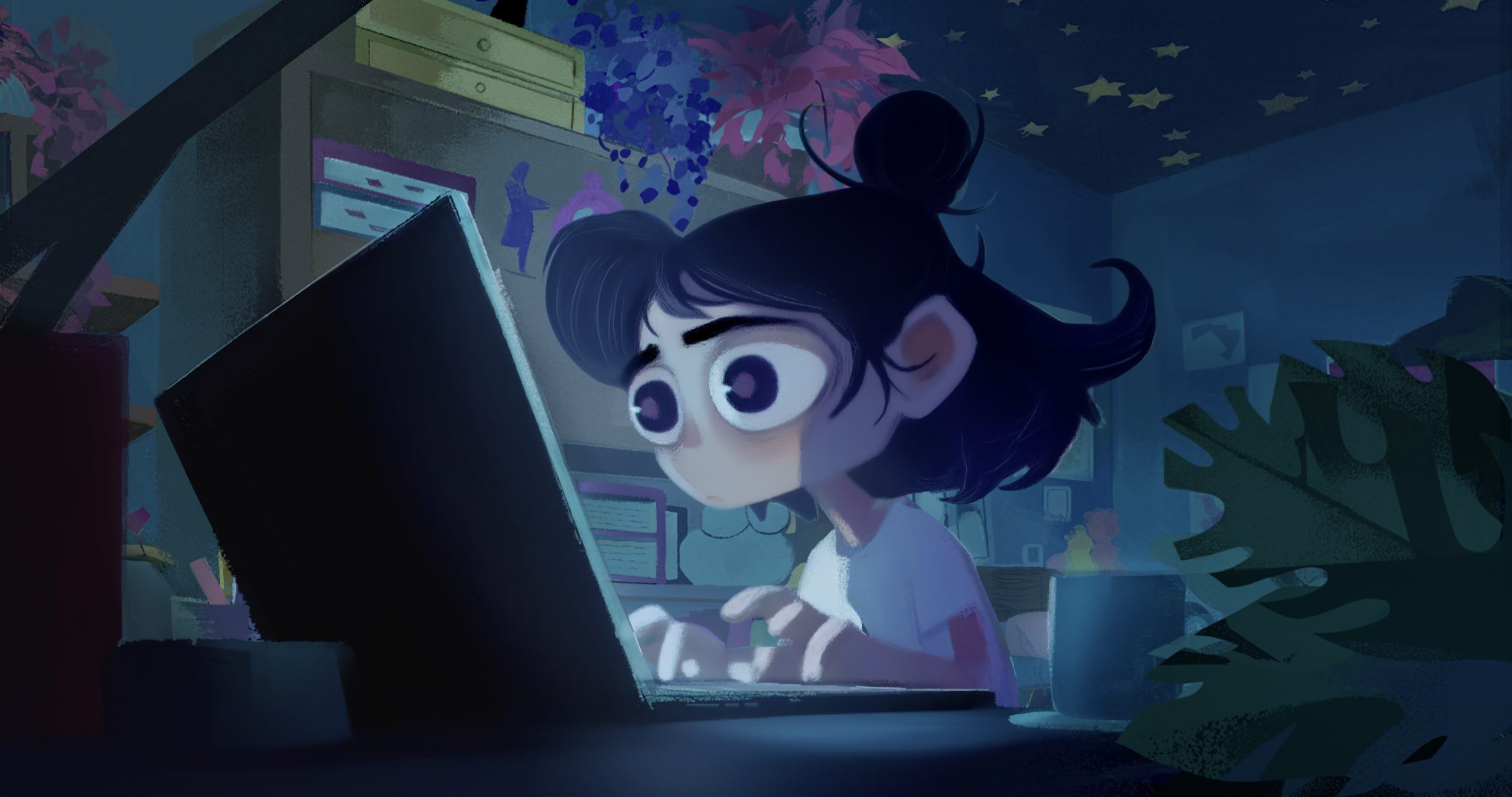
Ada, before the night begins. Courtesy of the filmmakers
But this funny, colorful, kinetic film is also a document of two worlds learning to talk to each other: artists and machine learning researchers. And it is a rare thing, an account from inside the process of what generative tools might be for, delivered by someone who is still not sure of the answer.
A word first about who made it, because our readers will ask. Dear Upstairs Neighbors is a Google DeepMind production. Connie and her producer, Márcia Mayer, worked alongside a team of DeepMind researchers and engineers, with DeepMind’s Doug Eck as executive producer, and the film’s look was built on custom versions of Google’s Veo and Imagen models fine-tuned on the film’s own concept art. Google has been open about all of this and has published its own account of the production. What follows is Connie’s, and she does not pretend the divide over any of it is not real.
Full insomnia, zero ambition
The short did not begin as a bid to make a prestigious animated piece that would shape the future of Motion Design. It began, Connie said, with real sleepless nights during the pandemic. “It was always started as like a personal expression,” she told me. “I never really thought it would actually become a short film. It was just like, I was so frustrated, and I feel like I have a lot of emotion, I need to put it out.”
One weekend, Connie went to a coffeehouse, wrote her feelings down on paper, and started the first version of what would become Dear Upstairs Neighbors. She got a storyboard about 80 percent of the way there. Then she left it alone for a long time.
The board came back to life when Connie and some friends from her Pixar days started talking about what machine learning might mean for artists. They were curious and cautious in equal measure, so they decided to understand the process by testing it on a story. Connie already had one sitting around, nearly finished, and it became the test bed.
I think a lot about this origin story, because it contradicts two easy narratives circulating about AI and animation. This is not a director chasing a trend. And this is not a tool inventing a film out of nothing. Dear Upstairs Neighbors was born from something that happened to a person who needed to get it out of her body, and who happened to be standing there when a new kind of paintbrush became available.
A bedroom and an anger taken from life
One of the pleasures of the film is Ada’s bedroom. It is full of books and small objects that seem to tell their own story. I told Connie the bedroom was one of my favorite things in the short, and her answer surprised me. She had asked her production designer, fellow Pixar alum Yingzong Xin, to put her own home into it.
“When we talk about, what do we design for Ada, I was like, Yingzong, how about you just design, put your own bedroom, put your own home into the design. A lot of the objects in the room is actual stuff that she has in her room and living room. If you get a chance to go to her place, you’ll see all the bookshelves, all the small details. I think those are the stuff to make her living room feel relatable, because they are real.”
That is the whole philosophy behind the production design, and it happened before any generative tool touched the film. Connie and Yingzong built a real, emotional imprint with traditional means: references, taste, and the stubborn textures of an actual apartment.
The anger came from life too. Connie grew up around the abstract art her father made, and she wanted to see whether that kind of work could carry a story.
“You seldom see that kind of artwork appear in animation or filmmaking, so I thought maybe that’s an interesting experiment, to see if we can bring those expressionistic ways into visual storytelling. That’s kind of where I set the art direction. I wanted to experiment. I think about Jackson Pollock’s art. I think that’s a great representation for expressing intense emotion, like anger. So I thought it’d be cool to add that. For the mood board, I brought in a lot of super abstract painting. I didn’t have a very clear idea of how I could visualize it, but that’s what I wanted to feel.”
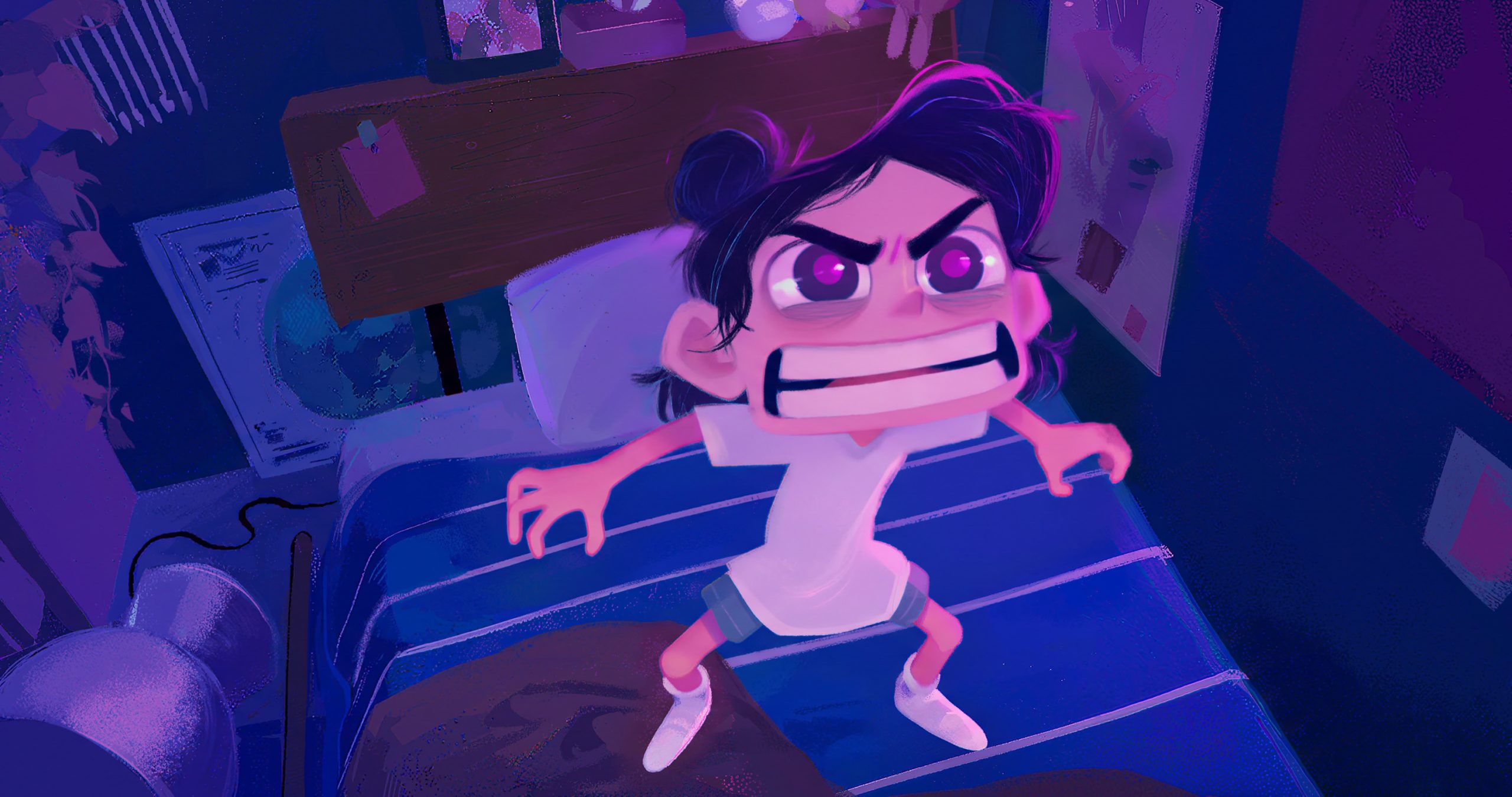
Ada, past the point of patience. Courtesy of the filmmakers
An instrument to be tuned, not a button to be pressed
The most quietly remarkable thing about the film is that the tool was treated as an instrument to be tuned, not a button to be pressed. Connie and her team joined a group of researchers and engineers at Google DeepMind and, with them, developed custom builds of the video model based on Connie and Yingzong’s own concept art. The starting material was small. “I think we actually fine-tuned about 12 concept art-ish with different layers broken down, so maybe hundreds of different images,” Connie explained.
That is where the moment at the top of this piece comes from. The model absorbed the low, two-point perspective they had used throughout their concept art without anyone flagging it as a rule. It absorbed the zigzag ground-contact lines, and it learned the brushstroke.
For the shots themselves, the team built tools for what Connie calls localized refinement: editing specific regions of a frame with adjustable control rather than regenerating a whole shot from scratch every time something needed a note. When I asked whether this changed her relationship to a shot compared with a traditional animation revision, her answer was almost anticlimactic in the best way. If you already know a CG pipeline, she told me, it did not feel like a rupture at all. She had spent time as a CG generalist on the first season of Love, Death & Robots, working in compositing tools like Nuke, layering nodes and iterating until a picture looked right. The new workflow, she said, was the same thinking process wearing a different coat.
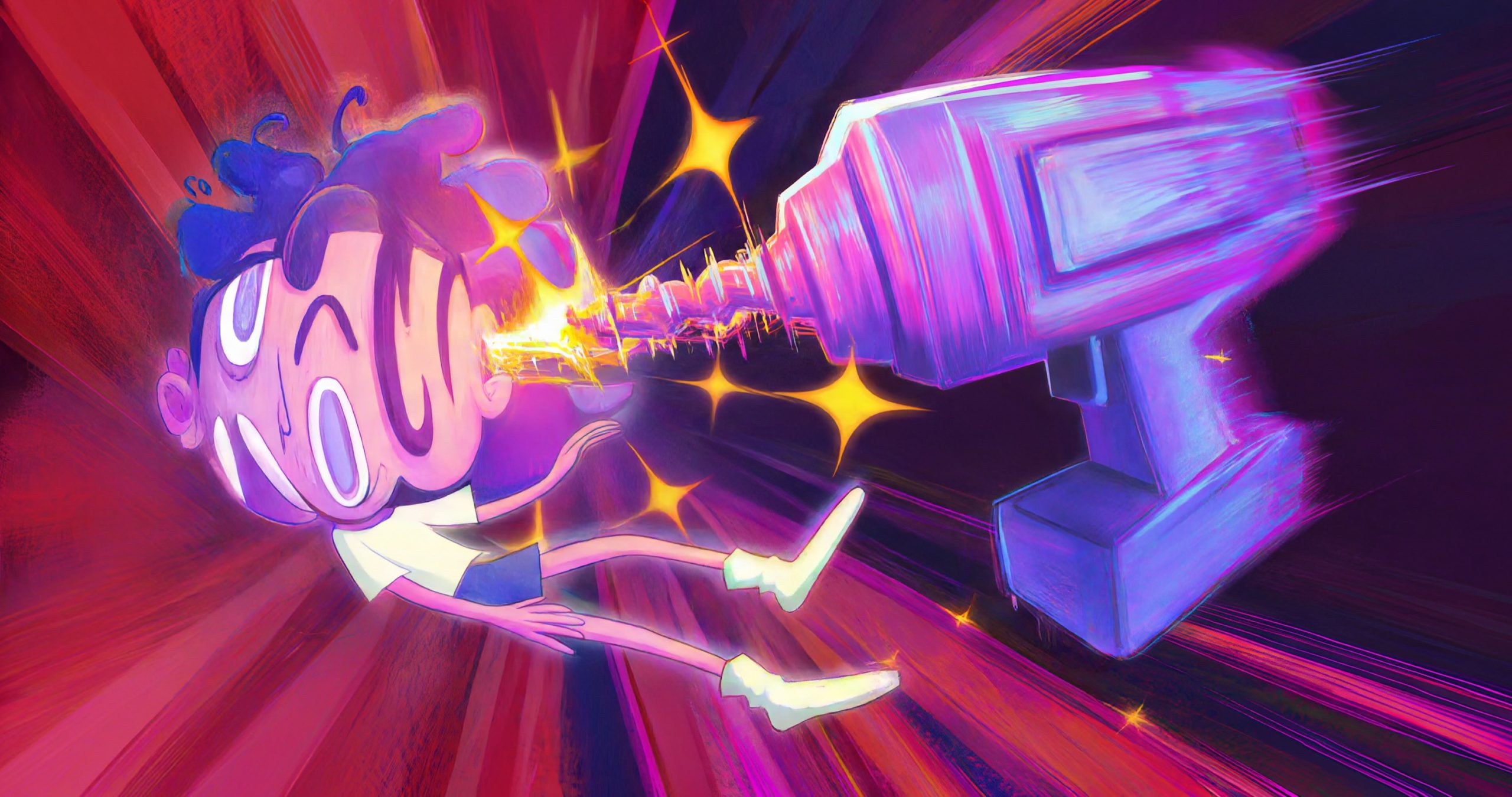
One of the hallucinations: the drill. Courtesy of the filmmakers
I find that reassuring in a way I did not expect. So much of the conversation around generative tools treats them as a total break from craft. Connie’s experience suggests something gentler and more useful to working animators: good judgment, honed over years of dailies and revisions and story notes, does not get replaced by new tools. It gets asked to do the same job in a new room.
Protecting the joke while the technology was still being invented
One of the things that struck me watching Dear Upstairs Neighbors is how funny it is. It is adorable, a little unhinged, and its comic timing lands cleanly, which is not a small thing to pull off while your production pipeline is being built in real time alongside the film. So I asked Connie how she protected the comedy through all that technical uncertainty.
Her answer was almost defiantly old-fashioned. The storytelling and the timing, she said, were mostly locked in the storyboard phase, long before any generative tool entered the process. Once the project came back to life, the board went through 27 versions over a year and a half, a side project she worked on with her producer, Márcia Mayer, and refined with editors brought in specifically to nail the rhythm of the story. “That’s probably a lot of pre-production, good pre-production, and working directly with editors and people who give story notes,” she said. “Then later on the production is just about executing. How do you execute to meet your creative vision.”
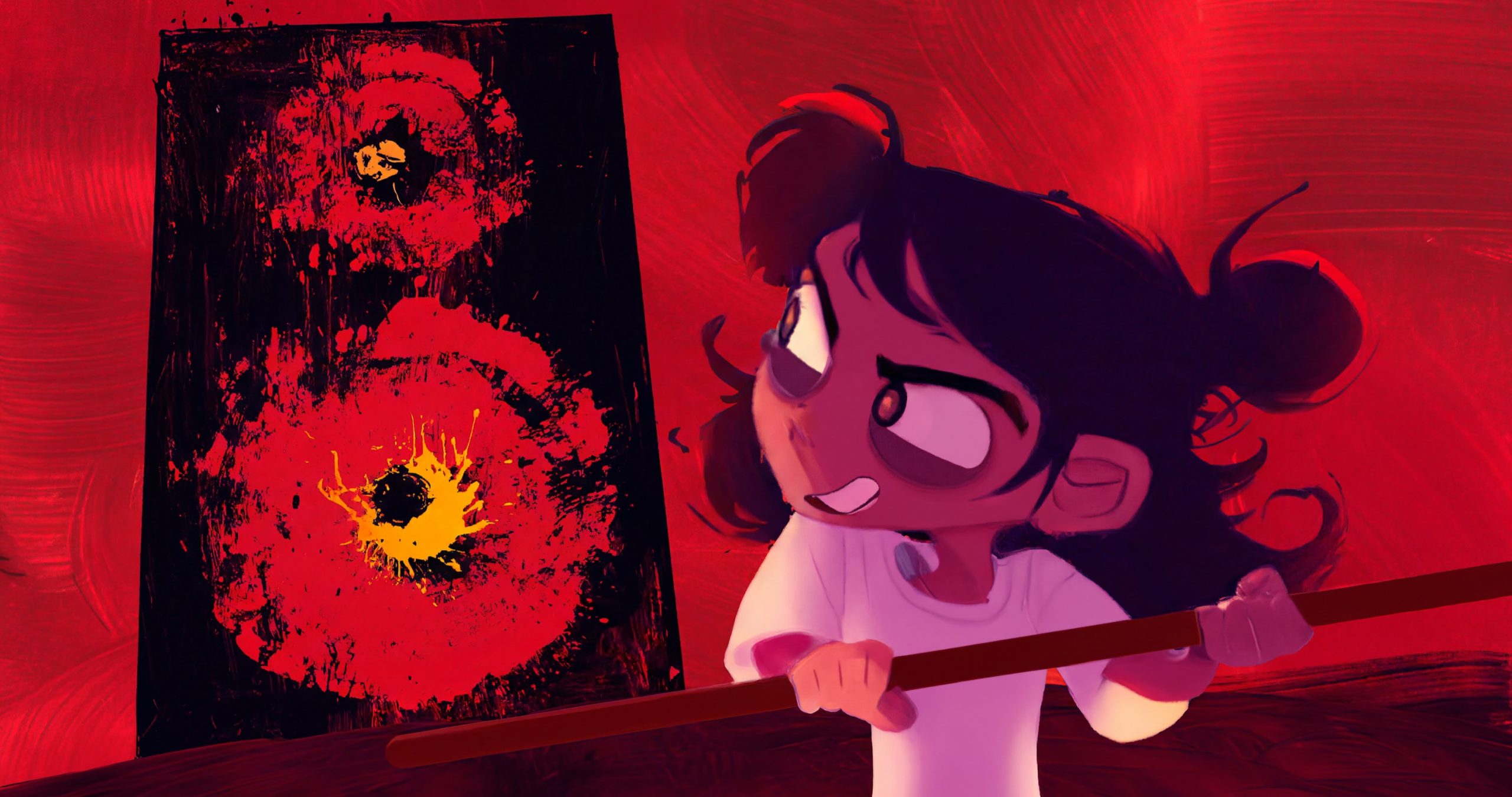
Ada versus the speaker. Courtesy of the filmmakers
It is a useful thing to hear right now, when it is easy to assume that generative workflows collapse the traditional stages of filmmaking into something faster and looser. In Connie’s account, they did not collapse anything. Pre-production still did what pre-production has always done. The new tools showed up later, in service of a vision that had already been earned the hard way.
Two worlds, one language
None of this happened without friction. When Connie and Márcia first joined the DeepMind team, there was a wide gap between what the artists wanted and what the researchers understood the work to require.
“We realized there’s a lot of gap between these two worlds and the language that we speak. So at first, we set up a lot of fun hackathons. And we invite people to say, hey, let’s just use one day or three hours. Let’s make a film together with our current toolings. And very quickly, all the researchers and people start to realize, oh, this is not how you can make a good film.”
From there, she said, the questions changed. What does a filmmaker actually want? What does a system built to support a vision look like? What is the creative process? “Clearly, you can’t just click a button to make a good film,” she said. “What does it take to make a good film? Let’s try to understand it.”
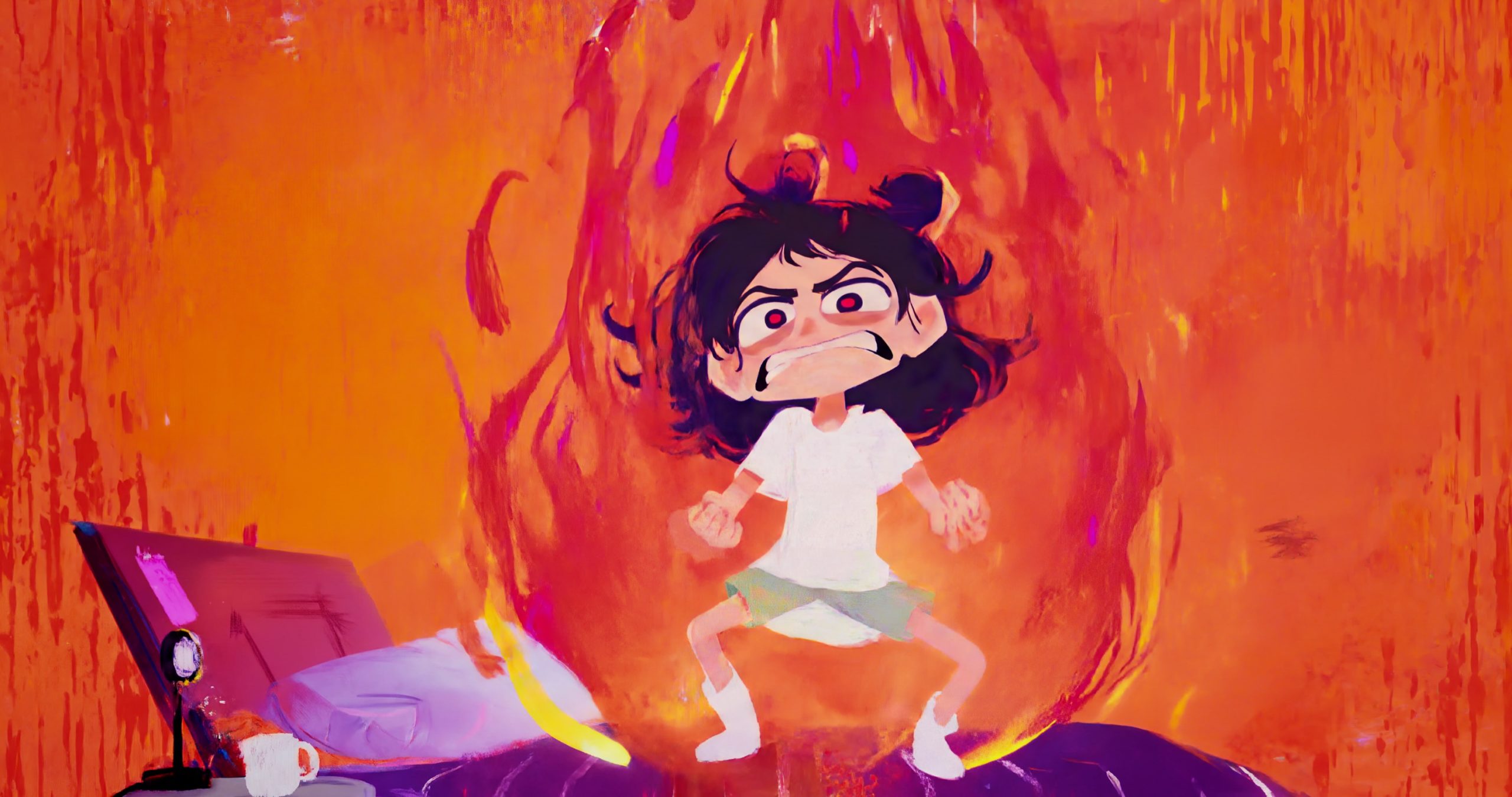
The night gets worse before it gets better. Courtesy of the filmmakers
“People keep saying like AI, it’s weird to put the AI, because it feels like a mysterious entity,” Connie noted. “But under the hood, what’s down to the essence, it’s machine learning. It’s about what you can teach the machine to learn.” She kept returning to a line she said gets repeated a lot at Pixar: art inspires technology, and technology inspires art. Her open question, and she was not being falsely modest when she called it open, is whether these tools end up as a way to make things faster and cheaper, or become something closer to a new medium, sitting alongside watercolor and oil paint and CG as one more way to tell a story.
I asked her about the sharp divide in our community over whether any of this belongs in animation at all, and about what happened at Annecy in June, when the world premiere of Hisko Hulsing’s Danse Macabre drew walkouts and boos over its use of generative tools. She did not flinch from the question, and she did not pretend the divide is not real.
“I think there’s a huge gap between what the technology is, what the technology can do, how people think it is, and inside the world of the people who are making the technology, their understanding of filmmaking and the creative process.”
Her instinct, and the more I sit with this film the more I share it, is that you cannot argue anyone into a position on this. You can only show the work, show how it was made, and let the conversation grow from there. “I really wish we can have more conversation between those two worlds, and even among artists ourselves,” she said. “I feel like the way that we make things on Dear Upstairs Neighbors is just one way it’s possible. It could be other ways, with other artists. But all those conversations need to happen first.”
What comes after
Connie is back in what she calls a learning and input phase, reading and researching new stories while she keeps an eye on how far the technology has come, trusting that the two will meet again somewhere down the line. After years in short-form storytelling, she is ready to think in a longer format. She asked me to wish her luck. I will, gladly, and so should you.
I keep thinking about the first time I watched this film at home, before I understood any of what had gone into it. I assumed I was watching a wonderful piece of hand-crafted animation, full stop. When I later learned about the AI collaboration behind it, my first instinct was suspicion. I have seen enough plastic, boring, soulless AI video by now to have a reflexive concern about the label.
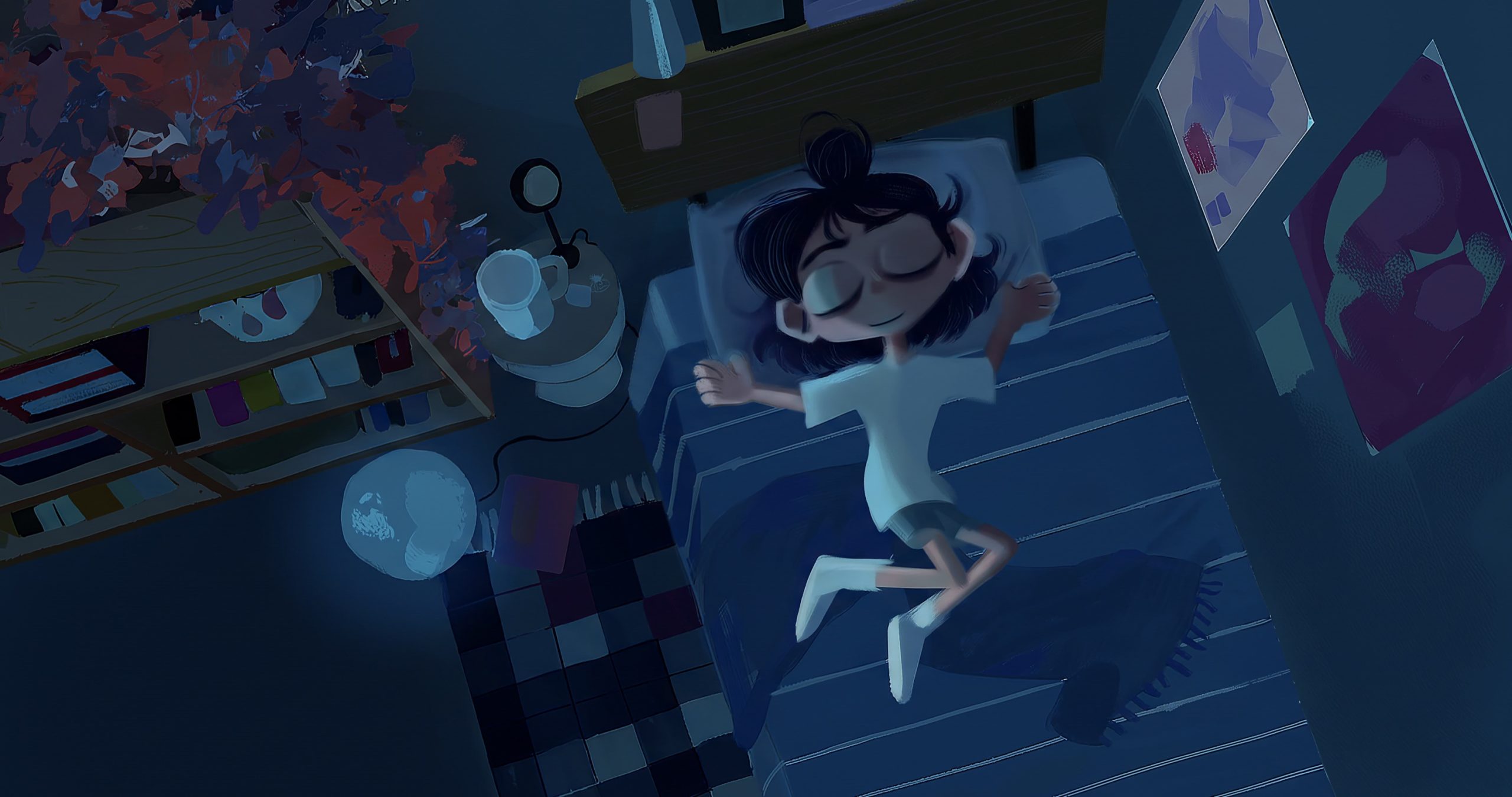
Sleep, at last. Courtesy of the filmmakers
Dear Upstairs Neighbors is not that, and talking to Connie made it obvious why. The technology did not replace the person behind it. It learned, quite literally, to reproduce the way she already saw. That is the real story here, and the reason this film deserves to be more than a case study in how a research lab and a group of animators worked together. It is a reminder of what happens when the people building these tools are willing to sit in a room with artists long enough to listen.
Connie He did not just make a funny, gorgeous short about not being able to sleep. She made a small, hopeful proof that the future everyone is arguing about does not have to be a fight. It can be a conversation, patiently and stubbornly had, until both sides start speaking the same language.
Congratulations, Connie. Here’s to whatever keeps you up at night next.
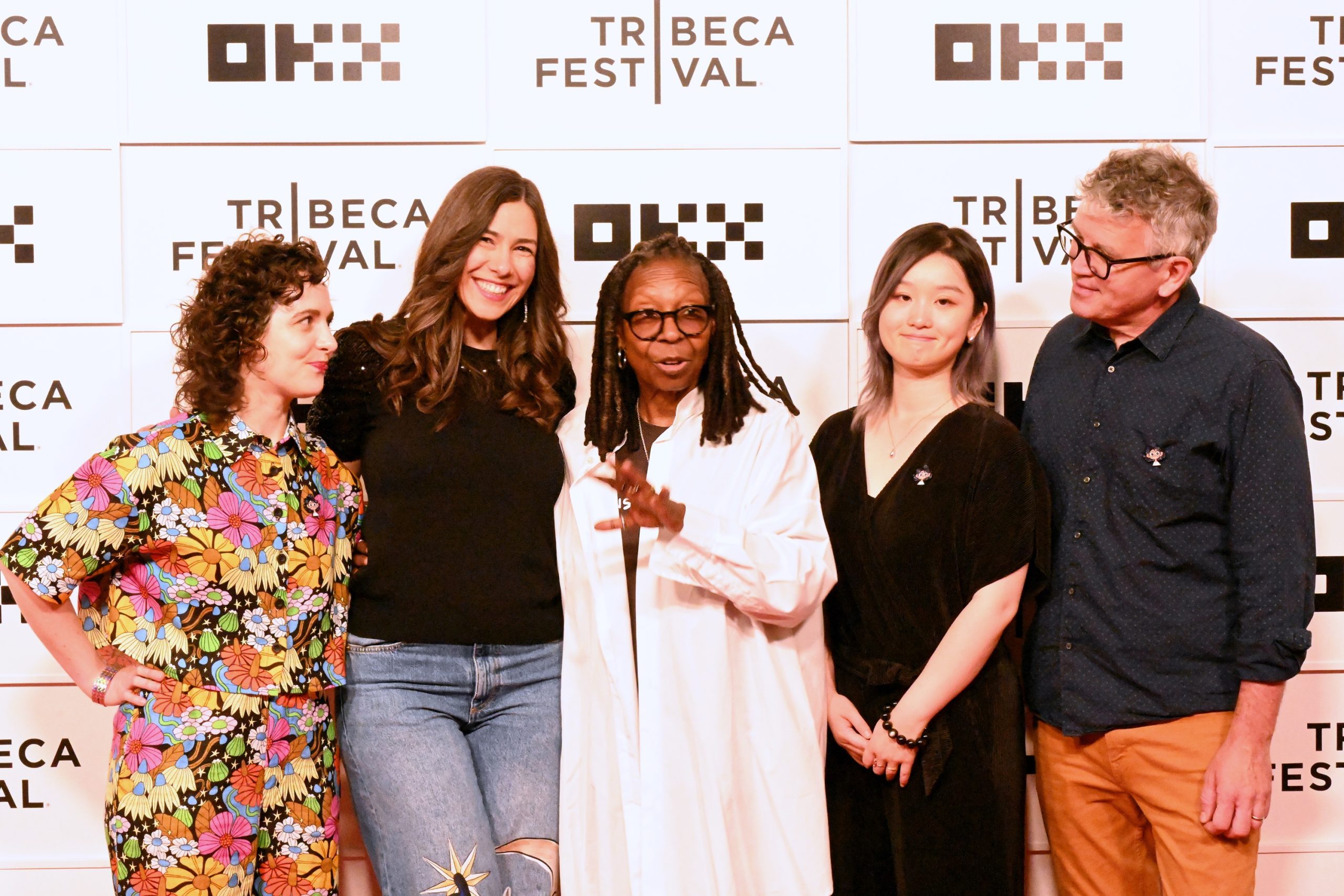
From left to right: Jess Walley (Production Manager), Márcia Mayer (Producer), Whoopi Goldberg (curator of Tribeca’s animated shorts program), Connie He (Director), and Doug Eck (Executive Producer) at the 2026 Tribeca Festival. Photo by Jesse Rylander
Film: Dear Upstairs Neighbors (2026), 6 minutes
Director and writer: Connie He
Producer: Márcia Mayer
Production designer: Yingzong Xin
Executive producer: Doug Eck
Production manager: Jess Walley
Editor: Sarah Ligatich
Composer: Yung Spielburg
Voice of Ada: Márcia Mayer
Production: Google DeepMind
Festivals: Sundance Film Festival 2026 (preview), Tribeca Festival 2026 (world premiere), SIGGRAPH 2026
Words: Jesse Rylander
Photo: Jesse Rylander
Stills: Courtesy of the filmmakers