







Director c. Craig on building Kaboom from hand-drawn performances, protecting artists in a generative workflow, and turning three years of practice into nine minutes of joy.
Editor’s note: ChikaBOOM! premiered as part of Whoopi’s Wonderful World of Animation at the 2026 Tribeca Festival. I was in the theater for every short in the program, and afterward I had the chance to connect with Whoopi Goldberg herself. I love what she is doing, giving exposure and visibility to animated shorts at Tribeca every year, and it deserves to be celebrated. This article is part of a series dedicated to the shorts of this year’s program, with more love letters on the way.
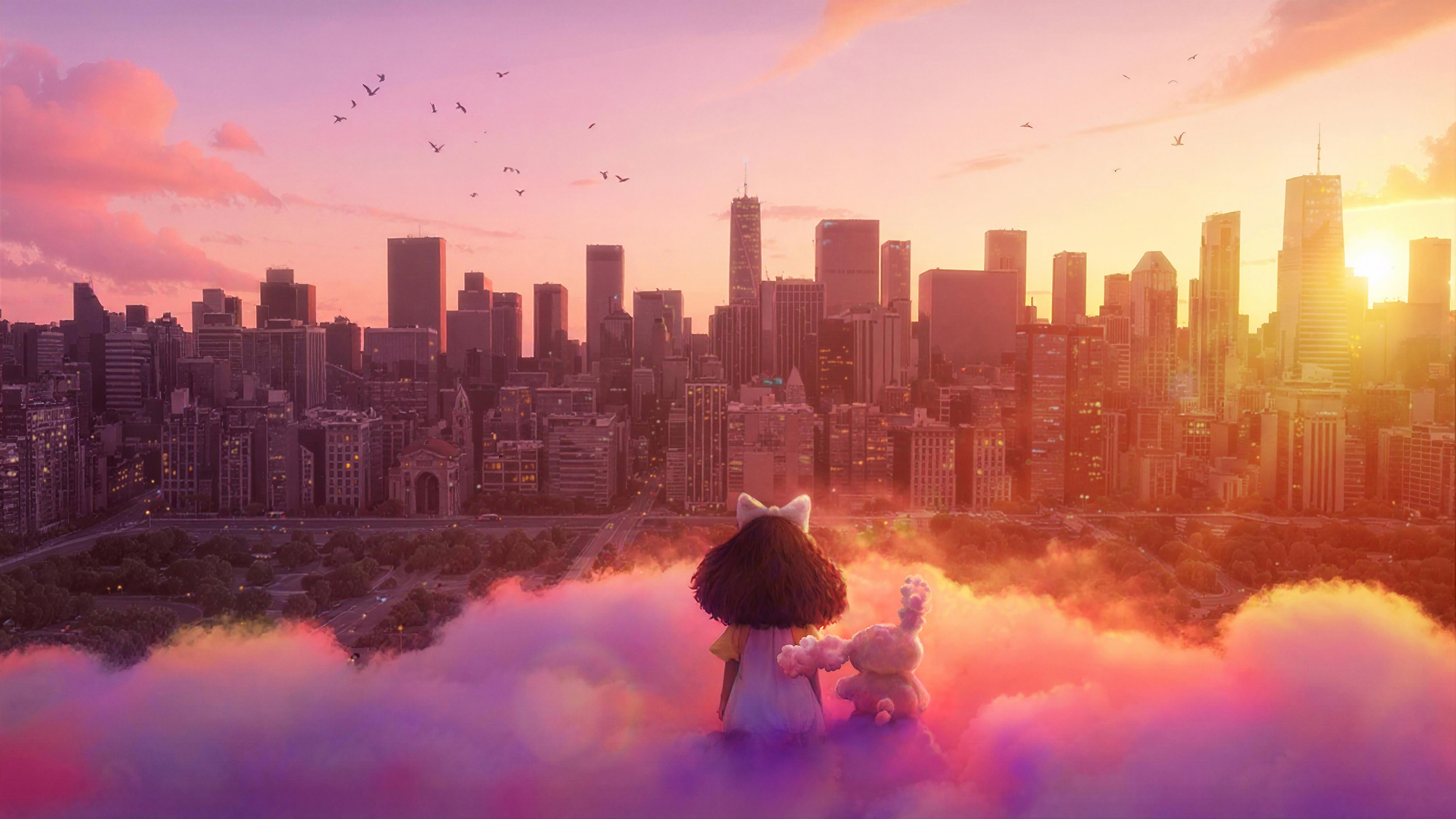
ChikaBOOM! Courtesy of Asteria and Everyday Mischief
Before Chika Batstone existed, there was a nine-year-old actor standing on a virtual production stage, watching the world move around her.
Writer-director c. Craig was shooting his 2023 film Fathead with its young star, Kapri Ladd, on Amazon’s Stage 15. At the time, the closely guarded volume was one of the largest virtual production stages in North America. As the crew rotated the environment into position for the next shot, Ladd stared at the shifting world and asked what was happening.
Craig told her it was magic.
“She fully believed that it was magic she was witnessing in that space,” he remembers. “It gave me the opportunity to see the wonder in her eyes, the belief in her eyes in the power of magic.”
At the end of that filming day, Craig went home and wrote the first draft of what would become ChikaBOOM!
Three years later, the nine-minute animated short made its world premiere in Whoopi’s Wonderful World of Animation at the 2026 Tribeca Festival. It follows Chika Batstone, an aspiring young magician whose curiosity accidentally releases Kaboom, a chaotic magical creature, into the heart of New York City. With her father, the world-famous Amazin’ Arnie, performing nearby, Chika must contain the mayhem before it escapes her control.
Yara Shahidi voices Chika, alongside Natasha Lyonne as Kaboom, Daveed Diggs as the Amazin’ Arnie, Roy Wood Jr. as Grandpa New York, and Tika Sumpter as Joan. Yet the most important presence in the film may be the one Craig fought to leave visible: the hands of the artists behind every frame.
Everything is magic
Craig did not always describe his worldview in terms of magic. Optimism, he says, was always his default. But making this film turned that optimism into something more tangible.
“The transfer of the joy from the actors’ performance to the artists’ hands to the animators and designers, then witnessing that joy become smiles on the audience’s faces, made a huge impact on me,” he says. “I didn’t have a choice but to recognize all of the miracles and magic that happen along the way to something as complicated as a film being made.”
Now he looks for it everywhere.
“You either think everything is magic or nothing is magic,” Craig says. “I think it’s magic that the subway trains in New York run. I’m trying to find it everywhere that I look.”
That philosophy is embedded in Chika. She does not want to become a magician eventually, after years of careful preparation. She wants it now, with her whole heart. Like many young artists, she believes in the dream before she possesses all the tools required to realize it.
For Craig, that impatience is not simply a character flaw. It is part of the creative impulse.
“Often, no matter what you do in life, we attempt to run before we can walk,” he says. “I think that’s needed. When you’re passionate about something, you have to attempt to run right after you figure out how to stand.”
The fall is part of discovering whether you care enough to get back up, learn properly, and continue.
“At the beginning, you have to go with your full heart,” Craig says. “Maybe we all go after things we love like Chika goes after magic.”
A little girl with strong shoulders
The first year of production took place through the Entertainment Technology Center at USC, working with Epic Games. It was ETC’s first attempt at animation, and the scope extended beyond the organization’s usual expertise and resources.
The team pushed the project as far as it could through in-kind work. The creative belief arrived quickly; the money required to finish the film did not.
“That little girl has some strong shoulders,” Craig says of Chika. “She carried the movie off of people just kind of falling in love with her, what they felt when they saw her. Then the rest was: Where do you find the finances to make this?”
Producers Alyssa Katalyna and Kacie Lehner helped keep the fire alive while the team searched for a path forward. Eventually, Asteria arrived with the technology, infrastructure, and funding needed to bring the film home.
“There were so many people who wanted this story to live that I knew we would find our way to the finish line,” Craig says. “Asteria stepped in right on time. They love Chika as much as we do, and they really pushed it to the forefront.”
The resulting film is an Asteria and Everyday Mischief production, made with an international family of collaborators that includes The Monk Studios, Rotu, and The Gotham Group.
“This production was blessed with many heroes,” Craig says. “Time after time, I was in awe of the creativity, selflessness, and spirit of this team, and I think it came from how much we all believed in Chika. We all wanted to do all that we could for her.”
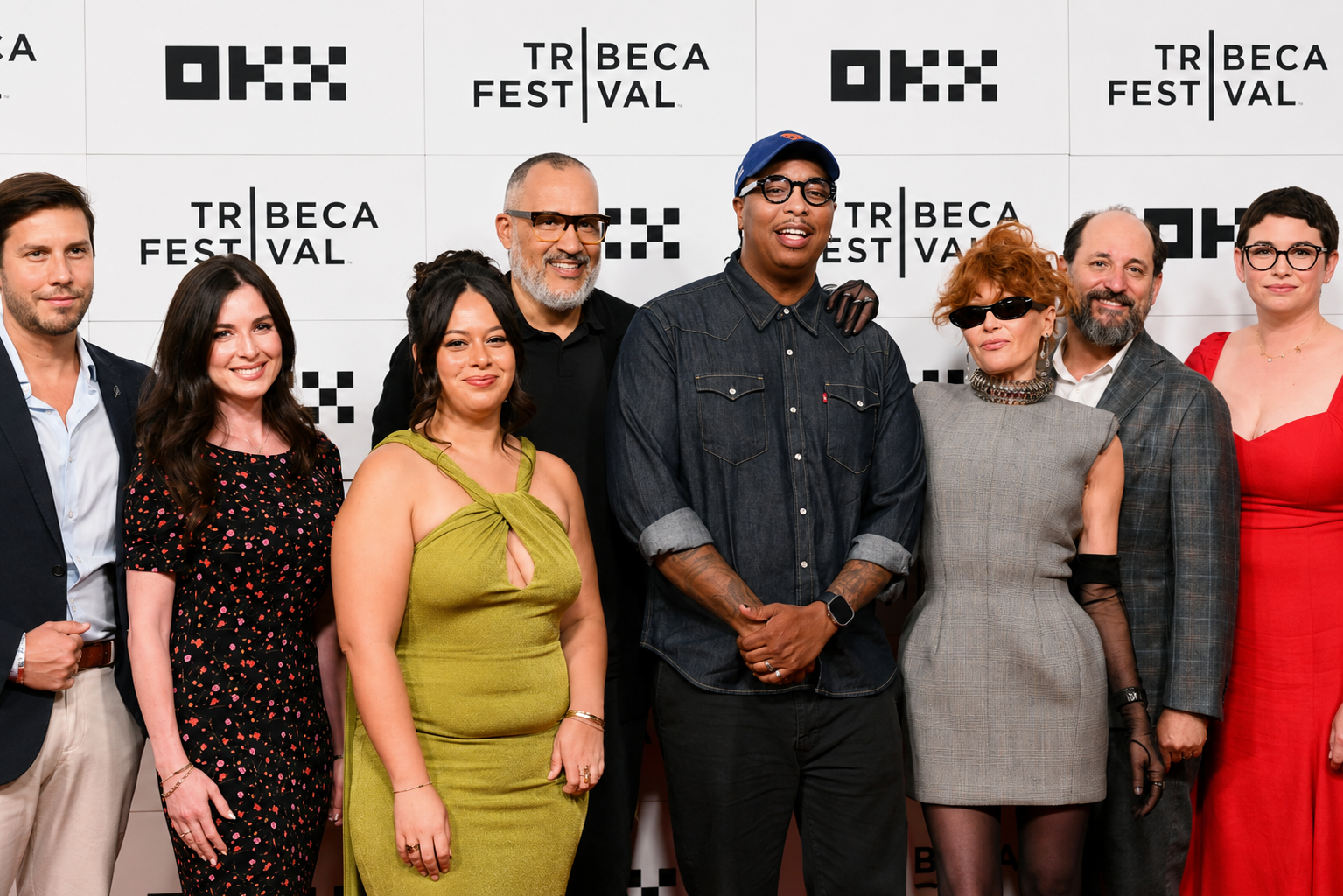
The ChikaBOOM! family at the Tribeca Festival premiere, including c. Craig, Natasha Lyonne, and producers Kacie Lehner, Alyssa Katalyna, and Marisa Castro. Photo by Jesse Rylander
The lesson he carries forward is simple:
“The work is only ever as good as the love behind it.”
A hand-drawn soul inside a CG cloud
More than 90 percent of ChikaBOOM! is CG. Its hybrid component becomes most visible in Kaboom, a volumetric cloud that presented the team with a particularly expensive and difficult animation challenge.
The solution began in 2D.
Lead 2D artist Hoss Wheeler and a group of artists hand-drew Kaboom’s movements and performances. A three-dimensional generative mesh was then wrapped around those drawings to create the character’s cloudy volume.
The performance came from the animators. The technology gave that performance another material form.
To make that origin unmistakable, the team retained the artists’ outlines around Kaboom rather than smoothing them away.
“Every frame that you see Kaboom in, you know that there was an artist’s hand driving it,” Craig says. “We left the artist’s work in there.”
The moment the team saw the outline in place, it felt right.
“It helped the character stand out in the world, and it made it feel somehow even more magical,” he says. “The poetic side of it is that the creators’ hands stay with Kaboom every step of the way.”
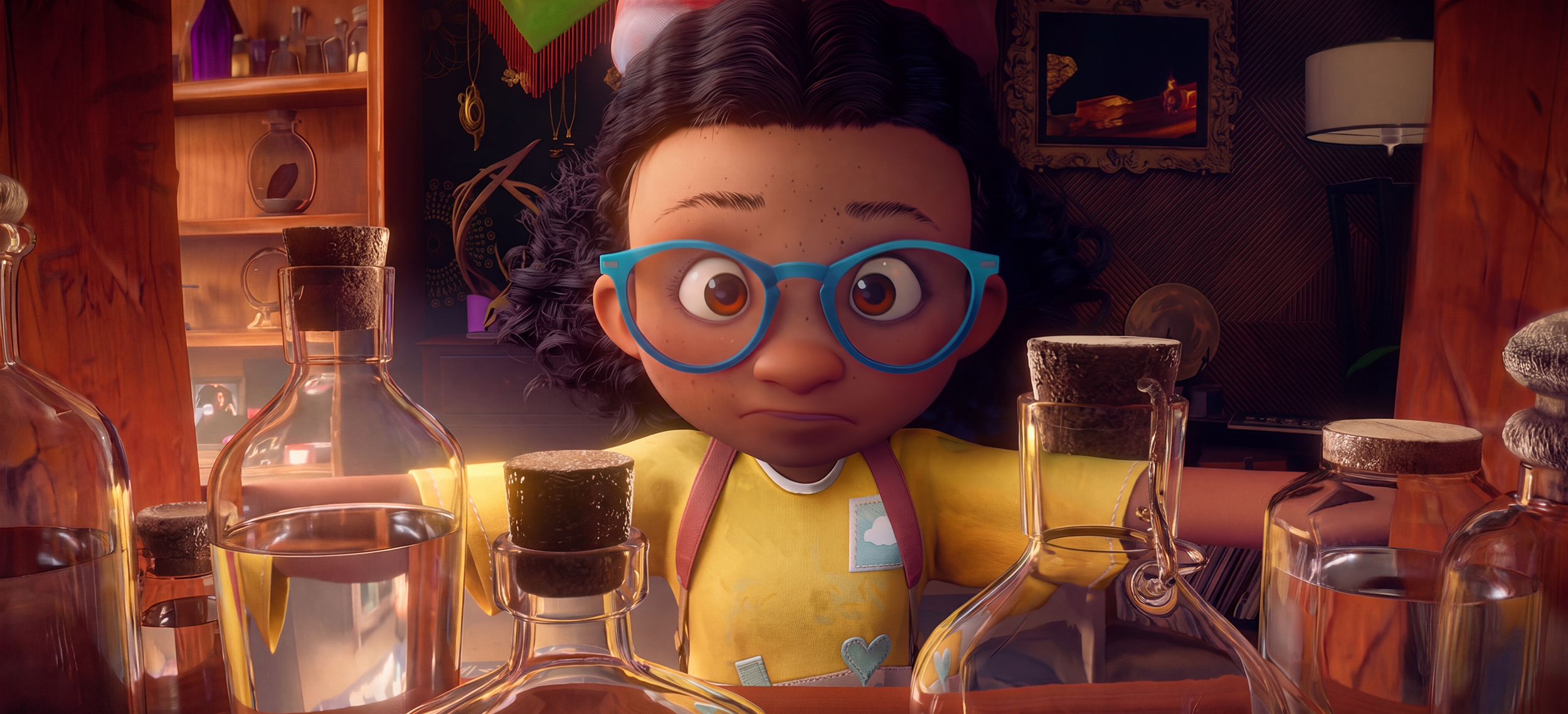
The artists’ outlines stay visible around Kaboom in every frame. Courtesy of Asteria and Everyday Mischief
One of Kaboom’s most expressive qualities, however, began as a mistake.
During a pivotal heart-to-heart with Chika, the model produced an unexpected sparkler-like effect around Kaboom’s eyes. The artifact was distracting, uncontrollable, and especially frustrating because it interrupted an intimate emotional moment.
Two weeks later, the technical problem had been solved. By then, the filmmakers had fallen in love with it.
Once they could control the effect, they reduced its intensity and incorporated it into Kaboom’s performance. Now the sparks emerge when the character becomes particularly excited or afraid.
A glitch became a behavior, but only after the artists gained the ability to direct it.
The part he would not cut
Craig describes himself as agile in production, especially when working with emerging technology. But there was one creative suggestion he could not accept.
One suggestion along the way proposed reaching Kaboom sooner by shortening the opening between Chika and her father. Craig believed those scenes protected the reason the entire story existed.
Chika wants to become a magician because she looks up to her dad.
“That relationship dynamic was so important, knowing why she wanted to be a magician,” he says. “It’s because she looked up to her dad so much. I thought that was important to keep in there.”
The short’s compact family story was also one of its most difficult elements to calibrate. Craig estimates that the twelve-page screenplay went through approximately twenty drafts, not counting the transformations that happened during editing.
“The truth is, I kind of loved all of them for different reasons,” he says. “When we got to the final edit, we could all feel it in the room. The team is always the first audience. If they love it, we have a chance.”
The production found another north star in Chika’s bedroom, designed under the creative leadership of production designer Hannah Beachler. Every shot in that room holds a special place for Craig.
“The design of that room with her inside of it is what made this film possible,” he says. “Those images were our team’s north star.”
An ocean of talent came to play
Craig attributes the film’s cast to luck, generous collaborators, and performers who connected naturally with the story’s sense of wonder.
“These are people who chase the magic in their own lives,” he says.
Daveed Diggs had recently become a father when he joined the project, allowing his performance as Arnie to draw on his own new conversations about fatherhood. Yara Shahidi brought the playfulness and youthful spirit Chika required. Tika Sumpter returned after working with Craig on Fathead, while Roy Wood Jr., a longtime collaborator, gave his voice to Grandpa New York.
“I’m just tremendously grateful for the ocean of talent that was willing to come play in the sandbox with me,” Craig says.
Kaboom changed most dramatically because of the performer involved. The character was originally conceived as a silent cloud, communicating through physical reactions. When Asteria joined the project, the possibility of Natasha Lyonne voicing Kaboom emerged.
Craig returned to the screenplay.
“I had this incredible actor who was going to be able to bring this to a different type of friendship and mischief dynamic with Chika,” he says. “It just wrote itself.”
Kaboom was completely reworked for Lyonne.
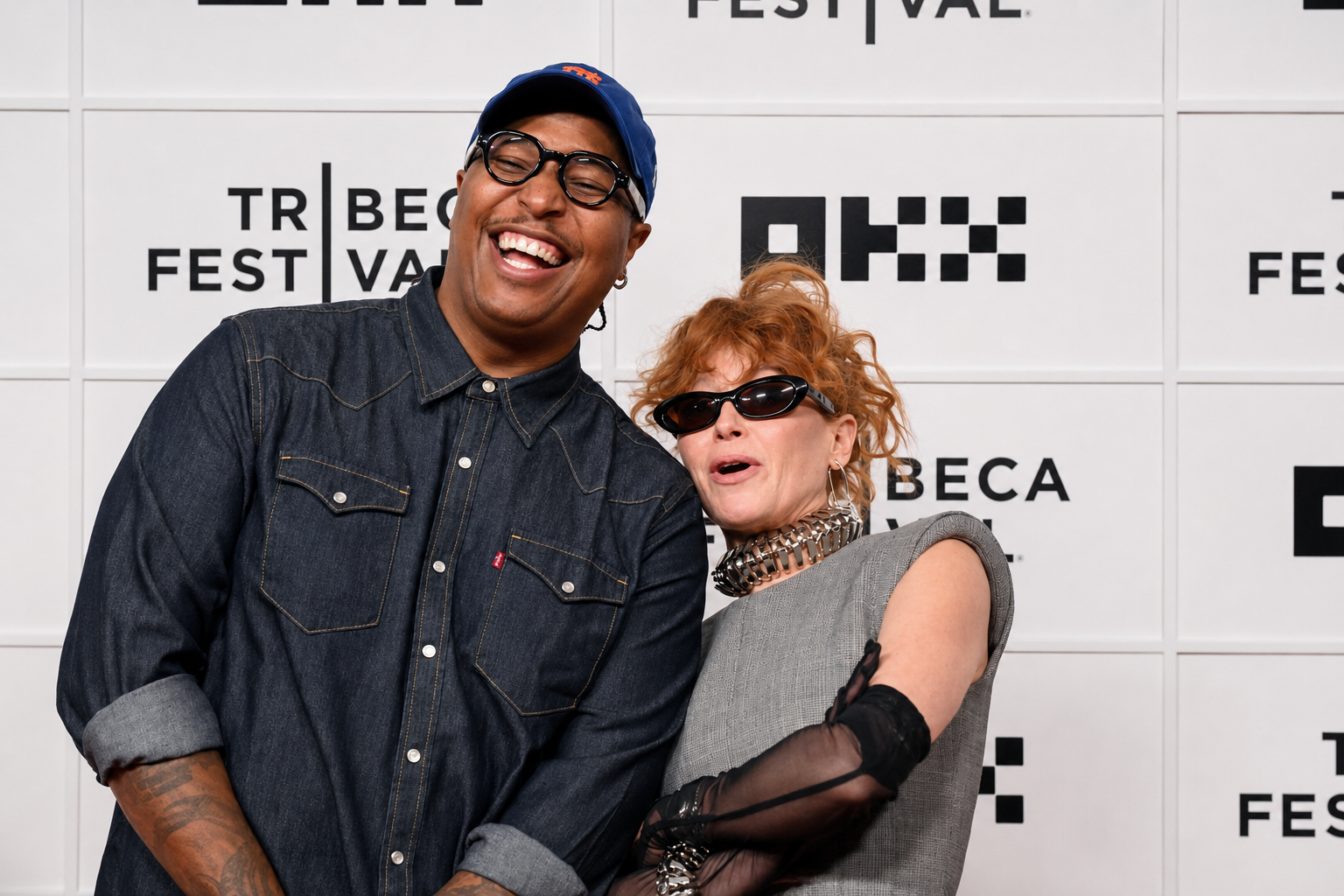
c. Craig and Natasha Lyonne at the Tribeca Festival premiere. Photo by Jesse Rylander
New York as a thank-you
Craig grew up in New Orleans, but he learned to make films in New York. Setting ChikaBOOM! there was his way of thanking the city for an education he feels he can never repay.
“It’s changed my life in ways I can never repay,” he says.
New York is more than a backdrop for the short’s chaos. It is another character: bright, crowded, unpredictable, and somehow functional. For the feature Craig hopes to make, he is developing set pieces around locations that were pivotal in his own filmmaking journey.
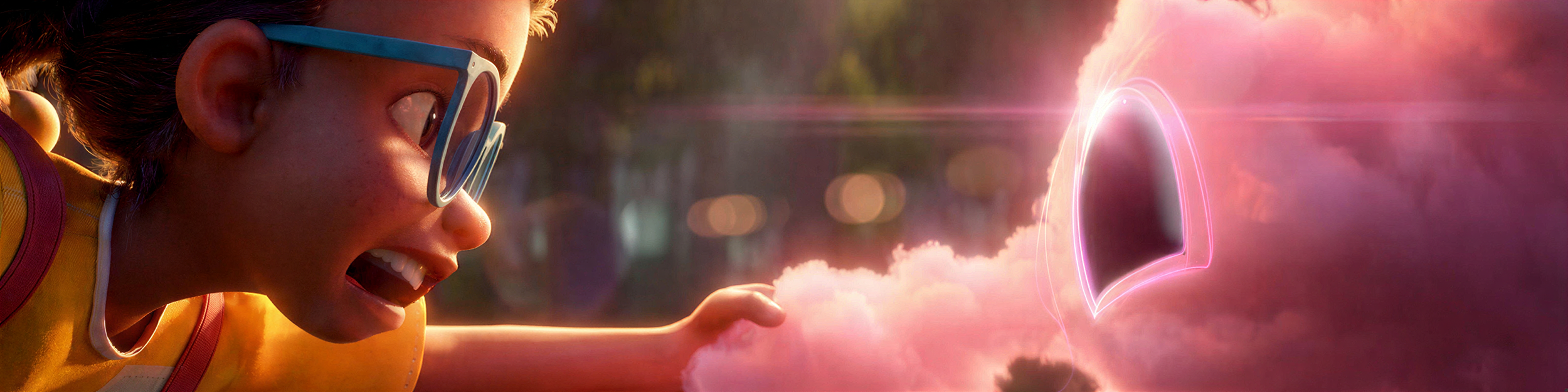
New York as another character. Courtesy of Asteria and Everyday Mischief
The city becomes part memory, part playground, and part teacher.
Even Chika’s surname carries personal history. Batstone is a tribute to Kathryn Boyd-Batstone, the film’s director of cinematography for layout and one of Craig’s most important longtime collaborators.
“On top of being one of the smartest people in the room, she also has a really awesome name,” he says. “I’m thankful she shares it with Chika. They’re both great people.”
Animators are actors, too
Before production began in earnest, Craig and his team met with an animation company to discuss the film’s technological ambitions.
The artists asked him to remember something.
Animators are actors, too.
They did not want to receive predetermined material and simply trace the lines. They needed room to interpret, perform, and be expressive.
“It was something that I’ll never forget,” Craig says. “It was important for me as someone who was on the outside, coming into this incredible medium that I’ve loved my whole life but hadn’t done it yet. It was a good lesson in respect and care for the artistry involved.”
In his written reflections after the interview, Craig returned to that moment.
“It grounded me in gratitude: that my single, small place in this tradition of animation is alongside so many tremendously talented artists trying to give the world what is inside of them,” he says. “I hope I always honor that.”
That gratitude shapes how Craig talks about the production’s emerging technology. His concern is not only what a tool can accomplish. It is whether the artists using it retain the space to act, experiment, and leave themselves inside the work.
There are no shortcuts to magic
Because ChikaBOOM! incorporates generative methods, the film will inevitably be pulled into the industry’s larger argument about artificial intelligence.
Craig takes respectful issue with allowing the word “artificial” to flatten what actually occurred.
“The artists involved in it worked so hard and put so much creativity into it,” he says. “They worked for years on making sure that every frame of this was really thought about and really cared for.”
His position is neither a blanket rejection nor an unconditional endorsement. When approached as a shortcut, generative technology can create the same problem Chika encounters when she reaches for magic before understanding how to wield it.
“There’s no shortcut that doesn’t get out of hand if you don’t know what you’re doing,” Craig says. “If you’re approaching it as a shortcut, you’re going to run into trouble.”
Using a tool with a complete understanding of filmmaking, craft, and the destination you are trying to reach is different from asking it to substitute for those things.
“When used with care, I think it should be considered simply another layer of the animation process, one that may or may not be useful for a particular film,” he says.
Craig hopes filmmakers will explore these workflows judiciously, remain honest about where and how the technology was used, and acknowledge its impact as openly as they would any other production decision.
He is also convinced that the industry’s center of gravity remains human.
“There are many people in our industry who remain deeply committed to protecting the work, presence, and artistry of their collaborators,” he says. “I believe that commitment is far more powerful than the relatively small number of people interested in erasing them.”
He has no interest in allowing efficiency to eliminate the people around him.
“I love my teammates,” he says. “I have no interest in making movies by myself, or just making movies with two or three people and some model.”
For Craig, protecting the industry does not require one filmmaker to carry the weight of the entire debate. It begins with artists, directors, and creative communities looking out for one another.
“If we all look out for each other, then I think that’s the best way to approach making sure our industry remains recognizable.”
Ask him what the most real thing in filmmaking is, and the answer has nothing to do with tools.
“The most real thing in filmmaking, for me, is whatever that precarious but special thing is that makes a large group of artists lock arms, despite each having a world of their own, and share the common goal of going somewhere we hope is worth going, together,” Craig says. “It makes the hard days bearable and the good days that much better.”
The feature came first
ChikaBOOM! was conceived as a feature before it became a short.
When Craig first brought the idea to the Entertainment Technology Center and Epic Games, they asked whether he had ever made an animated film before. He had not.
Their advice was to begin smaller.
Craig now sees that as the wisest possible decision. A filmmaker making a story about the danger of skipping steps could not skip the step of learning how to make the short.
The lesson is stitched into the script itself, in a line that gets said more than once in the film.
“I truly believe that practice makes magic,” he says. “It’s about the practice of what we’re doing. Be a practitioner of the things you care about.”
The eventual feature will now have a director who has already traveled through the process with an extraordinary team and who understands Chika’s world more deeply than he could have three years earlier.
“What I’ve learned on this film has been the biggest blessing,” Craig says.
The creative journey has also clarified who Chika is to him.
“Chika is my mother, my nieces, my sisters,” he says. “She is a collective being of every amazing woman in my universe. She’s representative of their heart and tenacity.”
He finds a kindred spirit for her in Little Amélie or the Character of Rain, the film he currently thinks about “fifty times a day.”
“Maïlys Vallade and Liane-Cho Han made one of the most beautiful stories ever told about how we center ourselves in the world, and how we eventually learn that the world does not belong to us alone,” Craig says.
“I hope that, in their hearts, Chika and Amélie are indeed kindred spirits. They both possess more curiosity than fear. They are both filled to the brim with life, and they are both capable of change.”
If Craig could travel back three years and hand himself one sentence before beginning ChikaBOOM!, it would not be production advice or a warning about the difficult road ahead.
It would be:
“She’s going to mean so much to so many people.”
Ten minutes of joy
At the Tribeca premiere, Craig heard the clearest evidence that the film’s energy had completed its journey: children laughing at the silly moments and becoming audibly excited by the adventure.
“It was made for them,” he says. “So that was special.”
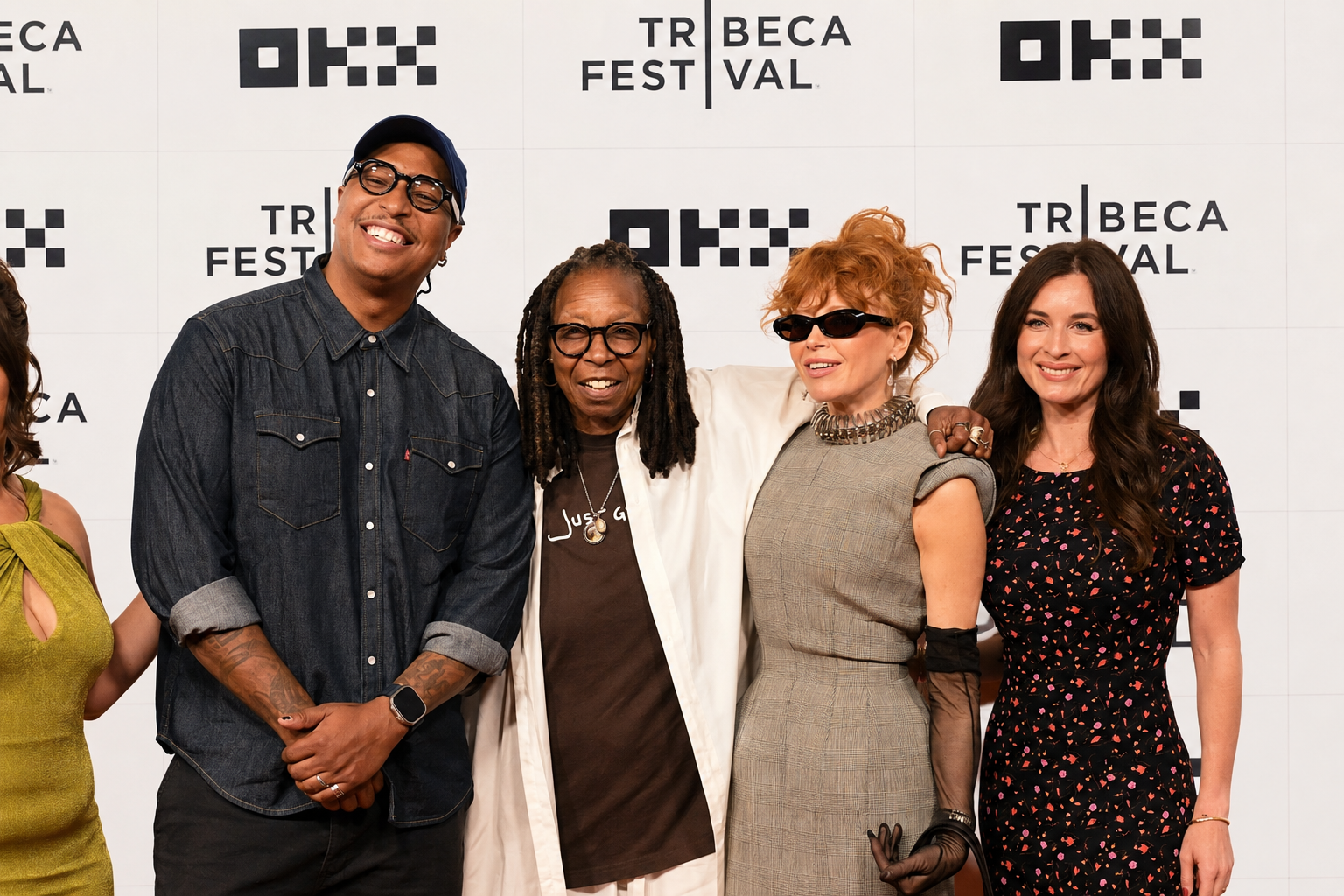
c. Craig, Whoopi Goldberg, Natasha Lyonne, and producer Kacie Lehner at the ChikaBOOM! premiere. Photo by Jesse Rylander
During the film’s research and development phase, producer Jacqueline Gray Miller described Chika as “ten minutes of joy.”
That is the feeling Craig hopes people carry out of the theater.
A filmmaker’s job, in his view, is to transfer energy. When the original feeling is honest, whether love, terror, delight, or wonder, it can travel through a production and reach someone on the other side of the screen.
“There’s no possible way to replace what you love,” Craig says. “If that emotion is true, it’ll get there. It’s impossible to replace what’s real.”
With ChikaBOOM!, it got there.
The magic did not come from avoiding the work. It came from practicing, failing, adjusting, protecting one another, and leaving the artists’ hands visible when the work was finally done.
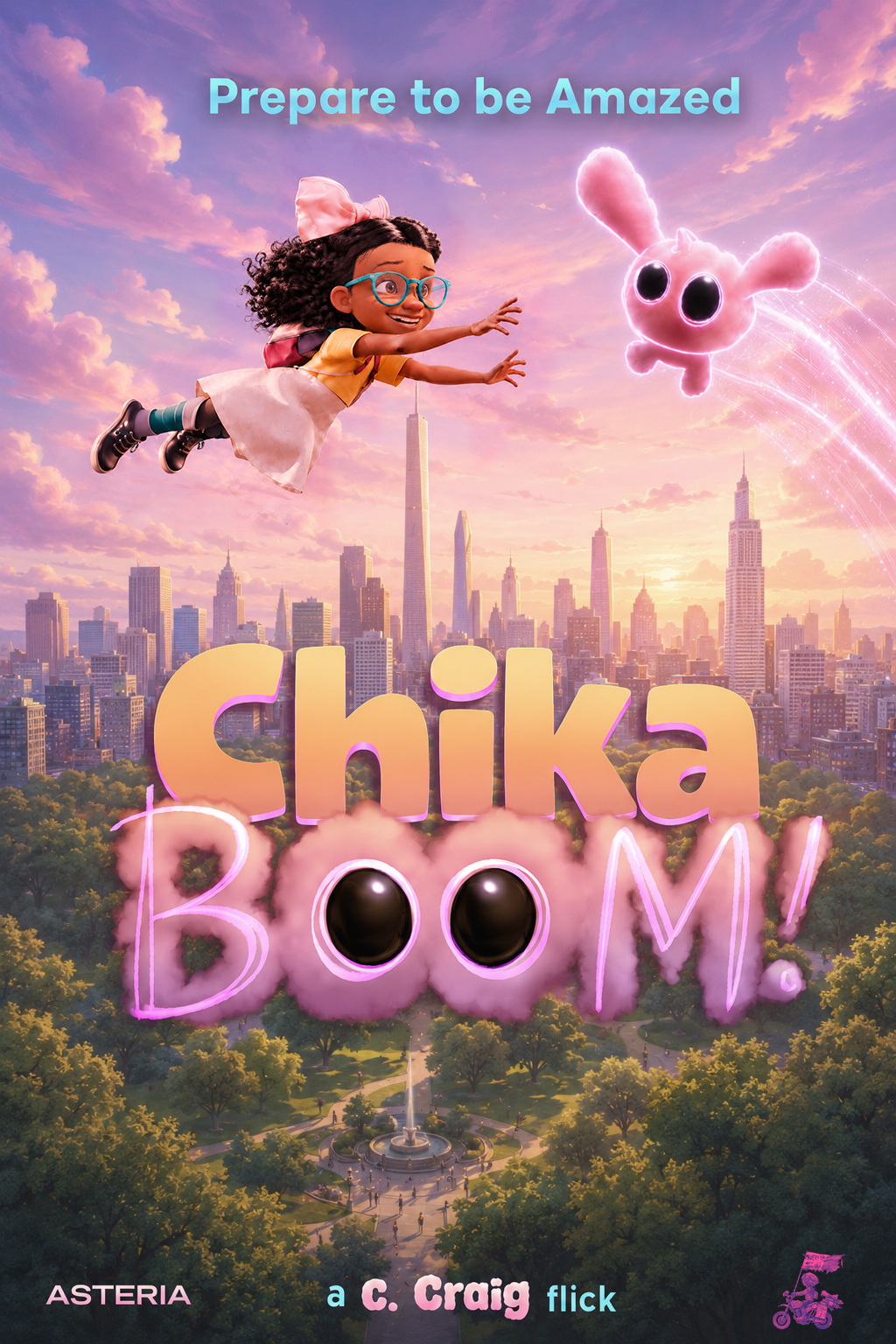
ChikaBOOM! poster. Courtesy of Asteria and Everyday Mischief
Motionographer Rapid Fire
Traditional animation or CG? Both.
Storyboard or script? Script.
Music or silence while writing? Music. Cirque du Soleil’s La Nouba.
Favorite animated short? Cordell Barker’s The Cat Came Back.
A filmmaker everyone should study? Kurosawa Akira.
A Motion Designer or animator whose work inspires you? The entire team of Witch Hat Atelier.
One film you wish you had directed? Citizen Kane.
One book every creative should read? The Authoritative Calvin and Hobbes.
One piece of technology you couldn’t live without? FaceTime.
One piece of technology you wish didn’t exist? One where detriment outweighs benefit.
One creative habit you swear by? Trying things that seem odd at the beginning.
Favorite New York spot? Railrider’s Throne, 116th and Broadway.
Favorite magic trick? David Copperfield making the Statue of Liberty disappear.
Last film that made you cry? Hamnet.
One thing people misunderstand about animation? How beautiful the process is.
One thing people misunderstand about AI? That it’s useless without us.
What gives you hope? The overwhelming number of good people in this world.
Practice makes… Magic.
Written and directed by: c. Craig
Produced by: Benjamin Michel, Ben Lock, c. Craig
Producers: Kacie Lehner, Alyssa Katalyna
Co-producer: Marisa X. Castro
Production designer: Hannah Beachler
Costume designer: Ruth E. Carter
Director of cinematography, layout: Kathryn Boyd-Batstone
Director of cinematography, lighting: Pedro Conti
Editor: Avo John Kambourian
Music: Austin Hammonds
Director of creative technology: Brad Tucker
Production: Asteria and Everyday Mischief
Cast: Yara Shahidi, Natasha Lyonne, Daveed Diggs, Roy Wood Jr., and Tika Sumpter