





Editor’s Note
Some stories feel personal even before you write them. This one does.
When I first met Kook Ewo, it felt less like an introduction and more like recognizing someone who has been on the same path all along. His kindness, humility, and generosity reflect the same values that have always guided Motionographer, a belief that creativity means nothing if it isn’t shared, that Motion Design is not just a career but an evolving art form that connects us.
Years ago, Kook and his partner Paola Boileau launched Motion Plus Design with a simple yet radical idea: that Motion Design deserves the same stage, respect, and cultural recognition as cinema, photography, or graphic design. What began as a small gathering of artists in Paris became a global movement, with events in Tokyo, New Delhi, Los Angeles, and beyond.
Now, as Motion Plus Design celebrates its 10-year anniversary at the legendary Grand Rex, it feels like a homecoming not just for Kook but for the entire Motion Design community. From the beginning, he’s fought for accessibility, for education, and for community, keeping tickets affordable, publishing talks freely online, and ensuring that every student or freelancer feels they belong in the same room as the industry’s legends.
In our conversation, Kook spoke about cinema, culture, and courage. About the doubts, risks, and quiet persistence it takes to build something that lasts. And as he prepares for this milestone edition, featuring icons like Patrick Clair, Karin Fong, and Michelle Dougherty, his focus remains the same: to bring people together, to learn from each other, and to keep the art of Motion Design alive, human, and connected.
This feature is a celebration of Kook’s vision, but also of what happens when an idea becomes a movement, and a movement becomes a family.
Motion Plus Design at 10 years isn’t just an event, it’s a reminder of how far we’ve all come, and how deeply we still believe in the power of motion to move people.
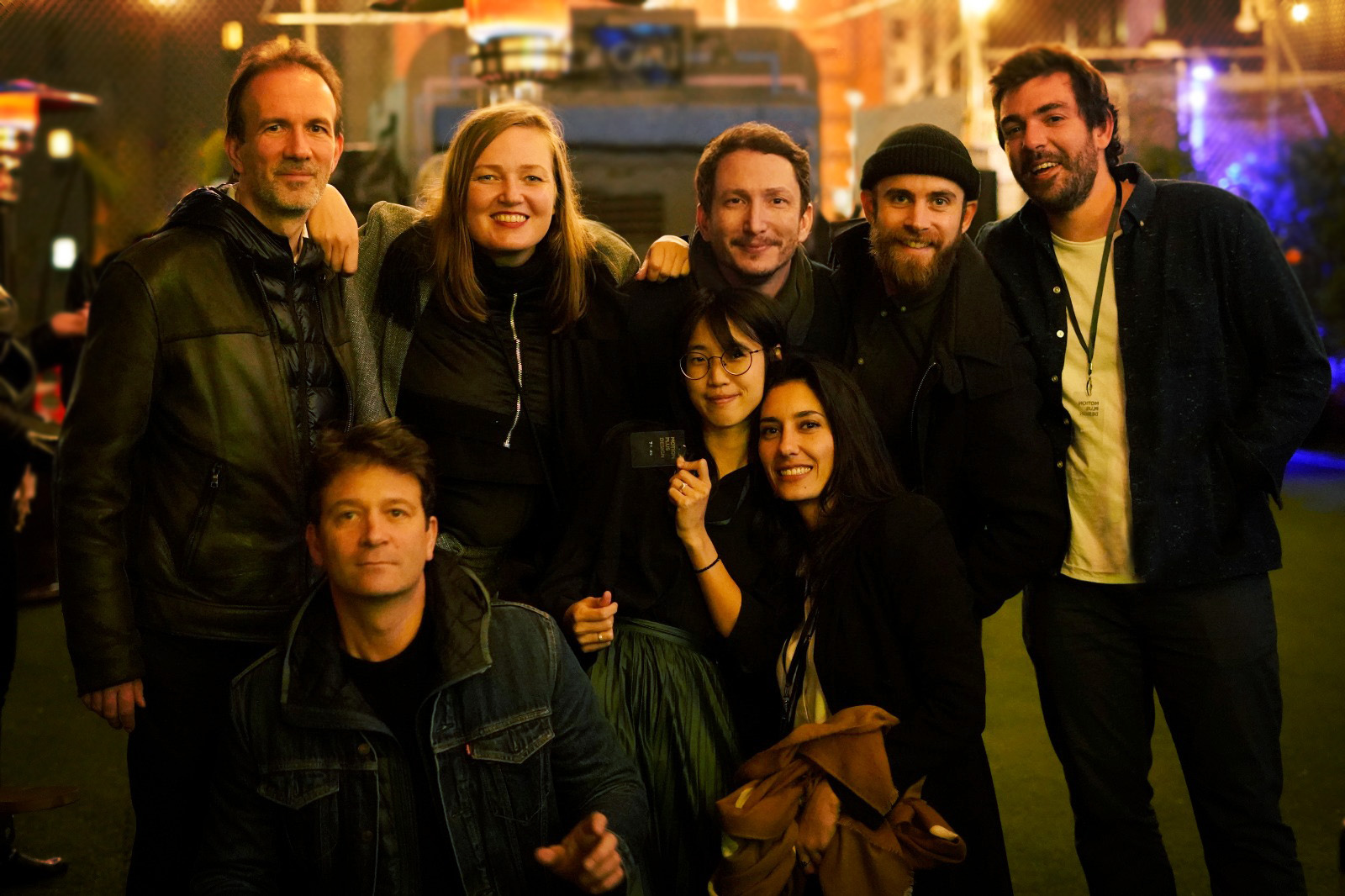
Sébastien Prangère – Olga Kiwerski – Kook Ewo – Ronan Guitton – Nigentz – Hu Yu – Mathilde Ammar
Motion Plus Design: 10 Years of Motion, Meaning, and Community
When Motion Plus Design began in 2015, it wasn’t a conference, it was a question, could Motion Design be recognized as a true art form? Ten years later, that question has become a resounding yes, echoed across continents, languages, and generations.
Motion Plus Design has grown from a small Paris gathering into a global platform dedicated to education, community, and the elevation of Motion Design as culture. From Tokyo to Los Angeles, New Delhi to New York, the events have connected thousands of artists, students, and studios under one shared belief: that Motion Design is more than craft, it is storytelling in motion.
Now, as the event celebrates its 10th anniversary at the Grand Rex, the world’s largest cinema still in operation, Kook looks back on a decade of growth, struggle, and unforgettable moments. What follows is a conversation about perseverance, accessibility, and the beauty of keeping art open to all.
- Ten years ago, you launched Motion Plus Design with a mission to celebrate and elevate Motion Design. Looking back, what was the original spark that started it all, and has that spark evolved?
The original spark was a deep conviction that this art form simply wasn’t getting the recognition it deserved. In the very beginning, I wanted to build a cultural center dedicated to Motion Design with my mentor Paola Boileau. And to explain this project, I made a book and created a short video called What Is Motion Design? to help people understand what this art form was about. That video was shared widely and translated in many languages. But despite that success, it was still difficult to convince people of the idea of a dedicated center.
In 2014, I started working with Ronan Guitton. We made real progress together on the book and at some point we thought: why not try an event, just once and see what happens? And that’s how it all started. The first Motion Plus Design event took place in 2015 and it was a great success.
- The 2025 event at the Grand Rex feels like a cinematic full circle. What does it mean to host this 10-year celebration in one of the most iconic theaters in Paris?
For me, hosting Motion Plus Design at the Grand Rex honestly feels like a childhood dream come true. There’s simply nothing bigger or more iconic. It’s the largest cinema still in operation in the world.
This 10-year anniversary is a celebration of a journey. We started very small and yet we’ve managed to grow, evolve and endure over the years. I also themed this year’s edition around cinema because this venue is where the biggest premieres from all over the world happen. It’s a place filled with history and symbolism. And for me, bringing Motion Plus Design there is a statement: Motion Design art belongs there too!

The Grand Rex, the world’s largest cinema
- Motion Plus Design has been remarkably global – Paris, Tokyo, New Delhi, NYC… What have you learned about how different cultures receive and respond to Motion Design?
What I’ve learned over the years is that Motion Design lives in a balance between global influence and local identity. On one hand, the web has created a global visual culture: people around the world are inspired by the same leading figures and trends. But at the same time, every country has its own cultural fingerprint.
That’s what I find truly exciting: people don’t lose themselves in imitation. They reinterpret and transform what they see into something that belongs to them. This is also why Motion Plus Design always tries to create a balance. Our lineups inevitably reflect major global influences but we also make sure to highlight local artists who represent the unique voice of each place.
Over the past few years, I’ve also been lucky to work closely with Hu Yu, an amazing artist, who has been instrumental in developing and curating many of our events around the world. Her vision, precision and commitment have been key to expanding Motion Plus Design’s presence internationally.
- From Ash Thorp to Pak, Woodkid to Cédric Klapisch, your lineups have bridged the worlds of art, film, and design. How do you choose your speakers? What makes a Motion Plus Design speaker unforgettable?
For me, an unforgettable speaker is someone who truly gives a part of themselves on stage, who shares their story with honesty and vulnerability. What I always tell our speakers is this: you have complete creative freedom over your talk but please don’t make it about selling your work. Instead, please talk about your journey.
The talks that stay with people are the ones that show the full picture: the doubts, the failures, the moments of uncertainty. When someone in the audience hears that a renowned artist has gone through the same struggles they’re facing, they walk away thinking “I can do this too.” That’s the simple magic of it.
When it comes to building a lineup, my priority is always to showcase the diversity of Motion Design. It’s a language with many dialects. Audience input also plays a big role. People often tell us which artists they dream of seeing (it’s actually a question we ask when they buy their ticket) and I try to make those wishes come true. At the same time, I build the lineup progressively. I start with a few key names and then I balance the rest based on who says yes.
- You’ve always kept the ticket prices affordable, making sure students and freelancers have access. In an era of exclusivity and paywalls, why was this so important to you?
Keeping Motion Plus Design accessible has always been essential because it’s about opening the doors to a wide audience. In France, the event is still organized as a non-profit and that spirit of accessibility has guided every decision we’ve made. We want anyone (especially students, young artists) to feel that they have a place here.
It’s the same philosophy behind the free recordings and interviews we share online. It’s about spreading knowledge and inspiration, just like you guys do. The more accessible we are, the more people can embrace Motion Design.
We also go beyond ticket prices as our events create real opportunities: attendees can meet our partners, studios and production companies directly, often leading to job offers or collaborations. Some ask for portfolio reviews or one-on-one meetings on site and that’s incredibly valuable for someone just starting out.
Another thing that makes the experience special is how naturally everyone mixes. Speakers stay in the audience after their talk to watch the others and during the breaks, they chat with students, freelancers and professionals alike. That sense of proximity and exchange is a huge part of the event’s atmosphere.
- You’re not just curating events, you’re curating culture. From the Ignition NFT collection to your long-term dream of a cultural center for Motion Design, what’s next for Motion Plus Design?
Over the past few years, I’ve become more and more interested in curation itself. Recently I curated large-scale outdoor exhibitions in Tokyo and Hong Kong, where motion design pieces were shown on massive screens in public spaces. I find this kind of cultural curation fascinating because it brings motion design to unexpected audiences and new contexts. It’s a direction I really want to keep exploring.
We also create original works each year through our “Made With” series, a carte blanche collaboration between artists and our partners. Those films are another way for us to give artists full freedom of expression while connecting them with global brands in meaningful ways.
Looking ahead, what I really hope for is to develop Motion Plus Design more deeply in every country where we already have a presence. The missing piece is still large-scale, long-term support. My main focus now is to find the right partners, whether corporate or philanthropic, who truly understand the value of this project and want to help us take it to the next level.
And eventually yes, I’d still love to build a dedicated cultural center for Motion Design!
- What has been your most emotional or meaningful moment over the past 10 years of Motion Plus Design?
There have been so many unforgettable moments.I’ll never forget a moment in New Delhi when a father brought his teenage son to the event for example. They had traveled thousands of kilometers together just so the boy could attend. I also think about meeting incredible talents early in their journey. I remember Curry Tian (now a renowned artist) showing me her work on an iPad at a rooftop party after the Los Angeles edition when she was still a student. Her talent was already astonishing. The same goes for discovering artists like Somei, who was so hard to reach in China at the time. Or Beeple who showed up the year he sold his NFT!
Other moments are more symbolic. Our event in Madagascar for example, took place shortly after the world started reopening. We couldn’t travel there ourselves but our passionate local team still managed to organize a screening in a cinema.
One memory that feels especially meaningful to me happened recently, in preparation of the New York edition. I met an extraordinary person there. Someone who not only helped me make the event possible but also supported me personally during a difficult time in my life. That, to me, is something truly special: to travel across the world and realize that a shared love of Art can bring people together so deeply that they become friends.

Patrick Clair
- This year’s lineup includes giants like Patrick Clair, Karin Fong, and Michelle Dougherty. What excites you most about this 2025 edition?
Bringing in people from the world of cinema felt like the right move and it’s incredibly exciting to have someone like Patrick Clair on stage for the first time. I’ve been asking him to come for almost a decade – literally every year but he’s always been too busy. Having these creators together, people whose work has defined title design and storytelling for film and television, is a way to honor the medium and show how deeply Motion Design is connected to it.
I’m also very curious to see how the audience will respond to the AI Evening. It’s the first time we’ve included such a dedicated space for this topic and I’m excited to see how people will react!
- You’re also a title sequence designer with over 40 film credits. How has being a working artist shaped the way you lead and grow Motion Plus Design?
It has influenced Motion Plus Design enormously. Being an artist myself helps me feel close to the people who attend – not just the speakers but the audience too. I know what it’s like to struggle, to doubt, to work on a project that’s difficult or overwhelming.
It also shaped the way I built Motion Plus Design structurally. Organizing a festival is a complex process but my experience as a creative gave me perspective on what matters most. It also helped with connections: I first met Kyle Cooper because I was working with Vincenzo Natali on Splice. My work naturally brought me into contact with many film directors and studios, and those relationships helped make Motion Plus Design possible.
- This year marks the first “AI Evening” at Motion Plus Design. What inspired you to create this dedicated space for AI, and how do you see it intersecting with the future of Motion Design?
We’ve actually been exploring this space for a few years already. In 2022 for example, I remember I invited Ümüt Yildiz, an artist working with AI. The idea behind AI Evening is part of our broader mission: to stay curious, to look ahead and to explore how new tools are shaping creativity. It’s not about replacing Motion Design or suggesting that AI is the future. It’s about recognizing that it’s becoming part of the creative landscape and asking how we can use it meaningfully as artists.
What I believe strongly is that Motion Designers will adapt to AI incredibly well (maybe better than many other creatives) because they already think in 360 degrees. They understand composition, movement, timing, sound and storytelling. That holistic vision makes them uniquely equipped to direct AI tools with precision.
My personal conviction is that the future of AI in creativity won’t be about pressing a button and instantly generating a finished piece. That will exist and it will serve a purpose, but the most interesting tools will be those that allow artists to express their vision with extreme precision.
- There’s a lot of noise (and fear) around AI in the creative world. What kind of conversations do you hope this evening will open up – for artists, students, and studios alike?
I agree. There’s fear – we all feel it. And let’s be honest: we’ve spent 10, 20, sometimes 40 years learning and mastering certain tools and suddenly everything is being questioned. But the best thing we can do is not to hide from it but to talk about it openly.
That’s really the purpose of AI Evening: to demystify. It’s also important to remember that these tools are not as magical or as simple as marketing sometimes makes them seem. Anyone who’s actually used them knows that they’re powerful but also still imperfect and full of challenges.
What I really want is to create opportunities for conversation – to bring people from different worlds into the same room so they can talk, ask questions and share perspectives. Many people assume that AI companies are trying to “replace” artists, but the reality is very different. Most of the people I’ve met in that space are trying to build tools that make new kinds of expression possible – not to erase existing practices.
We’ve been through moments like this before. When digital tools like Photoshop first arrived, they transformed everything – and yes, they scared a lot of people. Some jobs disappeared but many new ones were created. That’s ultimately what I hope this evening will do: open real, human conversations between people in the AI world and people in the Motion Design world.
- Looking ahead, do you imagine AI becoming a recurring theme at future Motion Plus Design events, or even its own series?
For now, AI Evening is very much an experiment: it’s our first test of this format. The plan is to keep exploring it and see how people respond. We’re already planning to host an AI Evening in New York next year. The idea would be to keep it as a separate event, because that format has its advantages: it allows us to focus more deeply on AI with a mixed audience while still keeping the main Motion Plus Design event centered on Motion Design Artists.
Also, to be honest, a lot will depend on the level of support we receive from partners and how much interest there is from the community.

The Grand Rex
- And finally… What do you hope someone walking into the Grand Rex on November 8th will feel as they take their seat, and what do you hope they carry with them when they walk out?
For me, this anniversary is also a generational moment. Some of the people who attended Motion Plus Design ten years ago will be back. Many of them were students back then, and now they’re established professionals. At the same time, we’ll welcome a whole new generation of attendees coming to Motion Plus Design for the very first time. Every year, our audience grows which shows that Motion Design is still evolving. It will also be emotional to see someone like Karin Fong on stage again – she was one of our very first guests in Paris a decade ago.
I’ve also prepared a special 10-year anniversary montage that we’ll show during the event. I hope it captures some of that journey and reminds everyone how much the community has grown together.
But beyond all of that, my wish is always the same, for this event and every edition: I want people to meet each other and to leave the theater feeling completely energized.. That’s the most important thing for me.
Finally, I want to take a moment to thank the incredible people who have supported and shaped Motion Plus Design over the years : Paola Boileau, Diana Szentgyörgyi, Morgane Chevalier, Pedro Kogen, Laure Chapalain, Brigitte de Saint Martin, Eric Brocherie, Ronan Guitton, Mathilde Ammar, Nathalie Jolivot, Michaël Chaize, Shiori Takei, Benjamin Maréchal, Pierre Maheut, Charlotte Pesle Beal, Hu Yu, Olga Kiwerski, Matthieu Colombel, Géraldine Karolyi, Collin Whitehead, Sébastien Prangère, Nigentz, Carla and Solal.
Each of them has, in their own way, helped make this project what it is today.
Closing Thoughts
Ten years on, Motion Plus Design stands as more than a series of events. It is a living archive of the Motion Design community, its evolution, its generosity, its courage to keep creating in uncertain times.
Through every edition, from Paris to Tokyo, Kook has built something rare: a space where artists meet as equals, where students and legends share the same air, and where the next generation finds its voice.
In a world that often moves too fast, Motion Plus Design reminds us why we fell in love with this art form in the first place, because it moves us. Because it connects us. Because it’s still, at its core, an act of empathy made visible.
Here’s to the next decade of motion, meaning, and the people who make it.
—