







After defining what Concept Art is and discussing the basics of how it’s used, there are still many facets to identifying its importance. What does the process look like? How does it connect to the real purpose behind the work?
Building on the foundation of Part 1, where its history and significance were explored through the past, this next installment turns its focus to present voices and the work itself. If Concept Art is one of the backbones of visual storytelling, its strength lies in the experimentation that happens long before a final product exists.
Through insight from the three featured artists, Part 2 examines how ideas are researched, tested, communicated, and refined to support entire productions.
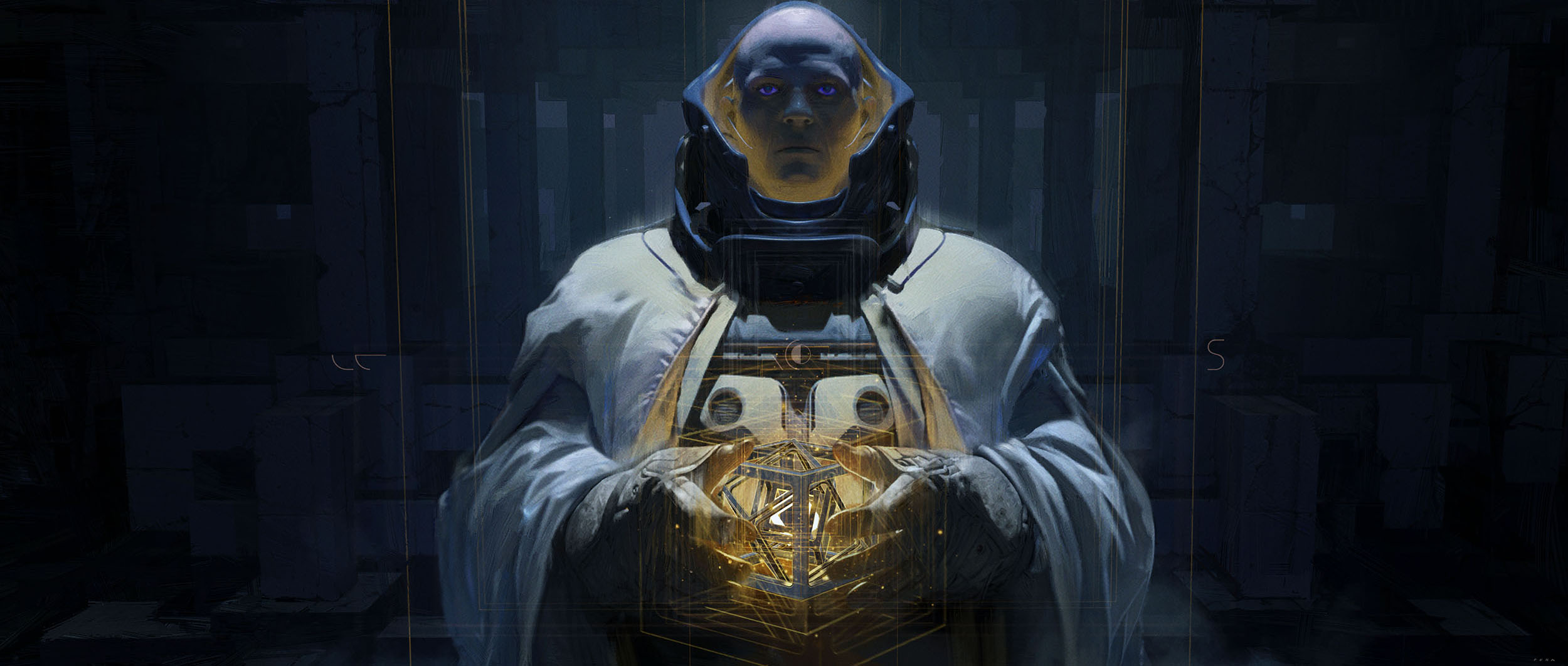
Eduardo Peña, Zolido: The Derelict King, 2023.
PROCESS AND PRACTICES
When discussing the value of Concept Art, it is important to understand its purpose as part of a collaborative process. Its place in creative pipelines is tied to the importance of reference, understanding the subject, and how to effectively communicate ideas. Consistent visual guides will not only enhance a project, but bring it to the next level starting from the very beginning.
A Concept Artist must not only have drawing skills, but an ability to create a consistent visual mood/style through research and collaboration. By creating a wide array of different options, they narrow down the most compatible ideas for a project, including the characters, environments, props, and all things worldbuilding.
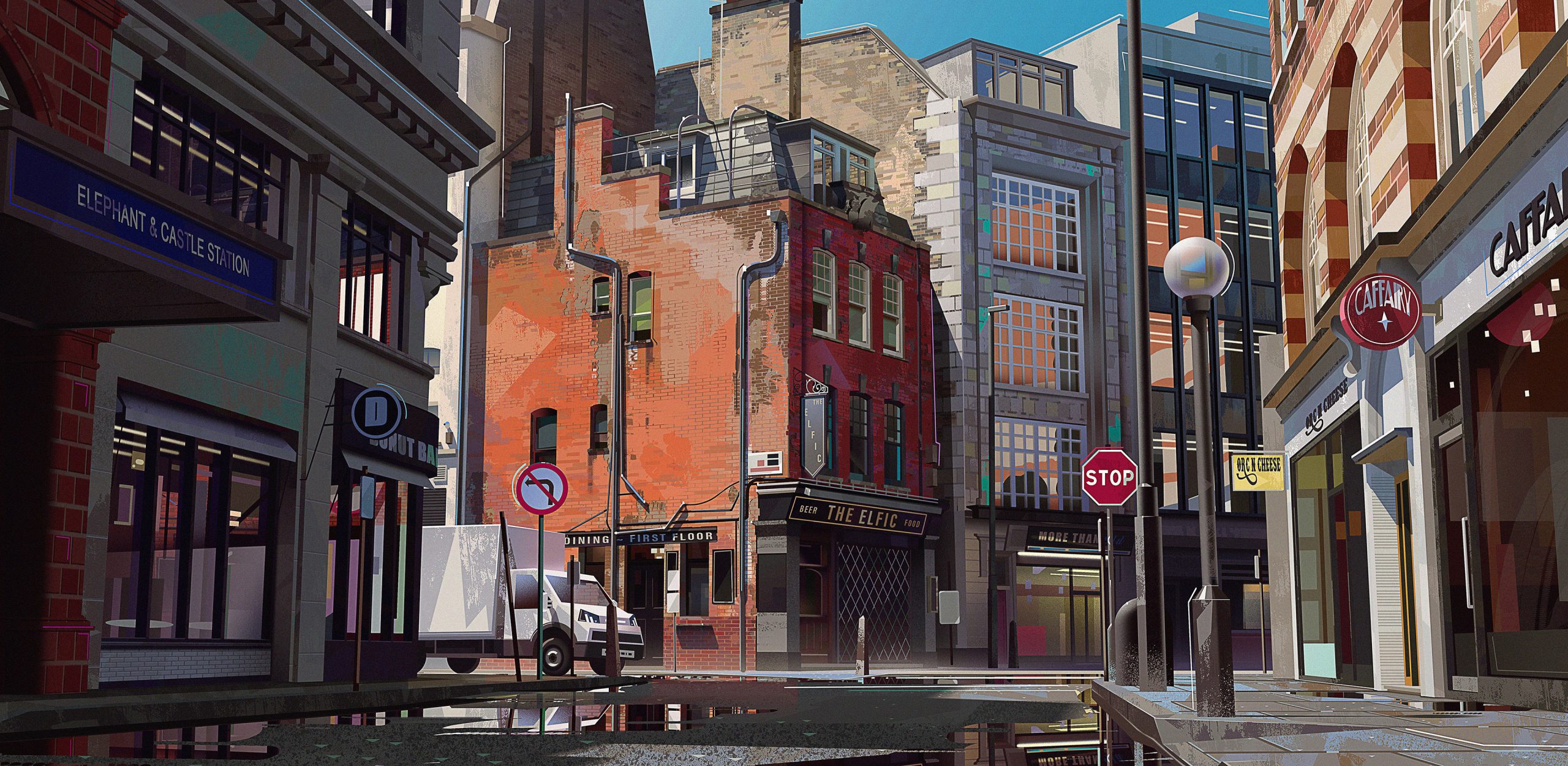
Junction Day, Léa Pinto, 2024.
EXPERIMENTATION AND COMMUNICATION
This experimentation is a building block of Léa Pinto’s work: “For me, the ‘reference’ and ‘understanding’ part is the most important. If I want my final artwork to be effective in production, it must be functional, and for that I must understand my subject(s).” Pinto describes herself as organized and a perfectionist, and one of her strategies is to create personal rules to follow so everything remains coherent. “I test a lot, and as soon as something suits me/suits the idea and emotion I’m looking for, I note it down.”
Testing and preparation stages are integral not only in Concept Art, but many different corners of the creative world. Illustrators and designers are problem-solvers, and creative problems are often solved through exploring as many different avenues as possible. Balancing efficiency and exploration leads to the best solutions for clients or studio executives.
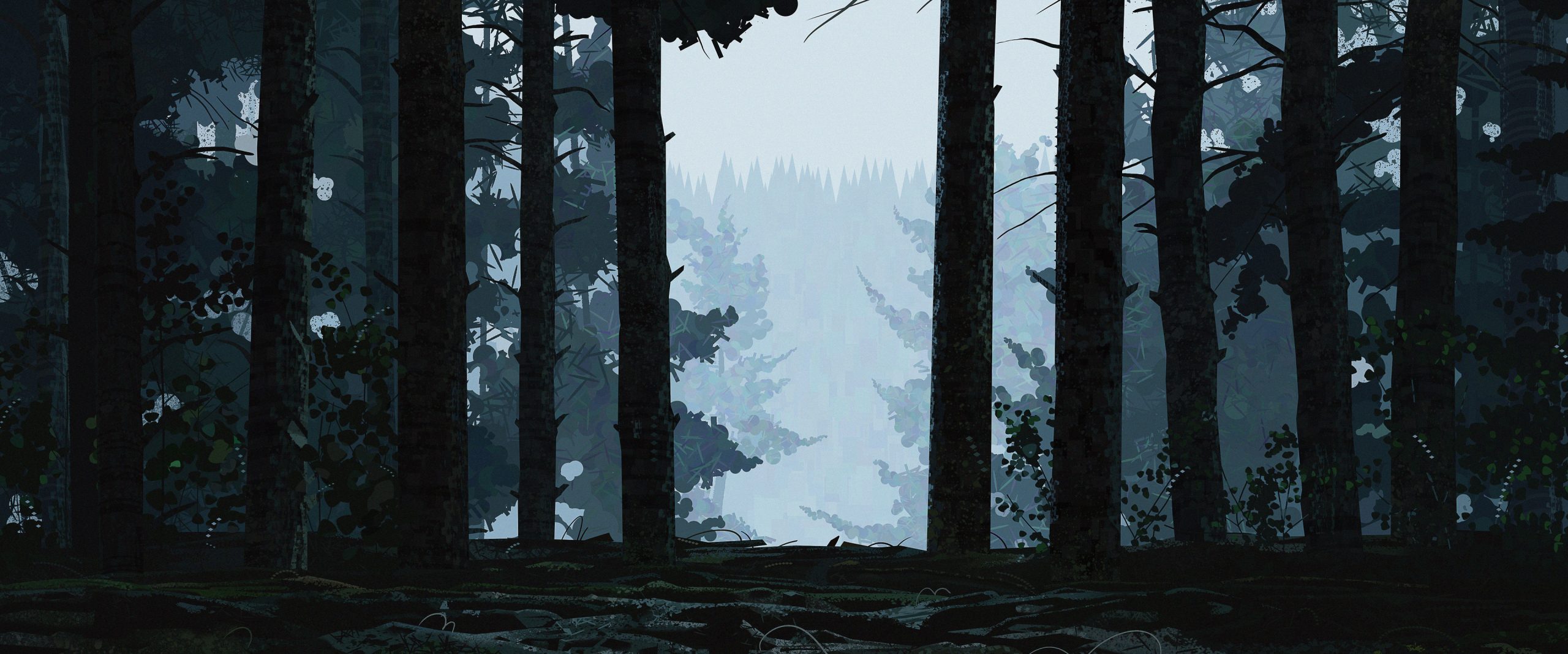
Léa Pinto, The Hunt, 2024.
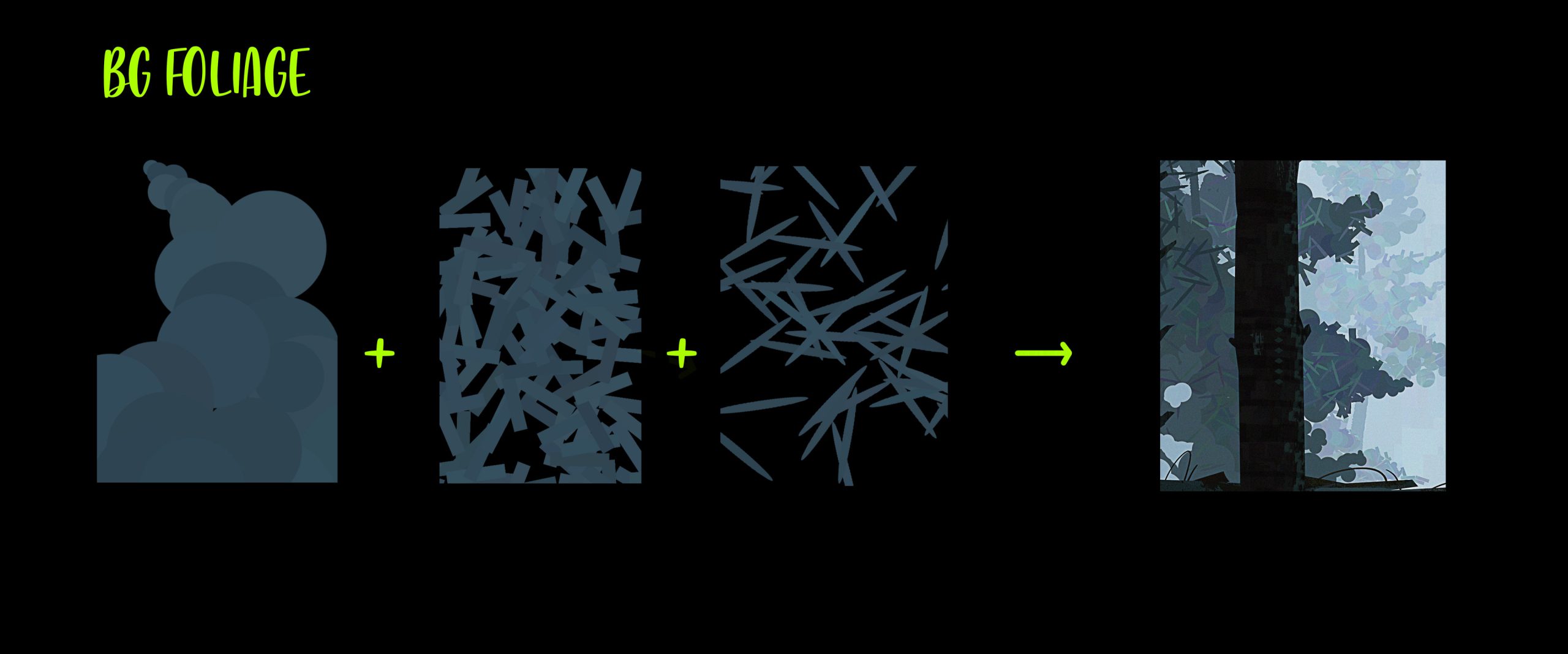
Léa Pinto, BG Foliage Process for The Hunt Paintings, 2024.
David Palumbo prioritizes the early stages in his painting process, relying on a consistent order of thumbnails, reference, sketching, and painting. Working with oil paintings increases the need for touching base with his clients: “I put a lot of effort towards early clear communication so that there are minimal changes needed on the finals.”
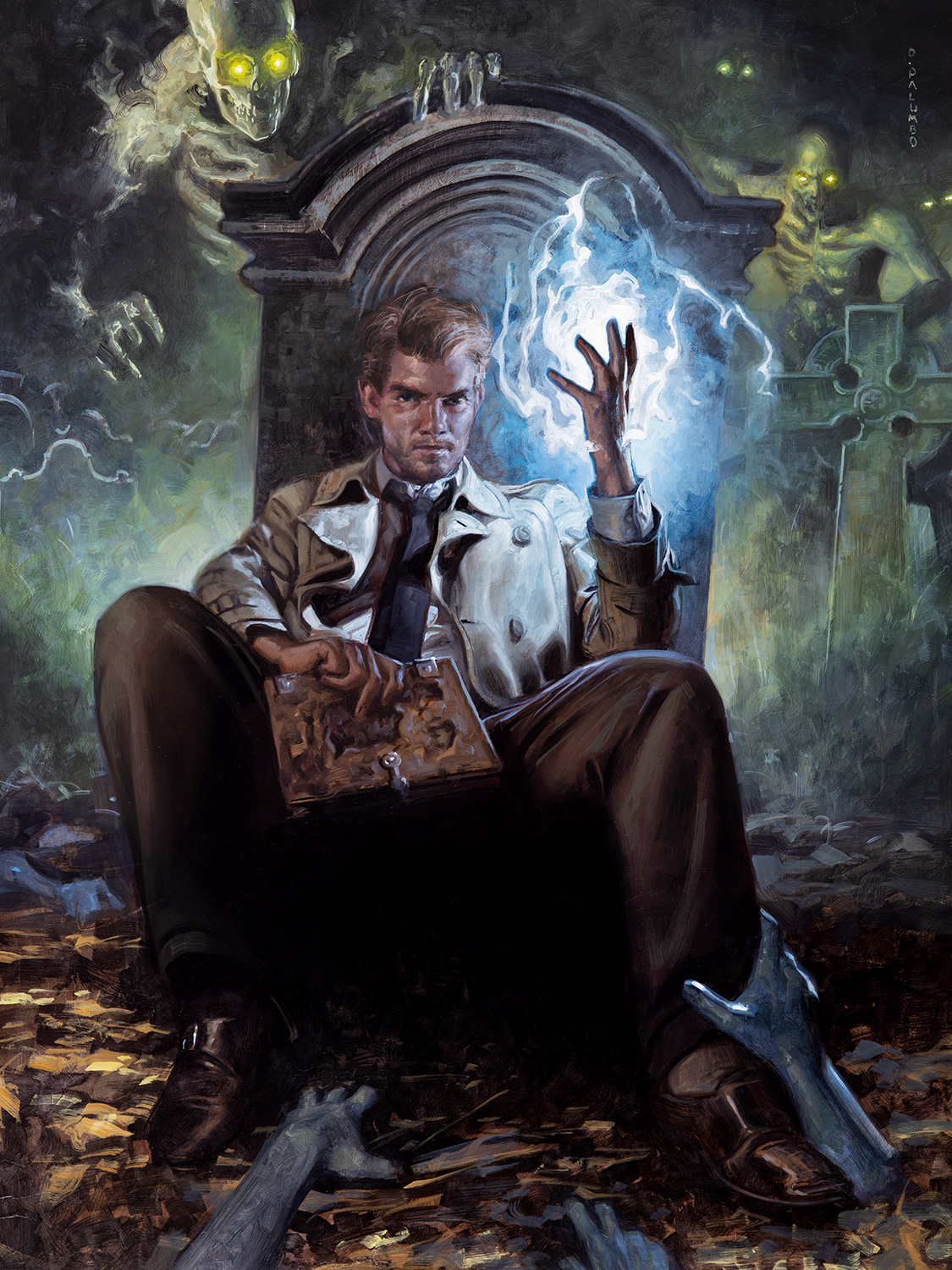
David Palumbo, Constantine, 2024.
Palumbo tailors his process towards his medium, using a mix of photos and 3D renders as reference and painting his sketches in oils rather than digitally to achieve a better outlook on the final piece. He states, “The bulk of my time on most pieces is prep work. The steps leading up to delivering a sketch often take as long or longer than the actual painting… I work best when I have time to ruminate and explore.”

David Palumbo, The Woman Whose Feet Didn’t Touch The Ground, 2023.
PURPOSES AND PIPELINES
Illustrations are made to serve a purpose and Concept Art is no different. Effective Concept Art helps maintain consistency through all production stages, providing a reference that the rest of the project can easily align with.
The exploration stage helps to identify potential issues, assisting teams in avoiding mistakes down the line. To create a character or world, you need to ensure that your designs function at their most basic forms. A flawed 2D design will be flawed when translated to 3D or put in motion. It is a Concept Artist’s job to approach boundless ideas with the right angle for a project, narrowing it down into a design that assists animators/modelers while remaining visually appealing.
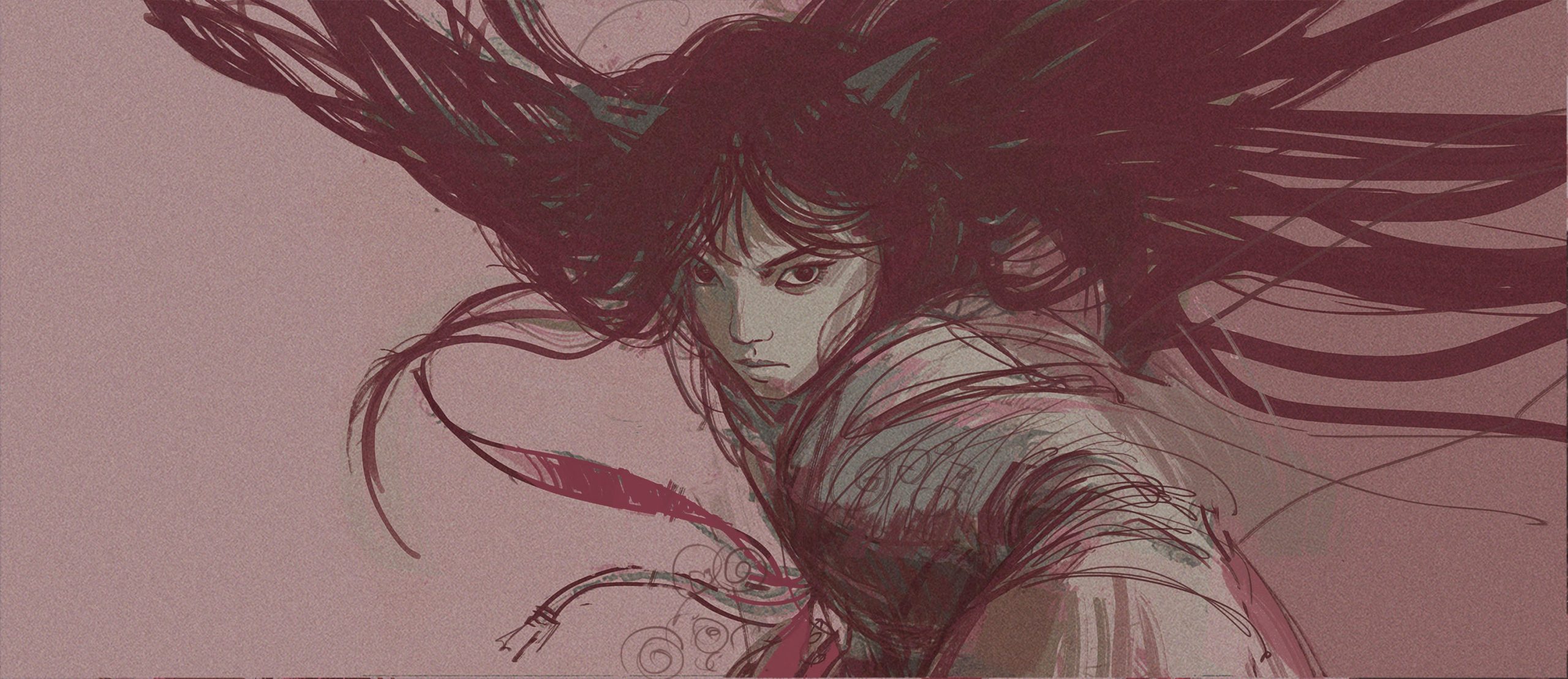
Eduardo Peña, Michis Sketch.
Eduardo Peña provides a valuable perspective both in regards to how he approaches his process and the purpose of Concept Art as a whole:
“For me, Concept Art is never a solitary act; it’s a collaborative conversation within a larger production ecosystem. My work exists to serve a director’s or production designer’s vision, so clarity and communication are essential from the very beginning.”
He goes on to emphasize that it’s just as much about creating work that functions within this pipeline as it is about making a beautiful final product. “Ultimately, effectiveness in Concept Art comes from balance: understanding the creative intent, respecting technical limitations, and delivering visuals that both inspire and serve the story.”
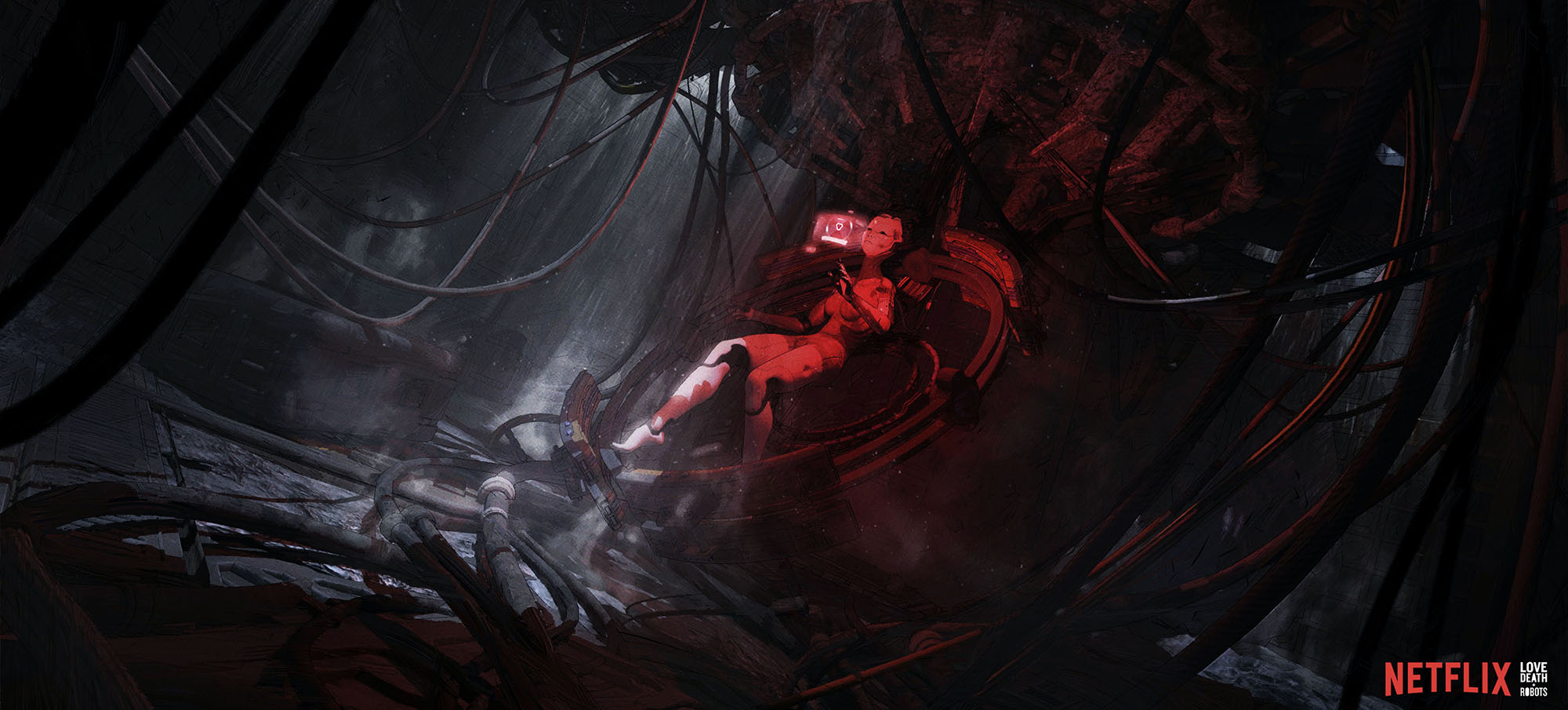
Eduardo Peña, Spider-Rose | Love, Death + Robots, 2025.
As the featured artist perspectives show, establishing clarity and consistency long before a final product takes shape is essential and ties to Concept Art’s overall purpose as a visual guide. Its effectiveness relies on a careful balance, especially because these steps are part of fast-moving, cost-conscious industries.
Understanding what Concept Art contributes and the process behind it is only the beginning. From shifting production expectations, to creative autonomy and the growing presence of AI., the next part of this series will examine the challenges that Concept Artists and Illustrators face today.
Part 1: Introduction & The History of Concept Art
Part 3: The Challenges