






Editor’s Note:
This is the first STUDIO STORIES written entirely from an in-person visit. I spent hours inside the studio, recording conversations with seven people across every level of the company. What follows is not a profile of a studio. It’s a thesis about what happens when a creative company decides that the people matter as much as the pixels.
When I walked into the VERSUS studio on 33rd Street for the second time, something had shifted, not in the studio, but in me. The first visit I came as a writer. The second time I came as a listener.
Because here’s the thing, every person I spoke to, from the founding partners to the producer who makes afternoon tea for the artists, to the executive assistant and office manager who’d been there six months, talked about this place like it had changed something fundamental in how they think about work. Not performed it. Meant it. And I wanted to understand why.
What I found wasn’t a secret. It was a conviction, carried quietly, daily, by every person in the building. The kind of conviction that doesn’t announce itself. It just shows up, on time, and does the work.
Faenza, Italy
Two years ago, in a ceramics museum in Faenza, Italy, I copied this quote into my notebook. I didn’t know then who it was for. Now I do. It captures what VERSUS refuses to surrender: the belief that creative work is not utility. It is presence. It is feeling. It is soul.
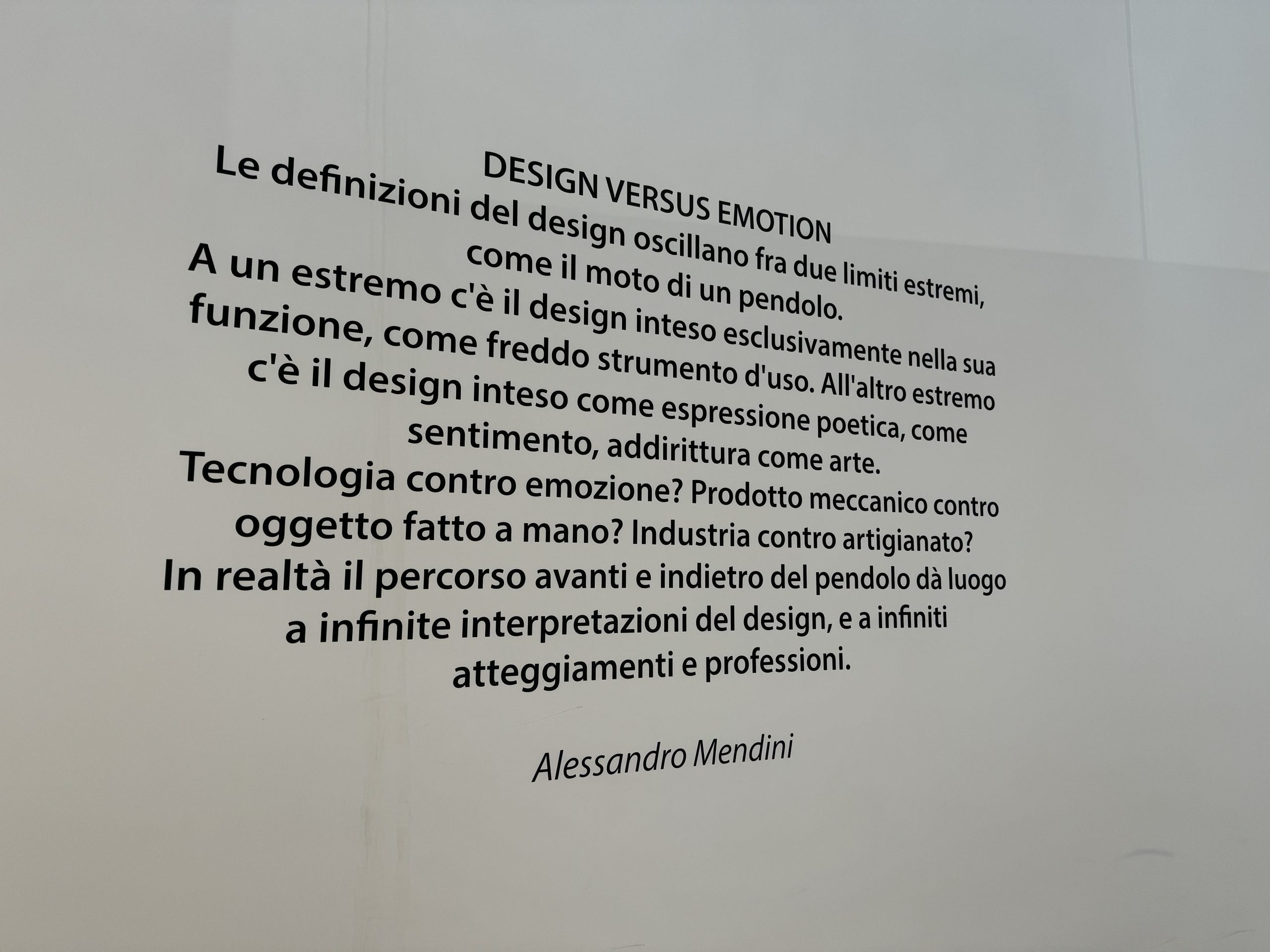
“Design Versus Emotion” — Alessandro Mendini, Museo Internazionale delle Ceramiche, Faenza, Italy. Photo by Carlos El Asmar.
DESIGN VERSUS EMOTION
The definitions of design oscillate between two extreme limits, like the motion of a pendulum.
At one extreme there is design understood exclusively in its function, as a cold instrument of use. At the other extreme there is design understood as poetic expression, as feeling, even as art.
Technology versus emotion? Mechanical product versus handmade object? Industry versus craft?
In reality, the back-and-forth journey of the pendulum gives rise to infinite interpretations of design, and to infinite attitudes and professions.
— Alessandro Mendini
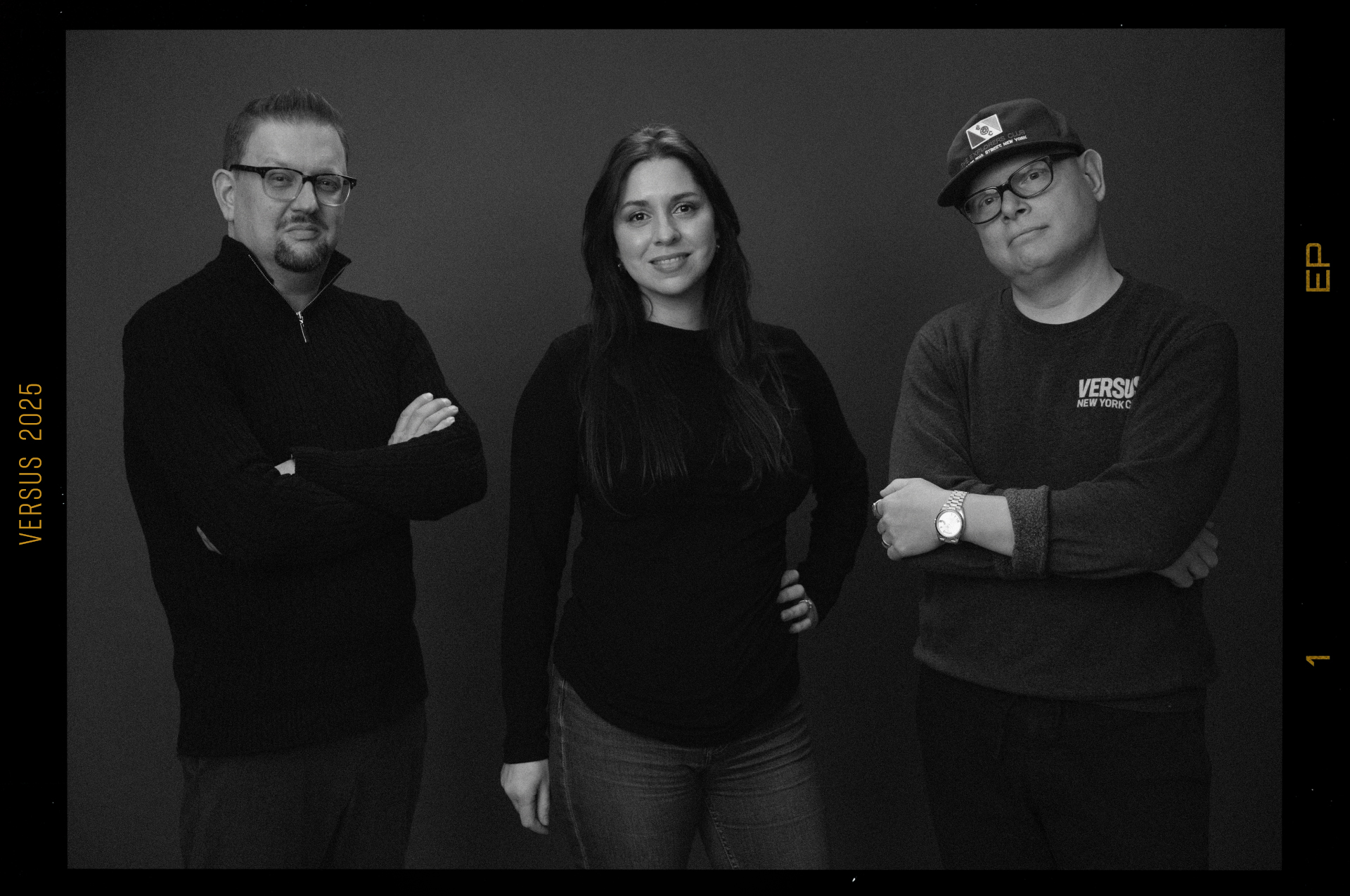
Rob Meyers- Managing Director, Partner | Samantha Louise – Finance/Operations, Founding Partner | Justin Barnes – Executive Creative Director, Founding Partner. VERSUS, 2025
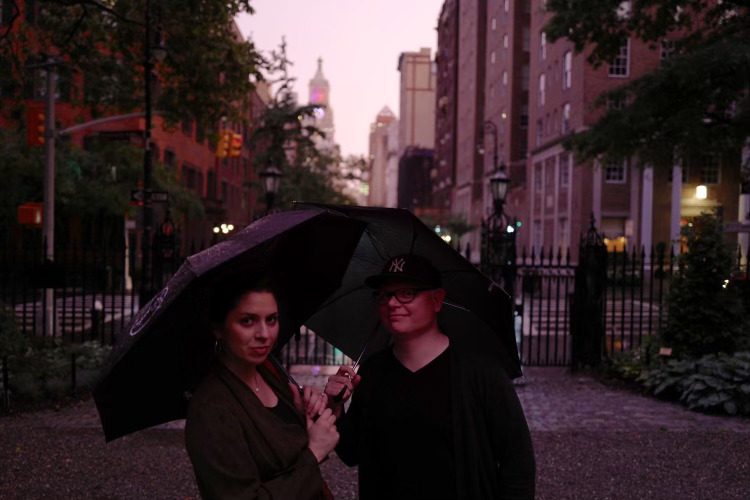
Samantha Louise and Justin Barnes, New York City. Before the studio, before the team, there was the hustle.
The First Trick
The best origin stories don’t start with a manifesto. They start with a small act of desperation.
When VERSUS was brand new, Justin Barnes says, the “office” was more concept than place. So they bought a burner phone for the company number. When clients called, Samantha Louise would pull up a YouTube clip called something like Sounds of the Office, the hum of keyboards, footsteps, distant chatter, and play it in the background so it sounded like VERSUS was already a busy studio with a real staff.
She’d answer brightly, professional as hell: Hello, Versus. Let me transfer you to Justin.
And then she’d hand him the phone.
"Their instinct was to build the feeling first and fight to make reality catch up."
It’s funny. It’s also telling.
Even then, their instinct wasn’t to play small. Their instinct was to build the feeling first and fight to make reality catch up. “It was insane,” Samantha says now. “20-hour days, seven days a week, going for it on all cylinders with no fear and no compromises.”
That was 2013. A single rented desk in a Manhattan coworking space. Within a month they’d expanded to a tiny private office, only to be displaced at Christmas by a larger tenant taking over the entire floor.
Twelve years later, VERSUS occupies a full floor on East 33rd Street, employs a global roster of talent, has sold shows to Paramount Plus and Hulu, launched a comic book at Comic-Con, built real-time animation systems, and just released a 400-page hardcover book and companion film that deliberately avoids talking about themselves.
But the feeling, that thing Samantha piped in through a burner phone speaker, is still the product.
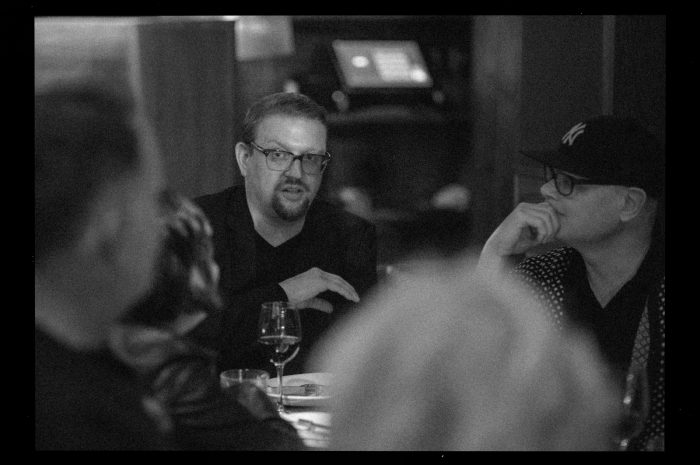
Rob Meyers and Justin Barnes. The conversation that built a partnership.
The Turning Point
If you want a studio’s true turning point, don’t ask about awards. Ask about the first moment the founders realized they might actually survive.
For VERSUS, early work like Uniqlo and Nike SB didn’t just bring credibility. It brought something more important: permission. Permission to stop feeling like impostors. Permission to think bigger. Permission to start building a studio, not just chasing jobs.
“Having such a big name early on meant a lot to us,” Samantha says. “It very much invigorated us to keep going. We never felt like this isn’t going to work.”
The “holy shit” moment came when success stopped being a lucky break and started becoming a pattern, and the workload started burying a two-person team. That’s when Justin made the call he’d been planning for years.
Justin had been offered the role of Executive Creative Director at Click3X, the studio where Rob Meyers was working. He turned it down, but not before making Rob a promise. “I told Rob, ‘The offer is amazing. This is a big studio, it’s a dream job, but I’m gonna say no. I’ll call you in a year or two when it’s time'” – meaning: when VERSUS was ready for him. True to his word, he did. Rob came on, heard the whole vision, and became a partner a few weeks later.
“One of the things that struck me working with Justin,” Rob says, “was that he never just answered the brief. He’d say, ‘Yeah, we could do it this way, but it would be so much smarter for them to do this.’ He’d answer the brief twice, once the way the client wanted, and another way he thought was better. He was the first creative I’d ever worked with who approached things like that.”
This became the DNA. Not defiance for its own sake, but the habit of looking at every problem and asking: What if there’s a better version of this that nobody requested?

“Our name is a statement.”
The Name as Operating System
Justin says they were “self-righteous” at the beginning, and he means it as a compliment.
VERSUS was built against what he calls the dinosaur legacy model: the studio that defines itself by a single lane, a single discipline, a single identity it can package neatly for clients. “I’d been freelancing all over the place – the Mill, Click3X – and there was always something missing. Studios were singular-focused: ‘We’re an animation studio, so we only animate.’ To me, if you really want to make interesting, original work, you have to bring all of that together.”
"To some studios, the lane is the safety blanket. To VERSUS, the lane is the trap."
So they built the studio around a different premise: the most interesting work doesn’t come from one voice doing one thing. It comes from multiple voices colliding.
“I think the only way you can be original,” Justin says, “is if a lot of different voices from different backgrounds and perspectives are all contributing on an idea. Then there’s a little piece of everyone from all these different places into a piece of work. If it’s just one person looking at things one way, it’s just gonna repeat itself.”
It’s a beautiful idea. It’s also an operational nightmare. Because a studio that refuses to be one thing has to solve a problem over and over again: how do you explain yourself without shrinking yourself?
VERSUS used to get hung up on it. Now they don’t apologize. “We can literally come at anything any way we want,” Samantha says. “Clients don’t come to us for one look. We’re inherently original.”
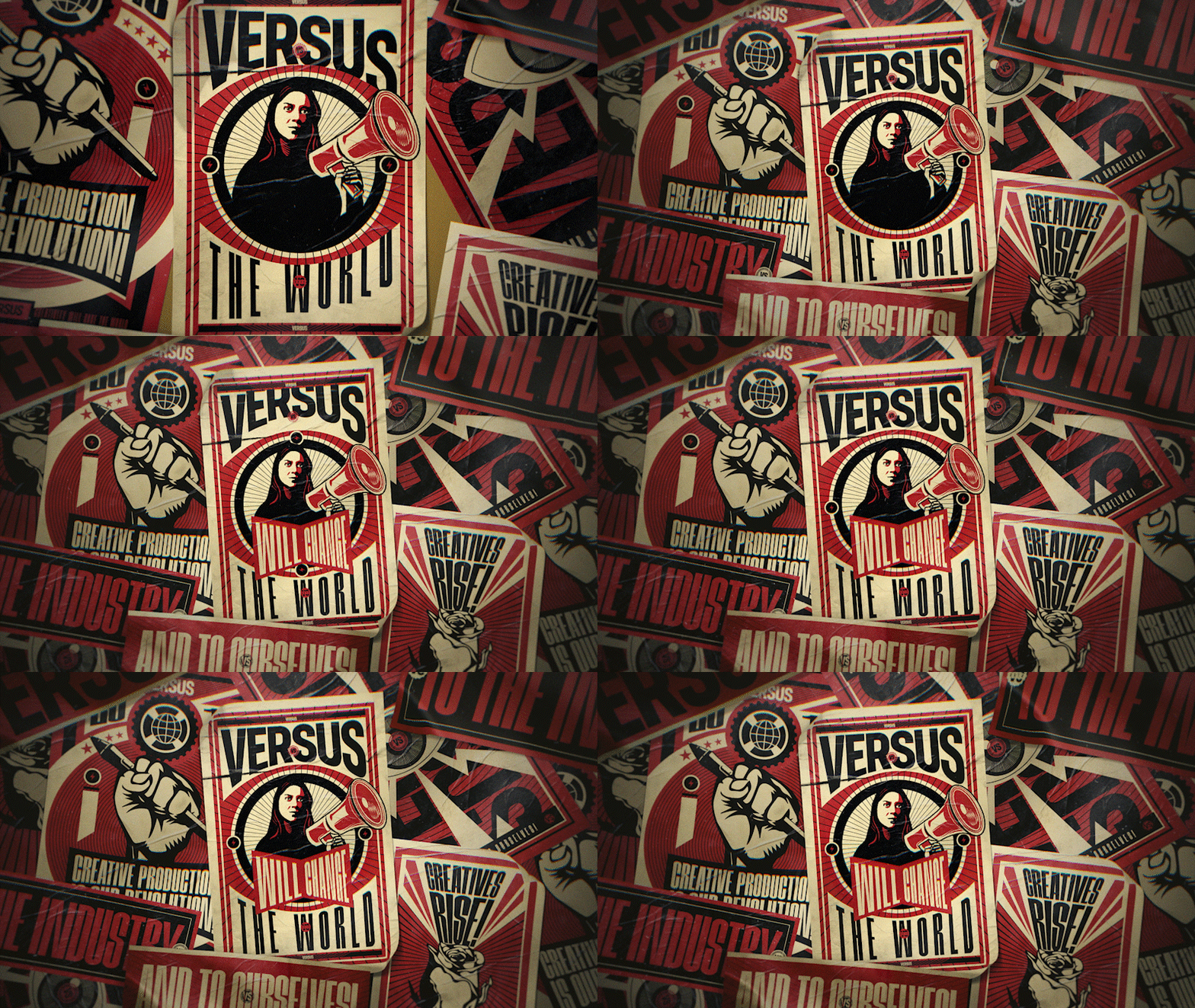
VERSUS The World — the studio’s visual manifesto in motion.
Clark Slater, a director who joined VERSUS to helm a feature film for their originals department, sees this from the inside: “They’re kind of writing their own story. I’ve worked at other agencies and production companies, and they all follow some kind of format. Here, if somebody has an idea, go to Justin, go to Rob, within days, there’s a deck being created, this room is full of people, and it’s happening. It’s not ‘let’s kick the can.’ The lack of bureaucracy, in a good way. I don’t see that anywhere else.”
Soukaina Alaoui El Hassani, a producer everyone calls Souki, puts it more viscerally: “You come to us with a challenge and we say, okay, we’ll take this on. We literally are constantly transcending the boundaries of what can be done within the timelines and budgets given to us. There are so many phenomenal people working here, we all take it as a call to action.”

The Triangle
Many studios are secretly built around one gravitational force. One taste-maker. One myth.
VERSUS is built around a triangle, and it’s one of the reasons people inside the studio sound so grounded when they talk about it.
Justin Barnes holds the creative hunger and the instinct for what is “uniquely VERSUS.” Samantha Louise holds finance and operations, the discipline that keeps ambition from becoming chaos. Rob Meyers holds the bridge between vision and execution, the business reality of turning big ideas into a stable, scalable organism.
This matters because the hard part of running a creative studio isn’t finding good taste. The hard part is making good taste repeatable without burning people down or turning the process into bureaucracy.
Rob describes the partnership dynamic as “interpretive dissent” – productive creative clashing that makes both sides better. “It’s not oppositional friction,” he says. “It’s like sharpening a sword.”
In practice, this means Justin might push for a pitch that’s wildly ambitious, the kind that makes a production team sweat. Samantha runs the numbers and tells him what it actually costs. Rob sits between them and figures out how to make it happen without breaking the team or the budget. “We have a very firm opinion on how things should be,” Rob says, “and we stand behind it.” But that firmness is tested internally before it ever reaches a client. The sword is sharpened at home.
“There’s no off,” Rob adds. “You’re never off. The three of us are willing to literally put everything on the line so everyone on our team can be happy with the work they’re doing. We sacrifice ourselves so we can have a successful company.”
But here’s where the triangle becomes something larger, because VERSUS has been deliberate about not keeping the power at the top.
“My dad said to me once,” Rob reflects, “that if you’re really lucky, it’ll be very easy to replace yourself. He meant that as you grow, you should find people who are smarter and more talented, and be comfortable letting them take the wheel. We’re finally in that place now, elevating the next generation of VERSUS. It’s not threatening. It’s really exciting.”

“Why Us?”
There’s a question VERSUS asks clients that many studios avoid because it’s risky:
Why us?
“When a big animated project comes in,” Justin says, “I’ll ask outright: Why aren’t you calling Marcel? Why aren’t you calling Buck?” It’s provocative, but it forces the client to name what they actually want beyond production.
The answer, when it’s the right fit, is usually not your style. It’s something like: You approach things differently.
That becomes the brief. Then the real VERSUS question kicks in: What can we do through the VERSUS lens that would be different than any other studio?
Souki sees this from the production side: “When we get a brief, we give them what they say they’re looking for, and then we give them something better. A lot of people think creative is this completely figured out thing from the get-go, but it’s a process. Within that process, you have to give enough leeway for it to evolve into something better. Having the space and the security to allow that is very rare.”
This is one of the most transferable lessons in the whole story, for creatives, storytellers, Motion Designers and studio owners alike: Don’t start with what do they want? Start with why are they here, specifically? Then design your response around what only you can do.
That’s not branding. It’s survival. Because in a market full of talented studios, what wins is not competence, it’s point of view.
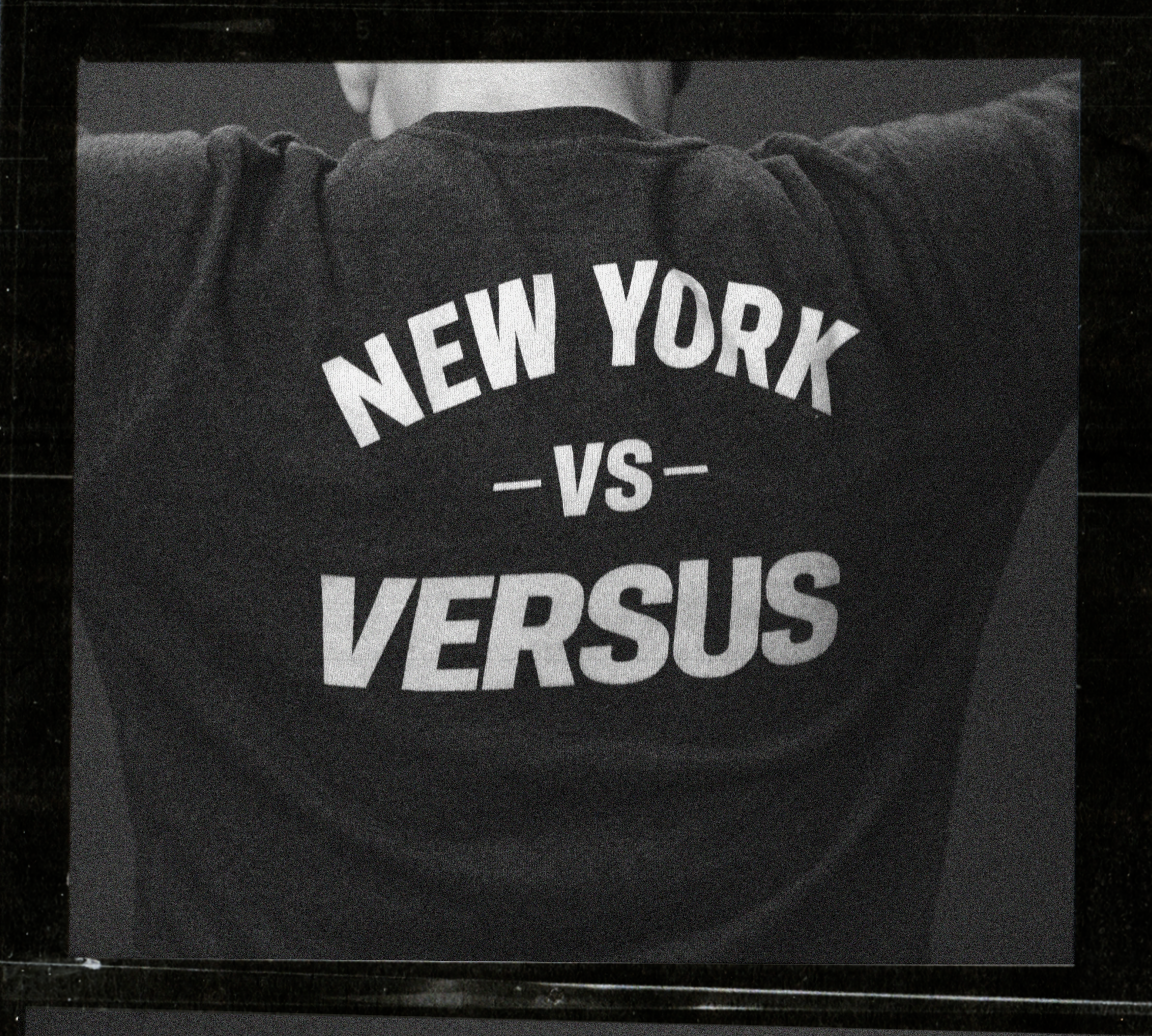
New York -VS- VERSUS. The city isn’t the backdrop. It’s the engine.
New York Is Not the Backdrop — It’s the Engine
VERSUS doesn’t just happen to be in New York. New York is in the work.
“New York is a huge part of our DNA,” Justin says. “We draw our hustle, determination, and fearlessness from the city.” When asked what inspires him outside the studio, his answer is instant: “Architecture, art. And to be honest, New York City is just everything.”
But what makes the studio’s relationship with the city interesting is that it’s not parochial. VERSUS is a New York studio built by people from everywhere.
Clark Slater grew up 15 blocks from the studio, a Manhattan native born in 1990 who left for three years to work at Vice in Mexico City, then came home. Souki arrived from Morocco, has been in New York on and off for 12 years. Anna is Puerto Rican and Cuban, studied in Florence, and landed at VERSUS six months ago. Samantha built the early operation from Brooklyn. Rob brought 30 years of industry experience from across the city’s post houses and agencies.
The studio reflects what New York has always promised and rarely delivered: a room where different origins collide into something none of them could have made alone.
“Our studio is made up of people from all over the country and the world,” Justin says. “We believe in meeting talent where they are. With tools like LucidLink, cloud rendering, and Zoom, we can work in whatever way best serves the creative.”
But the physical studio matters. You feel it when you walk in, the kitchen where people decompress at the end of the day, the edit suites where Anna sits in on sessions she wasn’t assigned to, the phone booth where an answering machine once collected hundreds of messages from the industry. VERSUS is a digital-age studio that still believes in the power of a room.
Clark puts it simply: “At other places I’ve been, if the agency’s not bringing in enough work, the originals suffer. Here the agency and the originals operate at the same speed, in parallel, two different things married under one roof.”
That’s a very New York sentence. Two different things, married under one roof, making it work through sheer will and proximity.
The Enemy: The Age of “Good Enough”
VERSUS is not anti-AI. They use it. They’re fluent in it. They just brought on Steven Weinzierl as Executive Creative Director, a live-action director and designer who Rob describes as “fearless when it comes to AI, training himself on all the tools for years.”
What VERSUS is afraid of is something more insidious: a new creative standard where prompts replace vision and craft collapses into “good enough.”
“That’s what scares us about AI,” Justin says. “Are we entering the age of good enough? We didn’t work this hard to be good enough. We didn’t come this far to only come this far.”
They have a vulgar, oddly clarifying internal motto: they “make AI our bitch” – meaning AI doesn’t get to talk them into ideas they didn’t already have. AI is a tool, not a compass.
That means AI enters their pipeline at specific stages, accelerating research, generating visual options during concepting, compositing elements in post, but never originating the idea. The creative direction is always human first. AI serves the vision; it doesn’t set it.
Kathryn Henderson, Director of Creative Operations, describes a more pragmatic integration: “It isn’t done mindlessly, but sometimes you have to do to be able to analyze how it’s working. Learn as we go, learn as we grow. There has to be strategy, but if you think too much, you never do.”
Clark, who comes from a documentary background, voices a quieter concern: “I’ve been seeing a lot of AI videos on Instagram, and people in the comments are calling it out, ‘This doesn’t look real.’ I think maybe it will get so crazy that people will long for real, authentic stuff again.”
This is the second transferable lesson, and it’s not about software: protect the source of your ideas. If the tool becomes the author, you become replaceable.
"If the tool becomes the author, you become replaceable."
VERSUS is fighting for something older than technology: taste, judgment, a human standard.
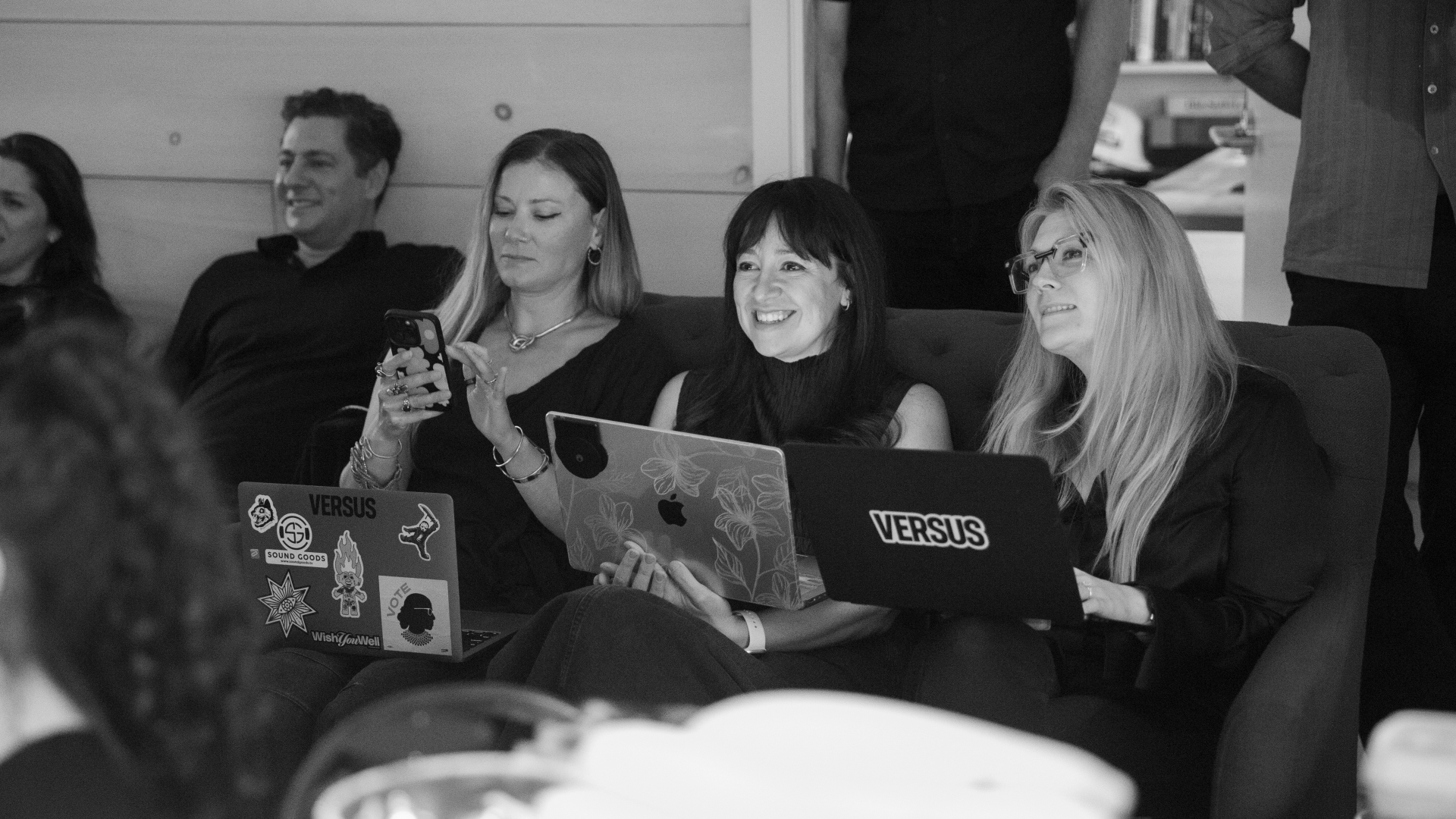
The production team at work. At VERSUS, operations isn’t paperwork, it’s the culture’s immune system.
The Quiet Backbone
Every studio has a visible identity, the work, the directors, the public voice. But the difference between a studio that makes great work occasionally and a studio that sustains it is almost always hidden in the less glamorous layer: operations.
Kathryn Henderson sits at the center of that layer. She came from managing a 200-person NBC operation, and she speaks to the unromantic daily craft of aligning people, reducing friction, and preventing chaos from swallowing the work.
“There should be chaos,” she says, “just the same way there should be friction, because it makes things better. But we shouldn’t make the clients uncomfortable with it. We should be controlling the chaos and using it to our advantage.”
She draws from the hospitality world, front of house and back of house. “Every single job we have, there is a plan. But not everybody needs to know the whole plan at all times. It’s about narrowing the focus, helping people know what needs to be going on right now.”
Rob recognized the need: “When we brought Kathryn in, it was largely to recentralize production operations. Because if you’re not concentrating and honing that continually, it can get messy, and everything is affected. It’s not just budgets. It’s the day-to-day calendars of every artist. It can be dismantling for a whole company.”
Kathryn describes a hiring philosophy that mirrors the studio’s creative ethos: “Before we invite anybody in, it’s what’s the plan for success for that person? Nobody enters the studio without support. We’re a small enough team where one person out of 30 or 40 is a very big jump.”
And then there’s Desirée Abeyta, Head of Production, who Kathryn describes as a breakthrough: “I finally feel very complete. Now that I have Desirée, it’s like having two of me. We have conversations about the same things, she puts her brain on it, and the two brain powers together, really great.”
Creative operations, at VERSUS, isn’t an admin function. It’s a cultural function. It’s how a studio protects attention, the only resource creativity actually needs.
The Front Door
If you want to know whether a studio’s culture is real, don’t read the website. Walk in the front door.
Anna Miranda-Molinos has been at VERSUS for six months as Executive Assistant and Office Manager. She’s the first voice many visitors encounter. And in a studio that depends on trust, risk, and collaboration, the first contact isn’t trivial. It’s part of the system.
“I try to treat everyone the same, just overall welcoming,” Anna says. “The same experience I had when I first joined. Everybody was so welcoming. From when you first come in, if you grab a drink or snack in the kitchen, someone’s likely to greet you and start a conversation. You can have all the talent in the world and all the awards, but people will want to work with you based on how you treat them.”
She’s Puerto Rican and Cuban, studied in Florence, and arrived at VERSUS with something the studio seems to value above all credentials: curiosity. “In some companies, there’s this unspoken culture of you stay in your role and don’t look sideways. People here actually invite you. ‘Hey, why don’t you sit in on this?’ Even Souki, who’s a producer, or Clark, who’s a director, they’re open to me just sitting next to them in a meeting or in the middle of editing a video, and me just seeing how things are done.”
Her most VERSUS moment so far: a swag collection meeting where every department crammed into an edit room. “It was the craziest back and forth of ideas and nobody blinks. ‘We want to do pajamas? Let’s do it. A bath set? Okay.’ All hands on deck. That’s very VERSUS.”
And her weirdest request? “Somebody came up to me my second week and asked, ‘How much do you know about time traveling conspiracy theories in the early 2000s?'”
She didn’t blink. “Not that much, but tell me, what do I need to know?”
"Trust leads to safety, safety leads to risk, risk leads to originality."
Hospitality sounds soft until you realize what it enables: trust leads to safety, safety leads to risk, risk leads to originality.
A studio can be creatively bold and still feel transactional. VERSUS seems to understand that the emotional experience of the place is part of the product.
The Trenches
Souki speaks from inside the pressure. This is where the culture becomes undeniable, because it’s tested under deadlines, not in slogans.
“My secret to managing chaos? Laughing through it,” she says. “Stress is unnecessary. We’re already in the mud, right? Let’s laugh at the situation. ‘Hey, this is what they want. Okay, then we’re just gonna have to do it. But I am here with you.'”
She means it literally: “I don’t leave until my artists leave. I’m not out here clocking out and being like, ‘here, just do this.’ When I say I’m in the trenches, I’m in the trenches. First one in, last one out.”
Producers are the emotional architecture of creative work. They absorb conflict, hold timelines, protect teams, translate between visions and realities. When someone says a studio “gives a shit,” they often mean: the producers give a shit, and leadership lets them.
“I was always scared to enter this industry,” Souki says, “because I thought I’d have to have my back to the wall in every room. But at VERSUS, you don’t feel that. It’s ‘What do you need? Let’s talk about it. How can I support you so you can show up, not for the work, for yourself?'” She pauses. “They’ve supported me through every stage of building my life here,” Souki says. “My bosses are like, ‘What do you need? How can we help?’ That kind of support makes me want to show up every single day and go above and beyond.”
Clark Slater tells a parallel story, one about creative trust. Hired to direct a feature film, he struggled with three editors who couldn’t execute his vision. He cut a scene himself to show the vibe. The team saw it and said: “Who cut this? It’s great.” He said it was him. Their response: “Then why don’t you just edit your film?”
“That was a very VERSUS moment,” Clark says, “because most places would be like, ‘You have to work with these people.’ Here they said, ‘Do it.’ They let me take the keys to the car.”
He describes the studio in one word: Trailblazing. “Literally making your own trail, your own camino, your own destiny.”
The Age of Enough — Or, Why the Choir Matters
(For the full breakdown of the We Are Versus book and film project, see our earlier feature: “We Are Versus, A Love Letter to Creativity and the People Behind It”)
In an industry drowning in bold ideas, VERSUS did something stranger than making another highlight reel: they handed the mic to their community.
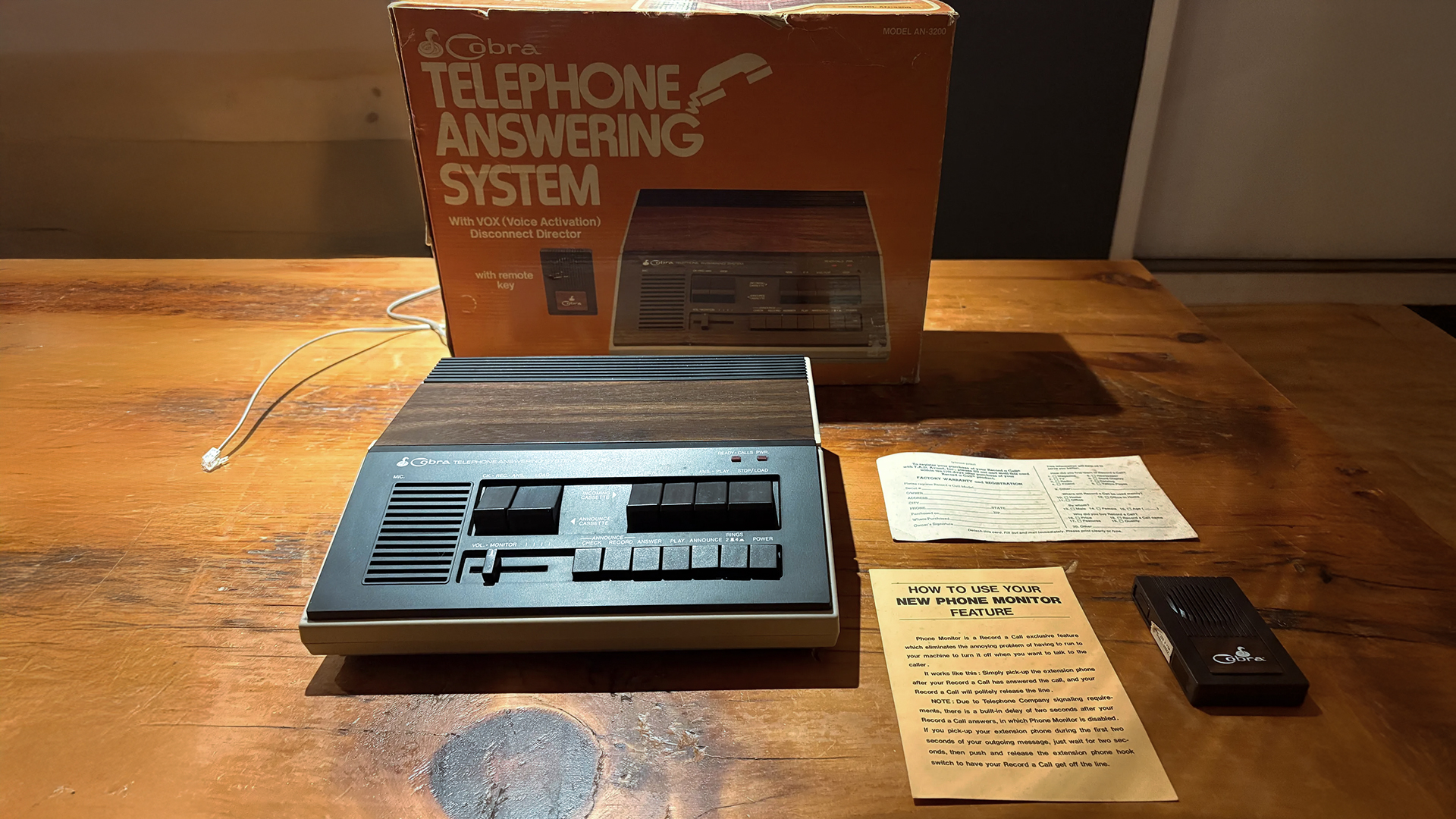
A vintage answering machine. A phone booth. Seven microphones. Hundreds of unscripted messages from collaborators, clients, and friends about what creativity means to them, layered into a film and accompanied by a 400-page book that says almost nothing in words.
“Why would we make an anthem reel where we talk about ourselves?” Justin says. “I’d rather have the community talk about the community.”
The project, inspired by early 90s hip-hop, where artists would set up hotlines for fans to call and leave voicemails that ended up on albums, was deliberately analog, deliberately tactile, deliberately difficult. “Richard Serra once said, ‘When you come to a fork in the road, go the hard way, because everyone else is going the easy way,'” Justin says. “We could have done some big AI project. Instead we got back to making.”
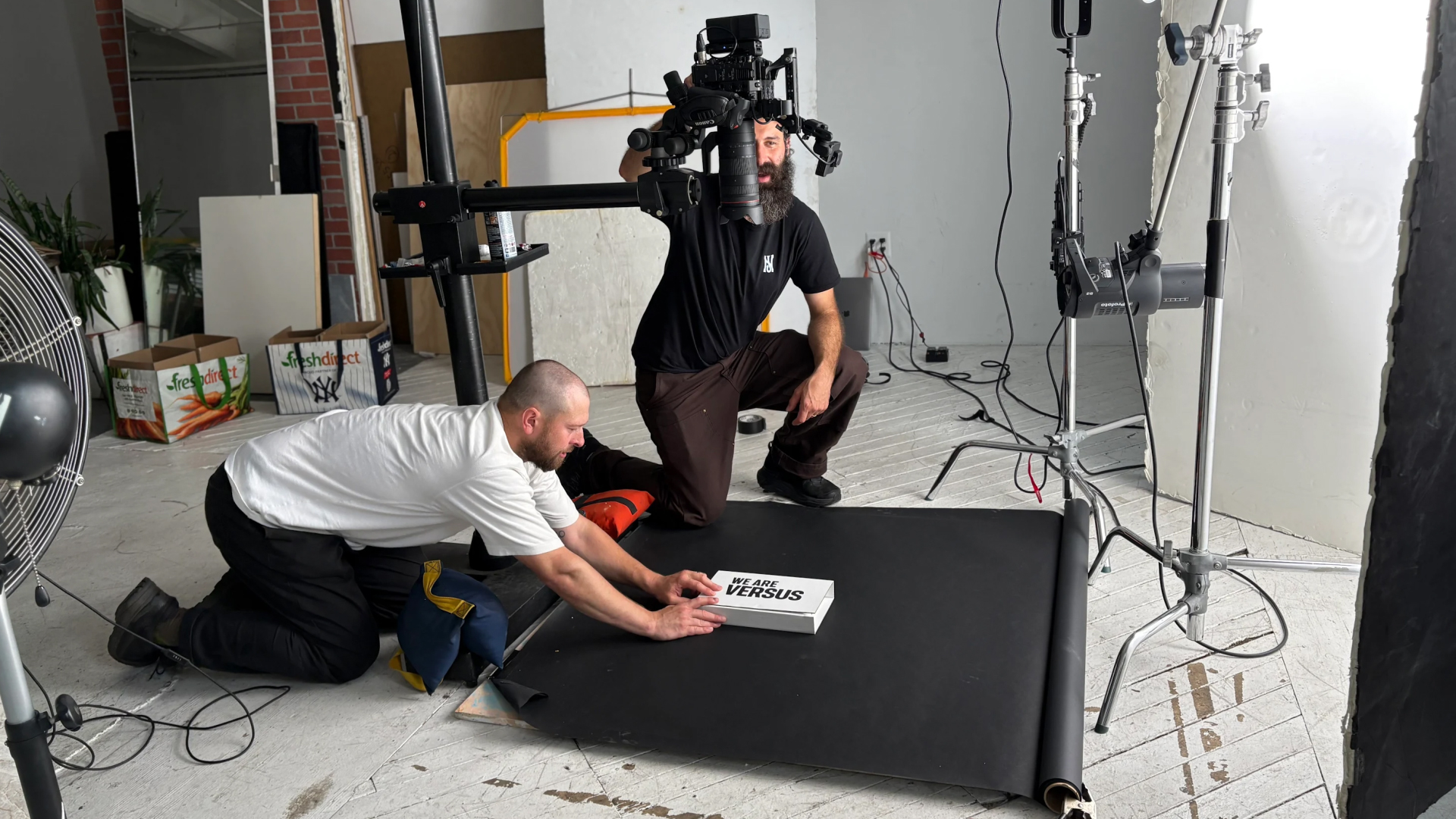
"They treated a $30 vintage machine like it deserved a cinematographer."
What matters here isn’t the book. What matters is what the book reveals about the studio: that after 12 years, VERSUS looked inward and decided the most honest self-portrait wasn’t a portrait at all.
It was a mirror held up to the people around them.
“I want everybody to recognize that they were a part of something very special,” Rob says. “I’ve been in enough places to know when something is unique and captures a time, a place, and a creative drive. I want everybody to know they were a part of that.”
Kathryn, who has watched the studio evolve from the inside, adds: “So much of the base and the heart of VERSUS is still there. How do you keep what made VERSUS special while still growing? That comes from the owners. They haven’t left their business just because they’ve got more people. They’ve become more involved.”
What the Community Gets From This Story
So what is it that I heard in those interviews? Why do employees talk about this place like it rewired something in them, without sounding coached?
Because VERSUS is offering something scarce:
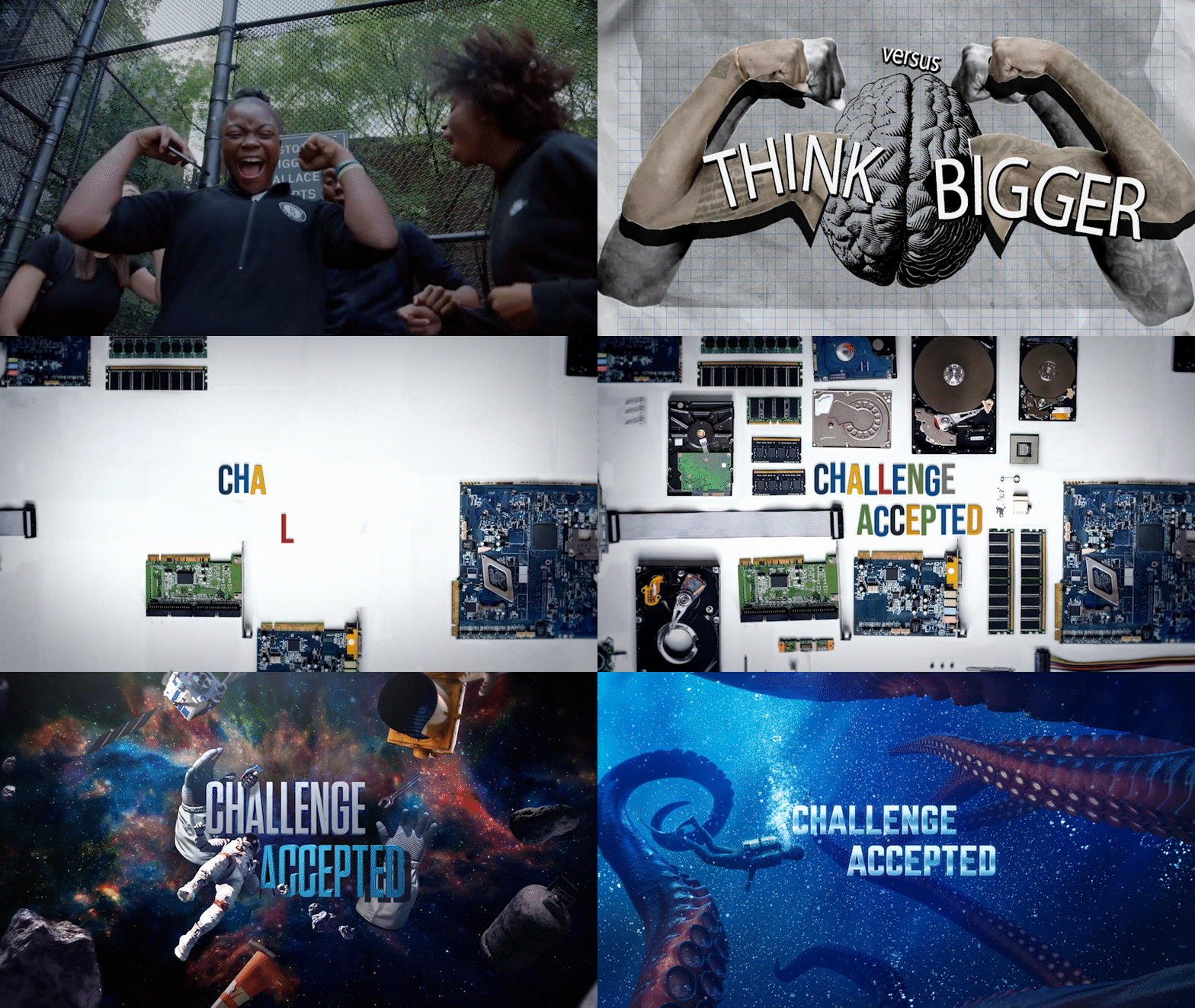
Permission with expectations. People are allowed to be weird, but they’re expected to be excellent. The studio doesn’t lower standards to create comfort. It raises support so standards can remain high. “Challenge accepted,” Kathryn says of the VERSUS mindset. “You choose to wake up every day. You just keep going.”
A lens, not a style. They don’t sell a look. They sell a way of seeing. That means the work can evolve without the studio losing itself. “We become more VERSUS the bigger we get,” Justin says. “It’s crazy.”
Holistic thinking. Justin describes thinking as much about the work as the people who will make it, where it will live, how it will resonate. This is a studio training people to think like owners of ideas, not executors of tasks.
Structure that protects play. Creative operations isn’t paperwork. It’s a shield that gives creativity room to breathe. “If your process is chaos, your culture becomes crisis management,” as Kathryn’s work demonstrates daily.
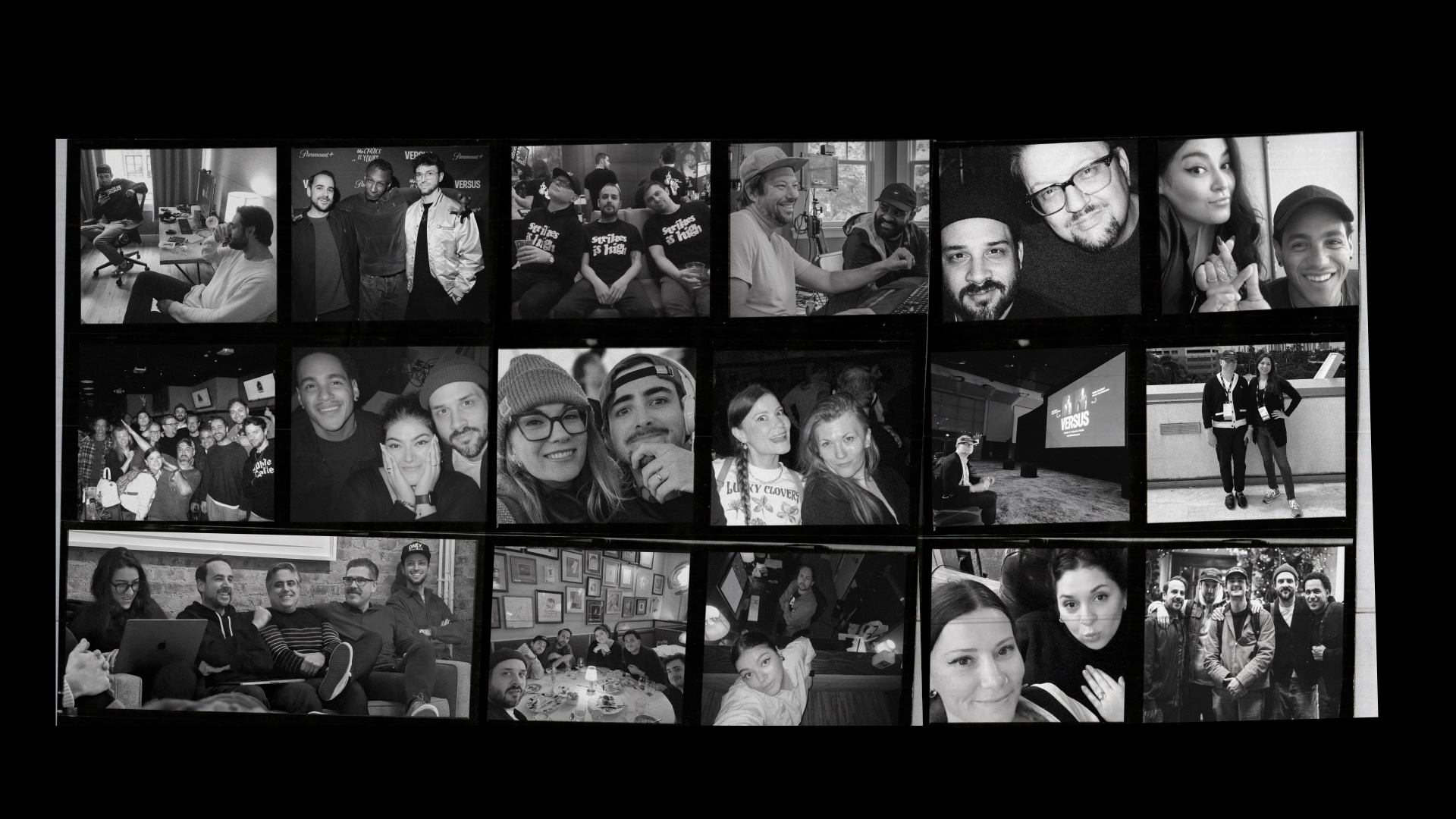
Community as practice. “The heart that we put into the work is the heart that we put into each other,” Souki says. “When they say they’ve got you and they have your back, they mean it in the full sense of the word.”
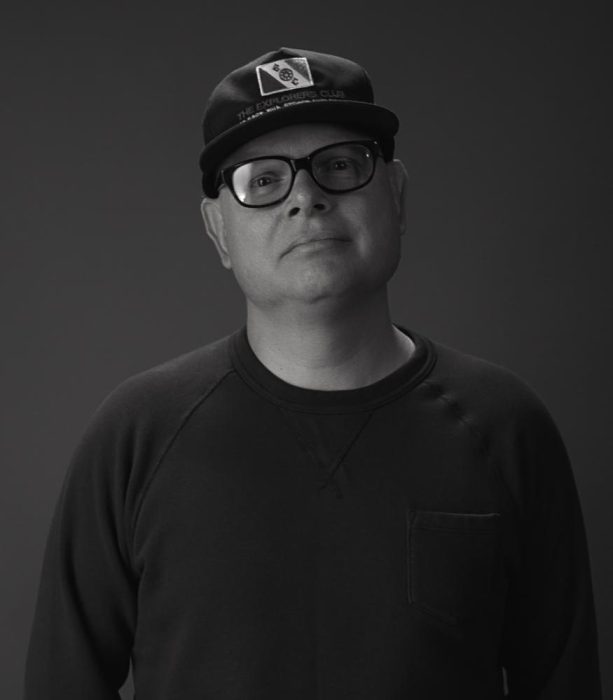
Justin Barnes, Executive Creative Director and Founding Partner. “Thank you, and let’s keep going.”
The Message
I asked Justin: If you could call that answering machine again today, what message would you leave?
“I’d say thank you,” he says quietly. “To the team, of course. We set out to build a studio that felt very different, very interesting, that cared deeply about the work, and I think we’re achieving that daily. Thank you to every client who’s trusted us. Thank you to every person who’s ever worked here. Thanks for believing in the studio. It’s a lot to ask someone to come work here and believe in this crazy idea and be so busy and do all this work. So yeah, thank you, and let’s keep going.”
Anna Miranda-Molinos, six months in, offers the newest voice in the room, and maybe the most revealing: “I wake up and I tell myself, I’m so lucky to be in a world where I can explore. There’s just so many possibilities, so much out there we can discover. I think that’s what VERSUS embodies. The privilege of having the opportunity to explore.”
And there it is. The deeper story, the one my antennae caught in every interview:
VERSUS is not winning because it’s louder. VERSUS is winning because it’s intentional, about the work, about the people, and about the standard it refuses to let die.
"VERSUS is not winning because it's louder. VERSUS is winning because it's intentional."
In an era obsessed with automation, they made a choir. In an industry chasing “good enough,” they chose heavy. Expensive. Human.
“We are all VERSUS.”
The VERSUS Rapid Fire
- Describe VERSUS in one word: “Trailblazing” – Clark Slater | “Transcending” – Souki | “Fearless” – Rob Meyers | “Feelings” – Justin, Samantha & Rob (all three said it independently)
- Holy shit moment: Having to physically run a hard drive to CBS headquarters for an NFL segment about to air, while the streets were shut down. “I might have lost a year off my life.” – Rob
- Weirdest request: “How much do you know about time traveling conspiracy theories in the early 2000s?” – asked to Anna, on her second week
- Hidden talent: “Souki, I didn’t know she’s classically opera trained. We went to karaoke and I was blown away.” – Clark
- What they do differently: “They give a shit. It’s as simple as that.” – Souki
- AI philosophy: “We make AI our bitch. We never let AI talk us into an idea we didn’t already have for ourselves.” – Justin
- Being VERSUS on a Monday morning: “Challenge accepted. You choose to wake up every day.” – Kathryn
- Future in one word: Community
VERSUS is a creative and production studio built to defy expectations and challenge convention, driving brand and entertainment into new creative territory with bold ideas, fearless originality, and innovation-led craft. Founded in 2013 by Justin Barnes and Samantha Louise. www.weareversus.tv