





Editor’s Note:
This piece began with an email from a young director we had never heard of, pitching a spec car commercial made with no money and eighty volunteers. It could have been a short post. Instead it became something else: a conversation about what happens when someone refuses to wait for permission, and what the rest of us might learn from watching her refuse.
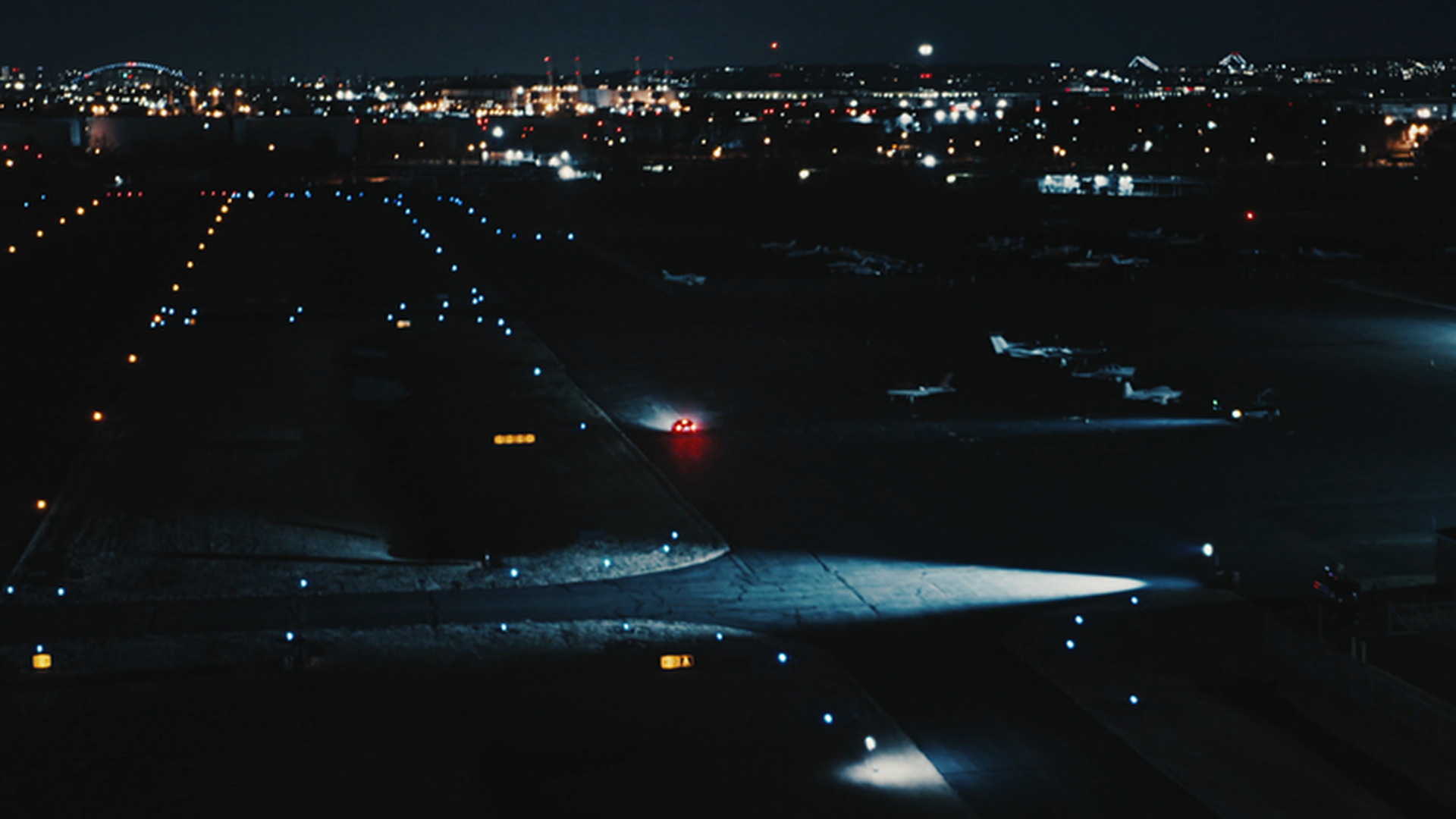
Drive it like You Stole It – Still
The Dare
At first it was a dare. Not against anyone in particular, but against the math itself.
Automotive advertising is one of the most expensive verticals in the industry. The budgets are enormous. The trust required is deep. The path to directing one is long, credentialed, and gatekept at every turn. And Breanna Lynn, twenty-six years old, a director and producer working out of New York and Los Angeles, decided she was going to make one anyway. With no client. No agency. No brief. No budget. Not a dollar.
She wanted to see what she could get away with.
Hence the title.
“We were proving that when you believe in what you are doing enough, the rules begin to bend.”
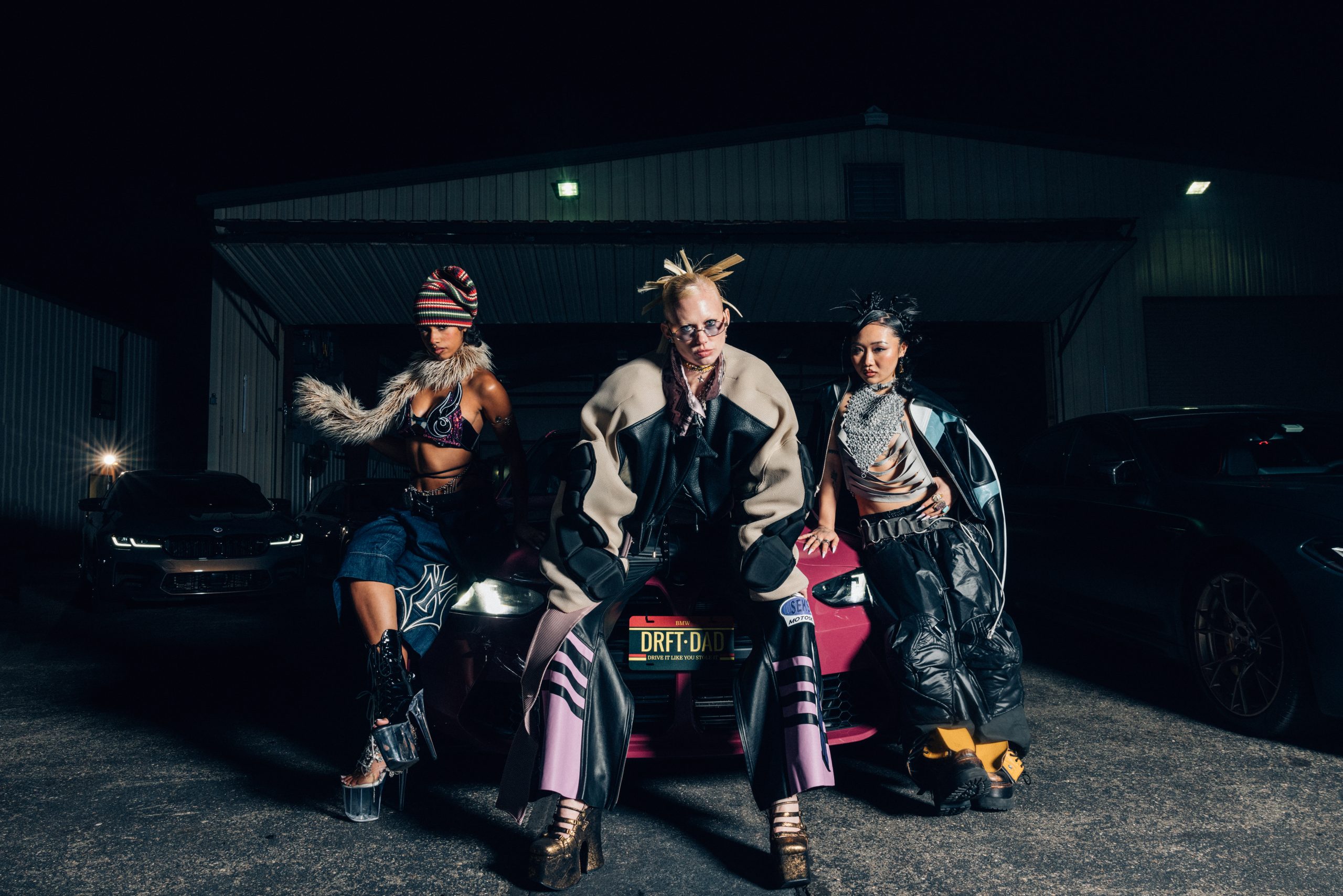
What followed was a year-long production that somehow assembled more than eighty people, shut down a New Jersey airport overnight, secured a Russian arm camera car that normally costs a small fortune, recruited a stunt driver from the Fast and Furious franchise, and produced a film that looks and moves like the real thing, because it is the real thing, minus the check.
This is the story of how that happened. But more than that, it is a story about what creative work looks like when the only currency is belief, and about a young woman building something larger than a film: a philosophy of leadership, community, and radical freedom that the rest of us would be wise to pay attention to.
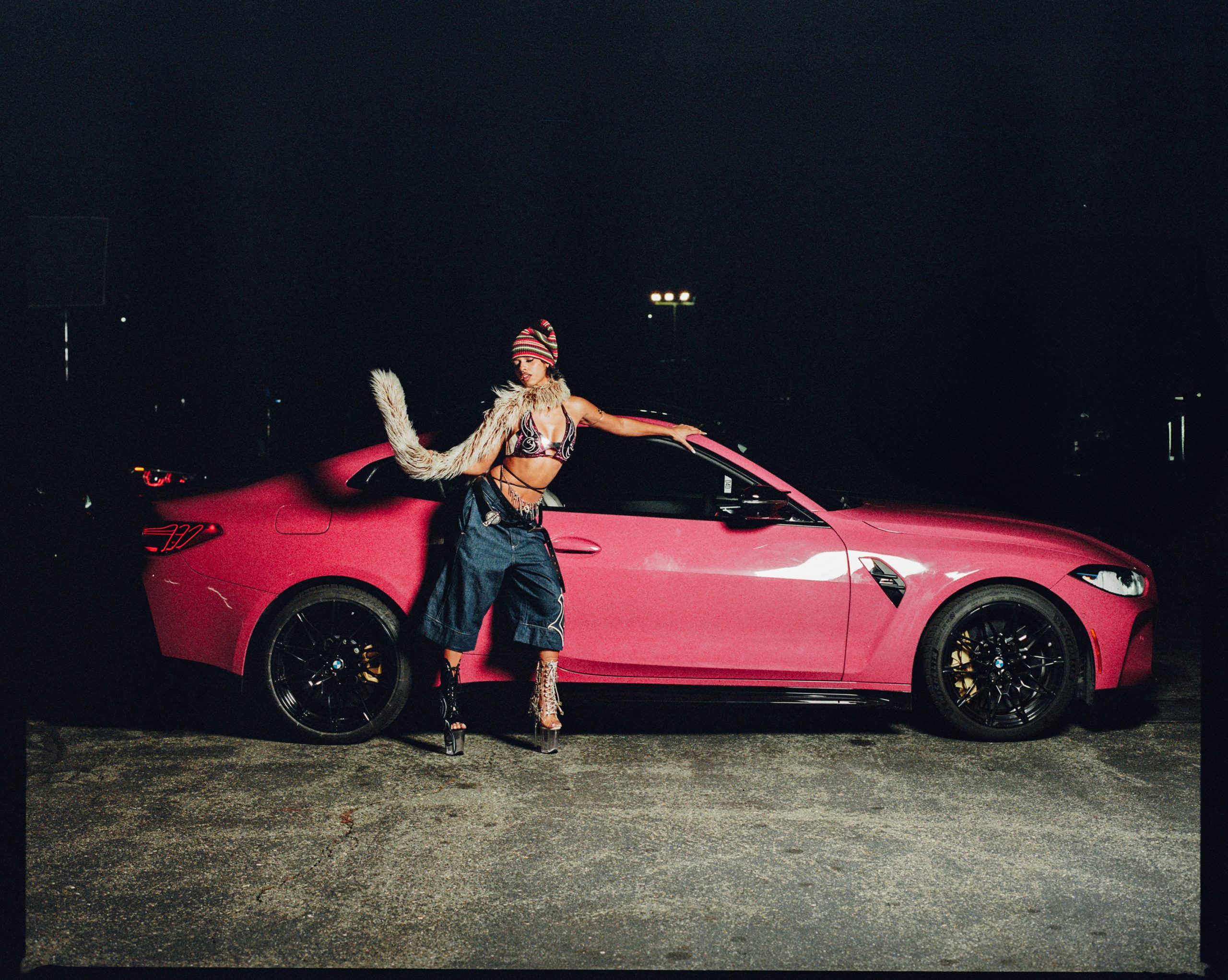
Photograph by Sonia Broman
The Room Where It Started
Breanna Lynn grew up with a single mother who was an artist. They lived in one-bedroom apartments where one of the rooms always doubled as a studio. That was the playroom. That was where the world made sense.
Her mother worked three jobs. Bree was an only child. And so she did what only children of artists do: she made things. Music videos with her Littlest Pet Shop toys. Stories crafted with whatever was lying around. The apartment was small, but the imagination inside it was not.
At thirteen she saw Almost Famous, and the feeling it gave her became a compass. She did not have the language for it then, but she knew she wanted to spend her life giving other people that same feeling: the sense that the world just got bigger and you are allowed to run toward it.
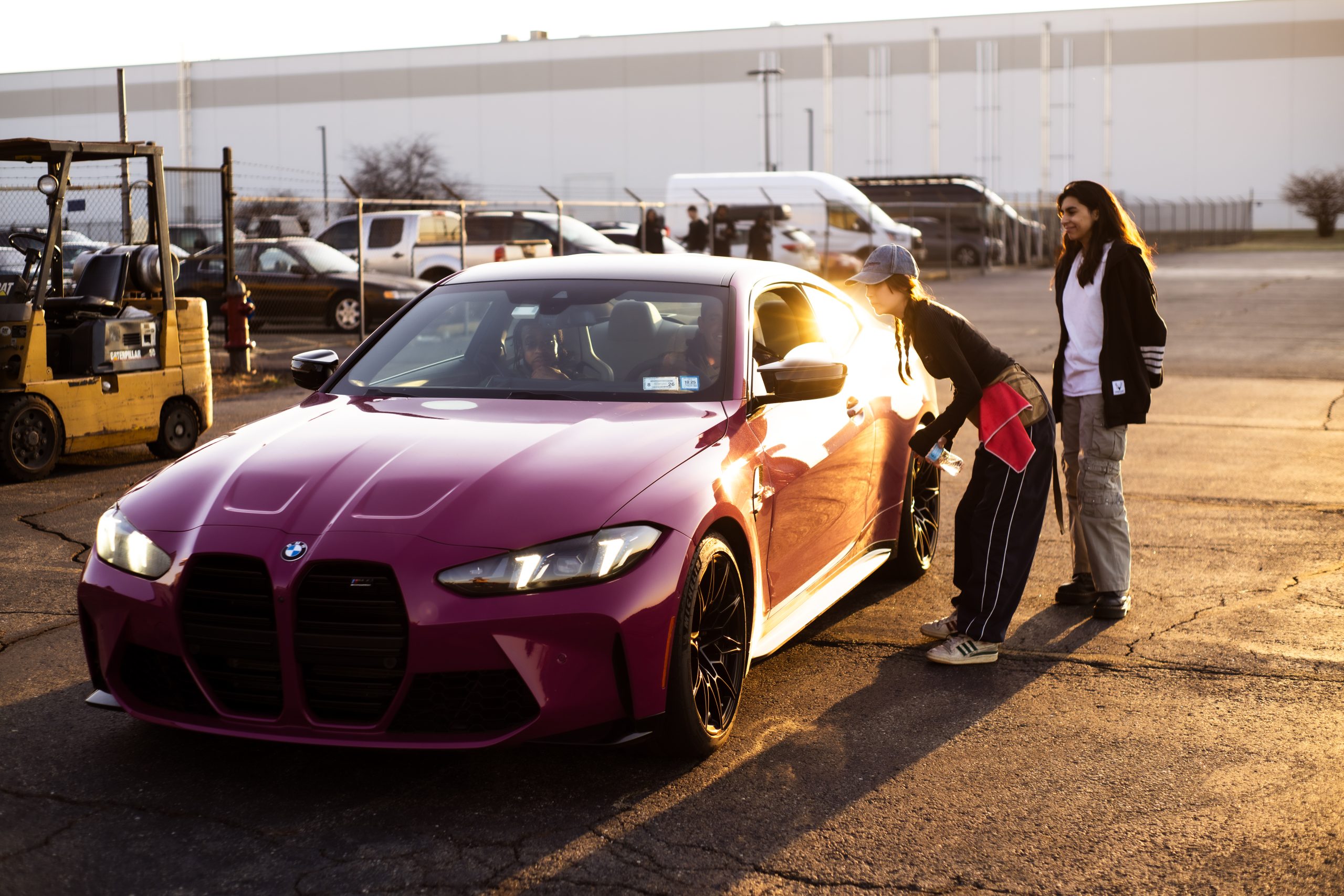
Photograph by Phil Winter
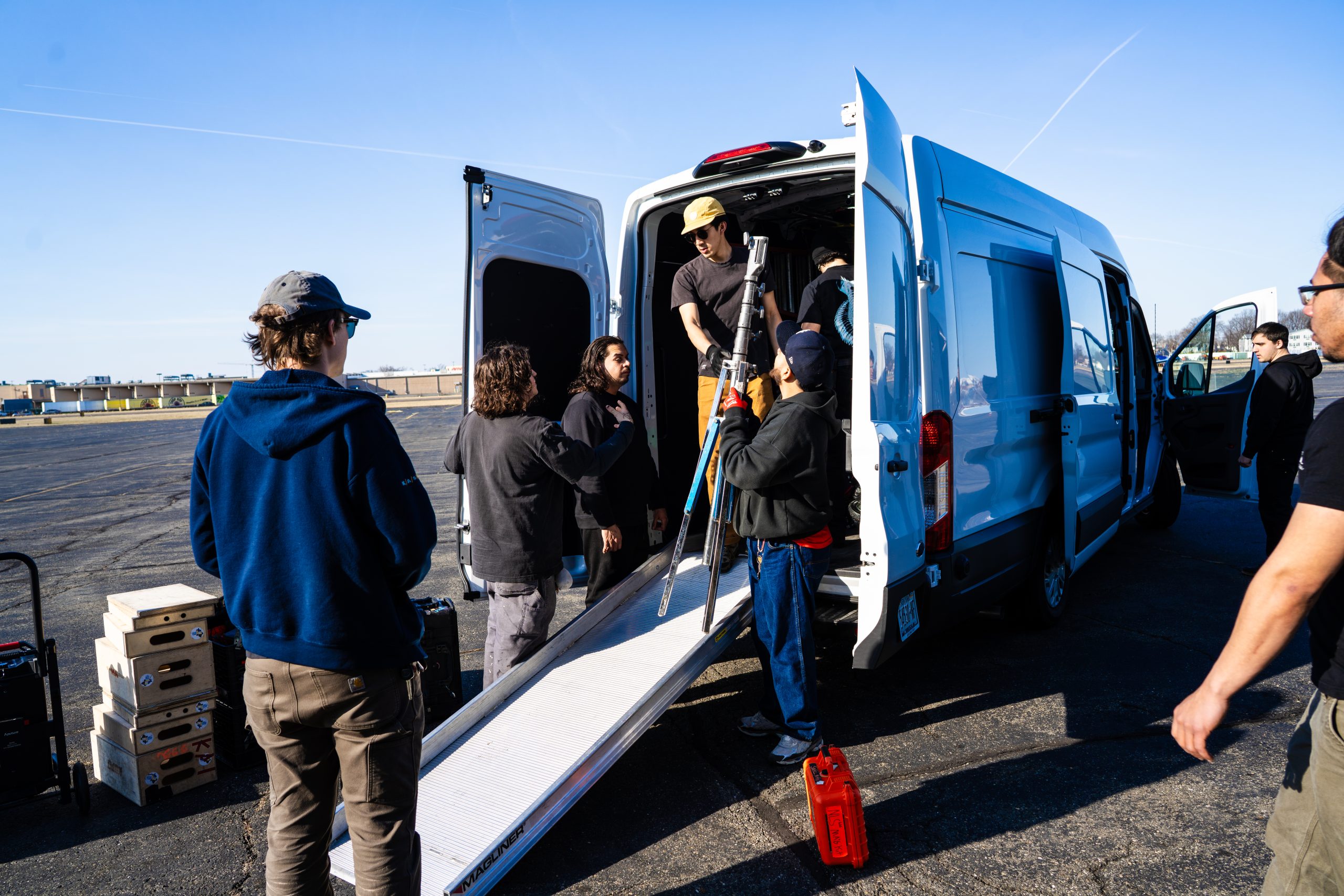
She started working on sets at fifteen. At UCLA, where she studied sociology and film, she was rarely in class. The MFA students had figured out she was cheap labor and surprisingly good at what she did, so they kept pulling her onto their productions as an assistant director, a producer, a problem-solver. It was the best education she could have asked for: learning by being thrown into the fire before anyone thought to ask if she was ready.
Then COVID hit during her junior year. She graduated early. She took a job in influencer management and sat at a computer all day, away from the sets and the people and the energy that had always fueled her. It lasted six months before she started reaching out to every musician she knew, offering to shoot anything for anyone.
Within half a year she had quit the desk job. She was twenty years old, taking photos for two hundred dollars and doing the math on how many shoots equaled rent. Within a few more years she was directing music videos, building a reputation in the New York film community, and fielding DMs from younger women asking how she did it.
She still does not entirely know. But she knows it started in that apartment, in the studio that was also a playroom, with a mother who showed her that making things is what you do when you are alive.
Photograph by Phil Winter
The Conversation That Became a Commitment
The idea arrived the way most dangerous ideas do: casually, over a conversation with a friend.
Early last year, Bree and Myles Caba, a director of photography she had collaborated with before, were talking about what they wanted to do next. Both were ready to move beyond music videos into commercial work. Both loved cars. And Bree had always wanted to make a car commercial. Fast and Furious was her favorite franchise. She grew up riding dirt bikes with stunt-driver uncles. The automotive world was not an abstract ambition. It was personal.
The problem was the industry’s invisible loop: to be trusted with the real thing, you first have to prove you can do the thing. But proof requires opportunity. And opportunity requires trust. The circle felt unbreakable.
Unless you broke it yourself.
“I wasn’t willing to wait for permission that might never come.”
The original plan was modest. Borrow a car from an exotic rental company. Run out with some cameras and Bree’s barely-running 2009 Ford Explorer. Get some cool footage. Maybe build a real piece. That was the ceiling.
And then people started saying yes.
Photograph by Phil Winter
The Yeses
The first absurd yes came from Joey Bearse at Metro Camera Cars.
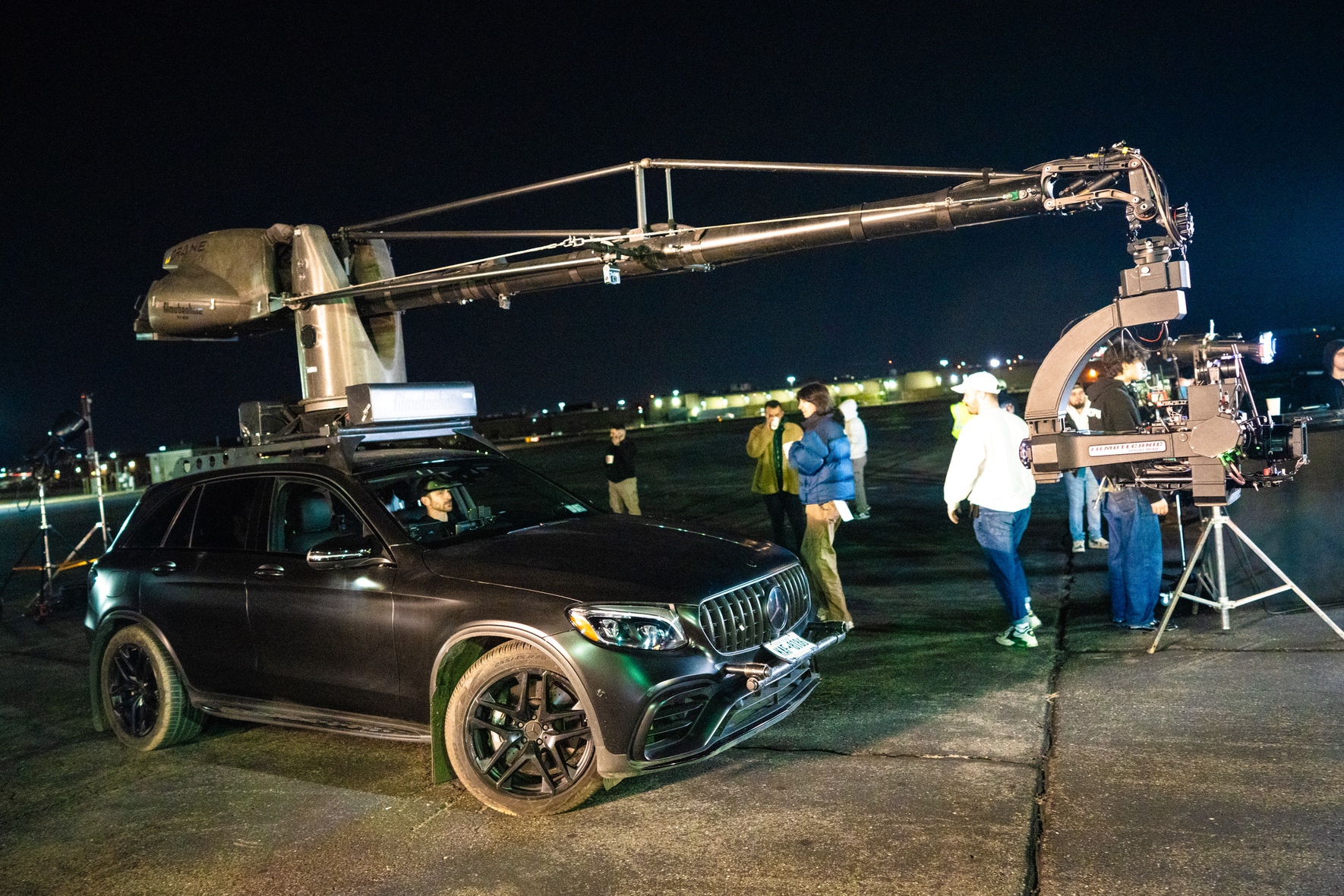
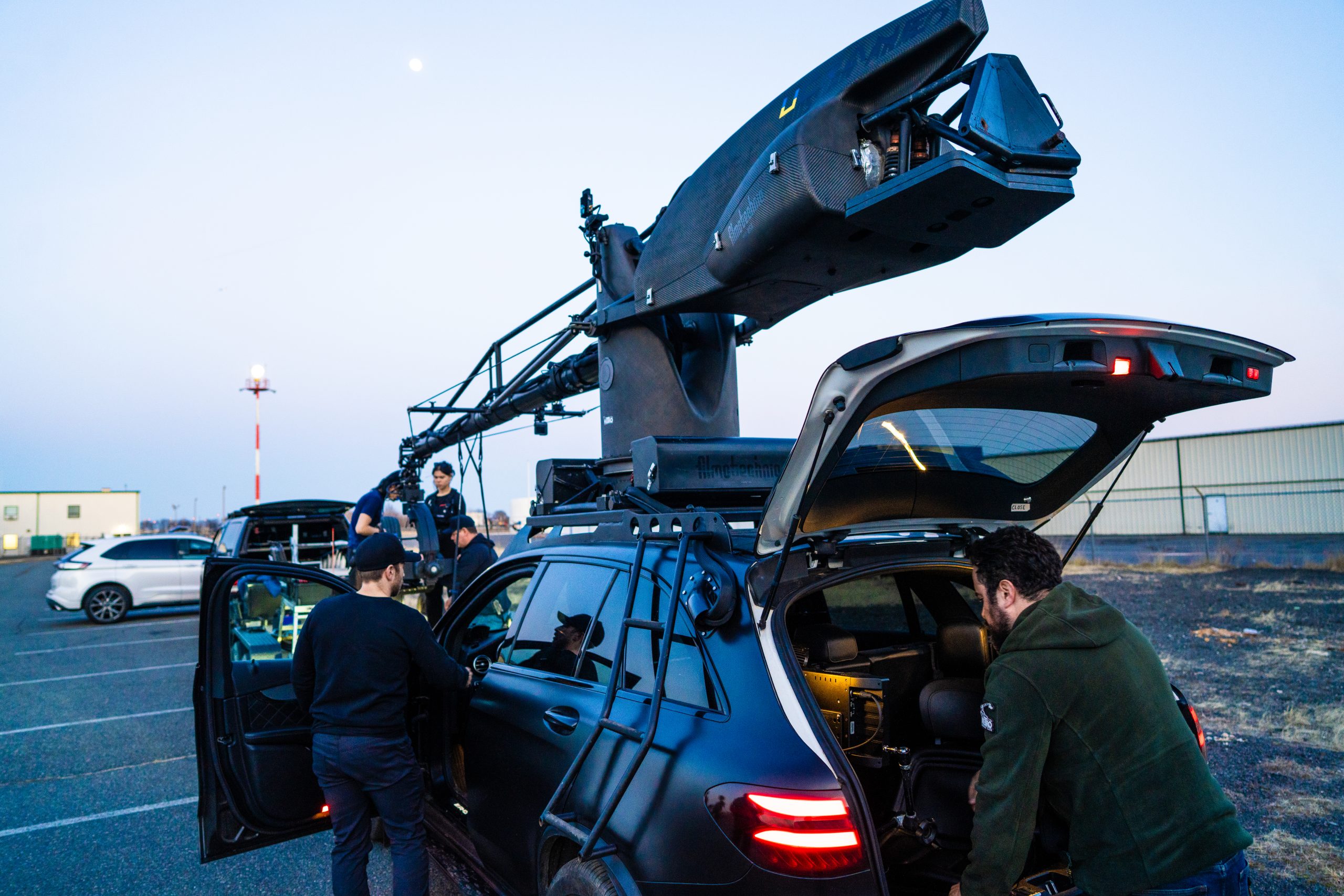
Myles had joked one day about getting a Russian arm car, a Mercedes rigged with a massive robotic camera arm that requires three specialists to operate. They are famously expensive. They are not the kind of thing you cold-call someone about for a no-budget spec. Bree got the number anyway, sent a mini pitch, and braced for a polite decline.
Joey called her. His first reaction was to ask if she might be insane. After hearing the full idea, he laughed and said yes.
That moment taught her something she keeps returning to: the spirit that got most of us into filmmaking in the first place is still alive somewhere inside us. Sometimes people just need a reason to believe again.
Photograph by Phil Winter
Then came Casey Rutherford. Bree had put out a call on Instagram looking for a stunt driver. A DM came in that gave her a strange feeling. She looked at his profile. He was one of the stunt drivers from Fast and Furious. He lived in Los Angeles. She told him the shoot was in New York and there was no money. He said he would fly out anyway.
Casey’s words, from a crew questionnaire after the shoot: “Brea Lynn was an absolute sweetheart of a human. Very gracious to everyone, humble, and happy. These are important qualities to have in this industry. Clearly she has unbelievable talent in her craft.”
Drive it like You Stole It – Still
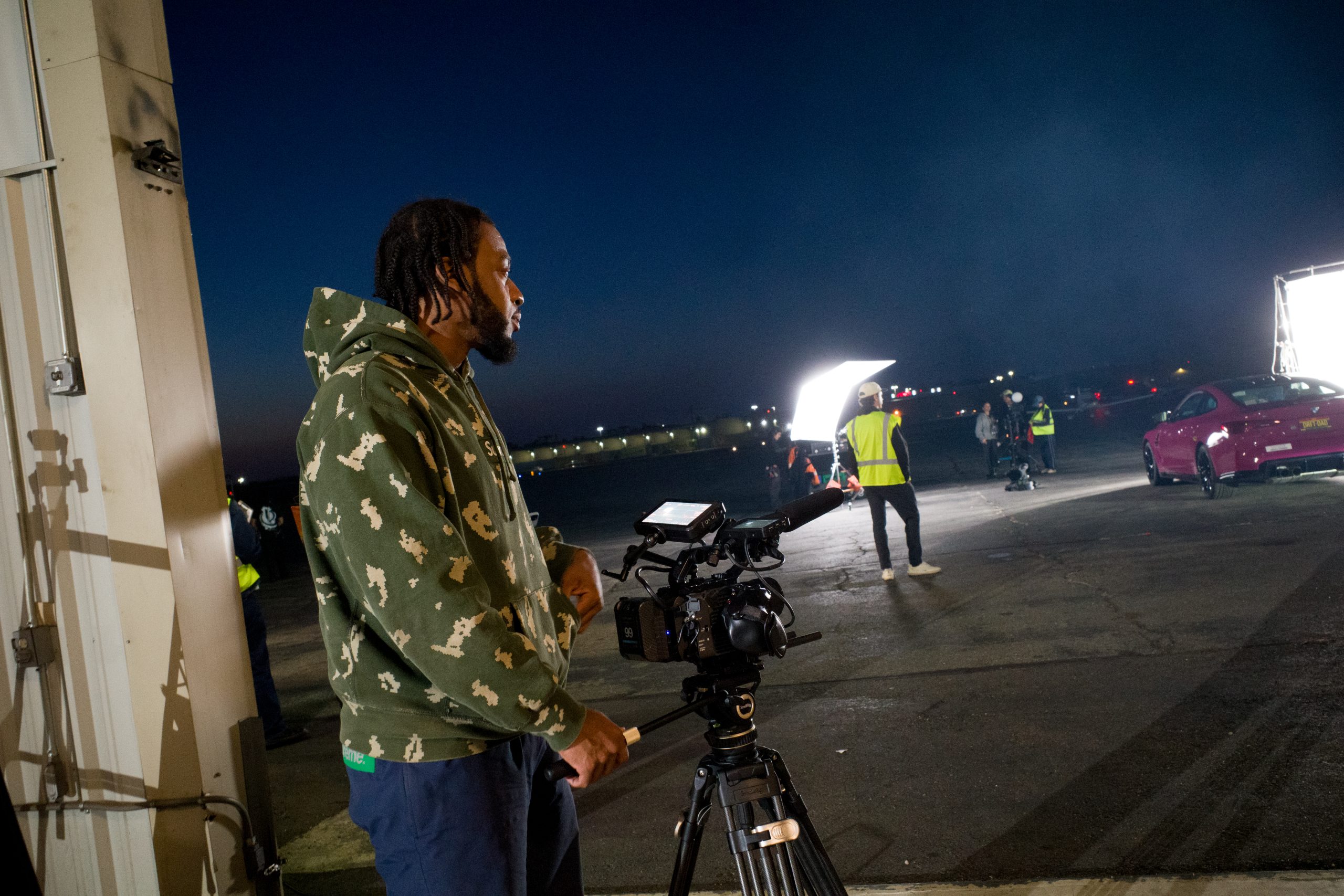
Then the airport. Everyone told her it was impossible to drive cars on an airport runway for a film shoot. But a man at a small airport in New Jersey said maybe. So Bree got in her car, drove to New Jersey, and showed up at his front door unannounced.
They spent ninety minutes driving around the facility. His boss was going to be out of town. The location normally cost twenty thousand dollars a day. They had zero. He said yes. He stayed on set the entire eighteen-hour overnight shoot and had the time of his life.
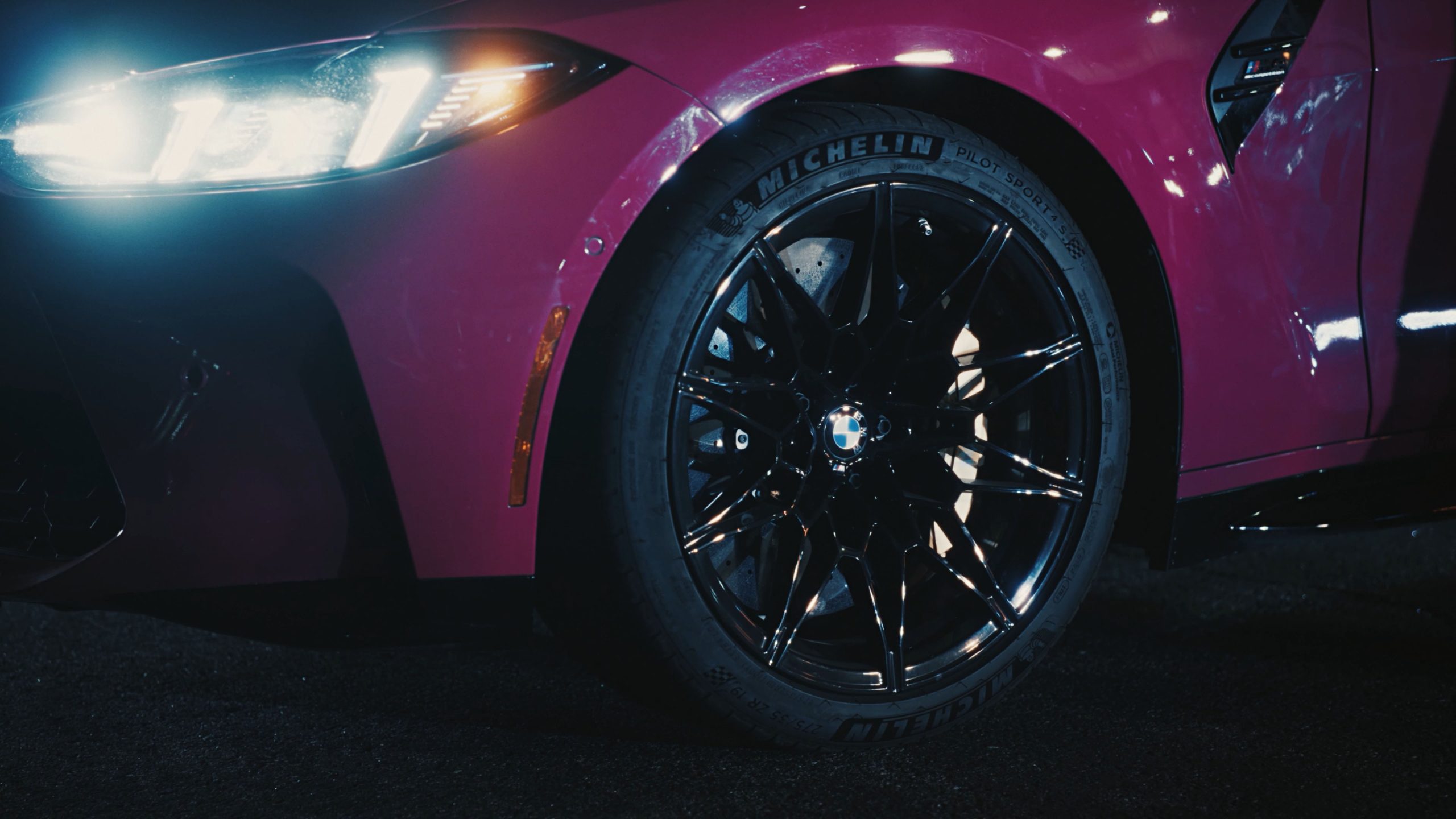
One by one, the project assembled itself. ARRI donated their virtual production studio for a full day. A gaffer brought his crew. A stylist brought assistants. A photographer flew back from Paris and came straight from the airport to the set. An eighteen-year-old kid from a BMW enthusiast club on Long Island mobilized a fleet of cars at three in the morning when the scheduled picture cars started to leave.
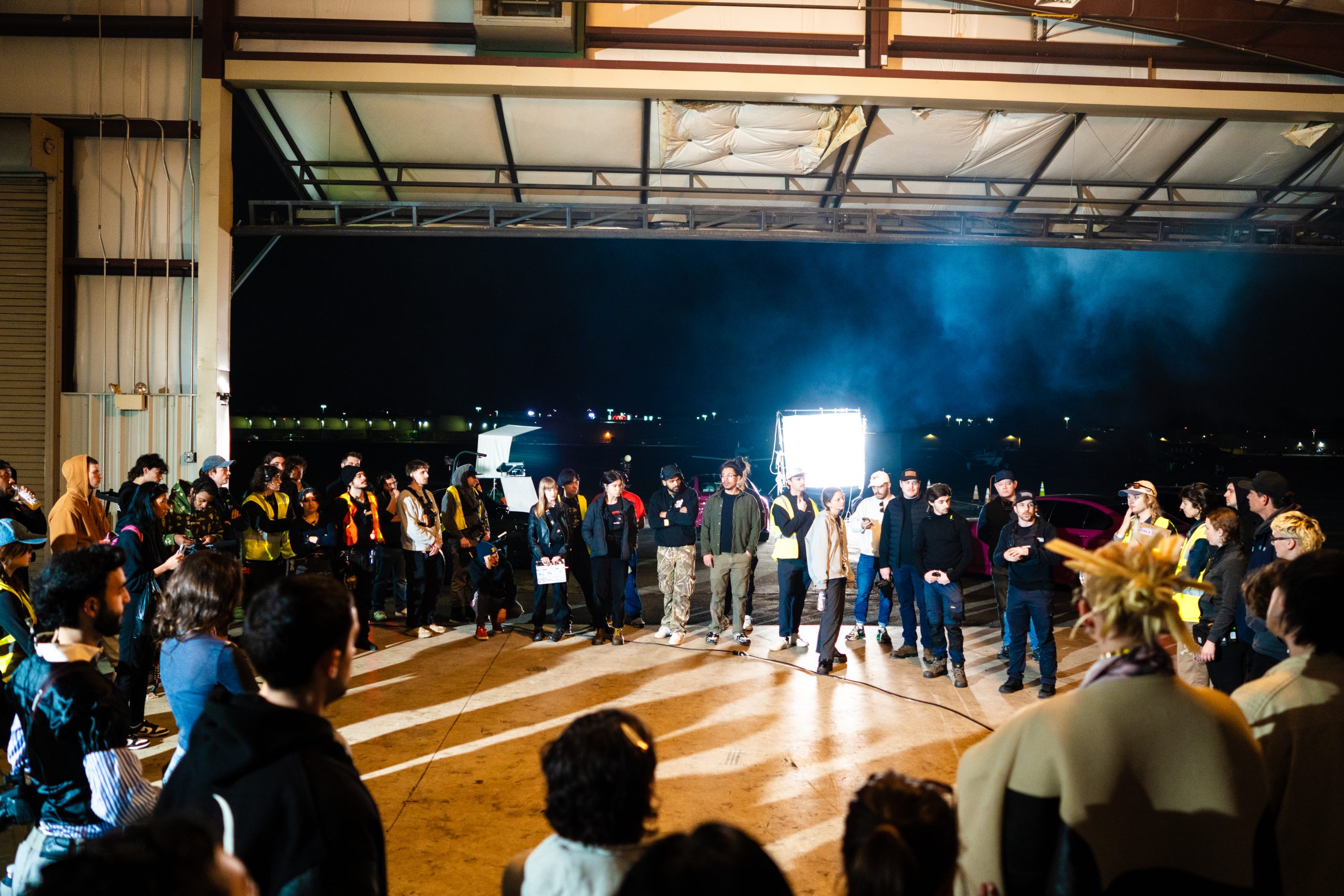
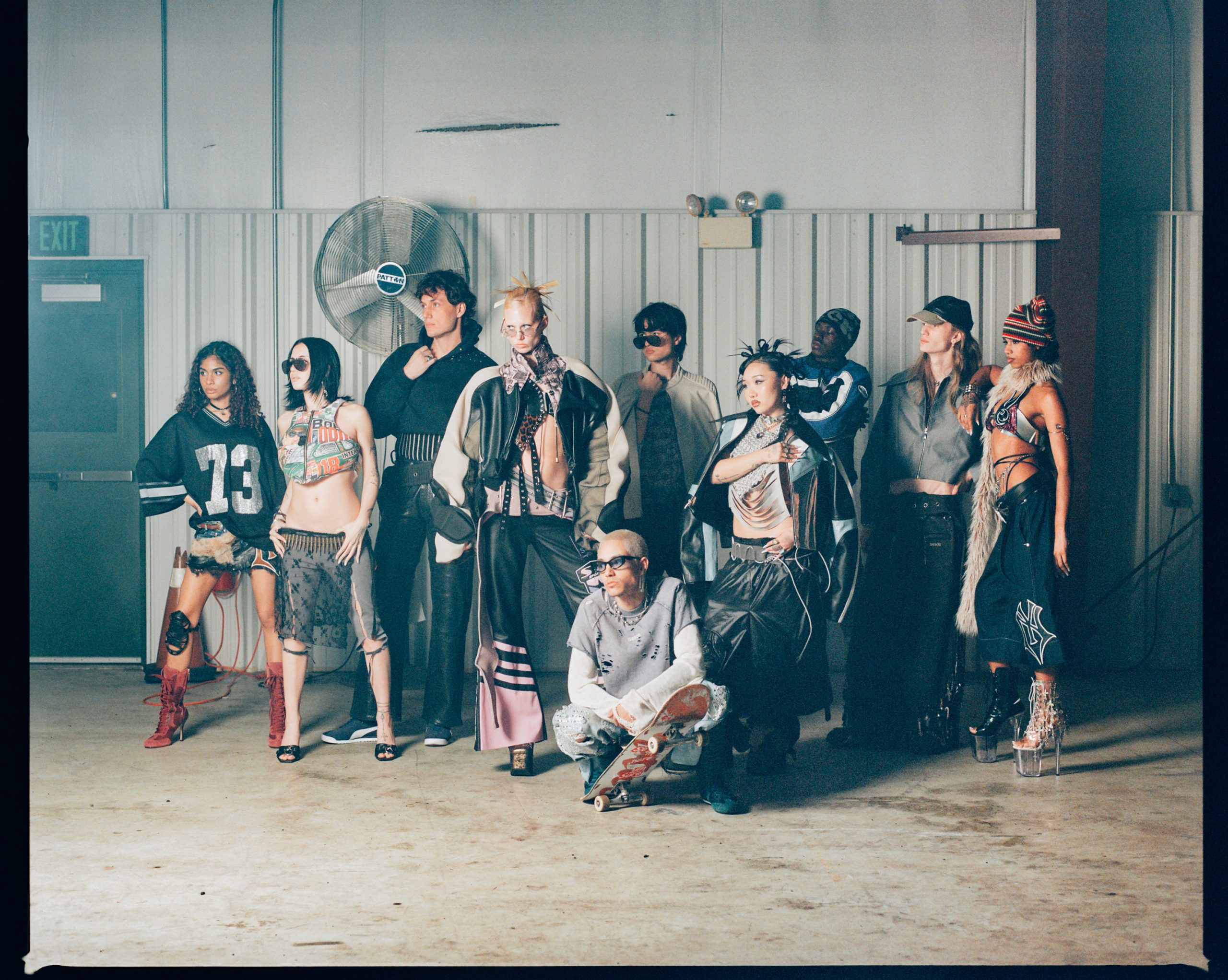
Eighty people. Two days. No paychecks.
“People were saying yes to the feeling behind the project. The radical notion we could build something near impossible together simply because we care enough to do so.”
Photograph by William Rowan
Leadership as Invitation
So how does a twenty-six-year-old earn the trust of eighty people, many of them far more experienced, to work for free on a freezing overnight shoot at an airport in New Jersey?
The answer is not charisma, though Bree has that. It is not hustle, though she has that too. The answer is something quieter and harder to fake: she built the structure first, then invited people into it.
Before she asked anyone to join, she had already poured countless hours into the deck, the strategy, the shot lists, the logistics. There was tangible evidence the structure was real. She was all in before she asked anyone else to be.
“Directing for me isn’t about controlling every detail,” Bree says. “It’s about holding the integrity of the vision while trusting the brilliance of the people around you.”
Photograph by Phil Winter
Evan Sagadencky, the movement director, put it simply in his crew questionnaire: Bree is one of the few people he would step into the unknown with. Her warm leadership and clear directorial point of view are so engaging and energizing that it is hard to say no.
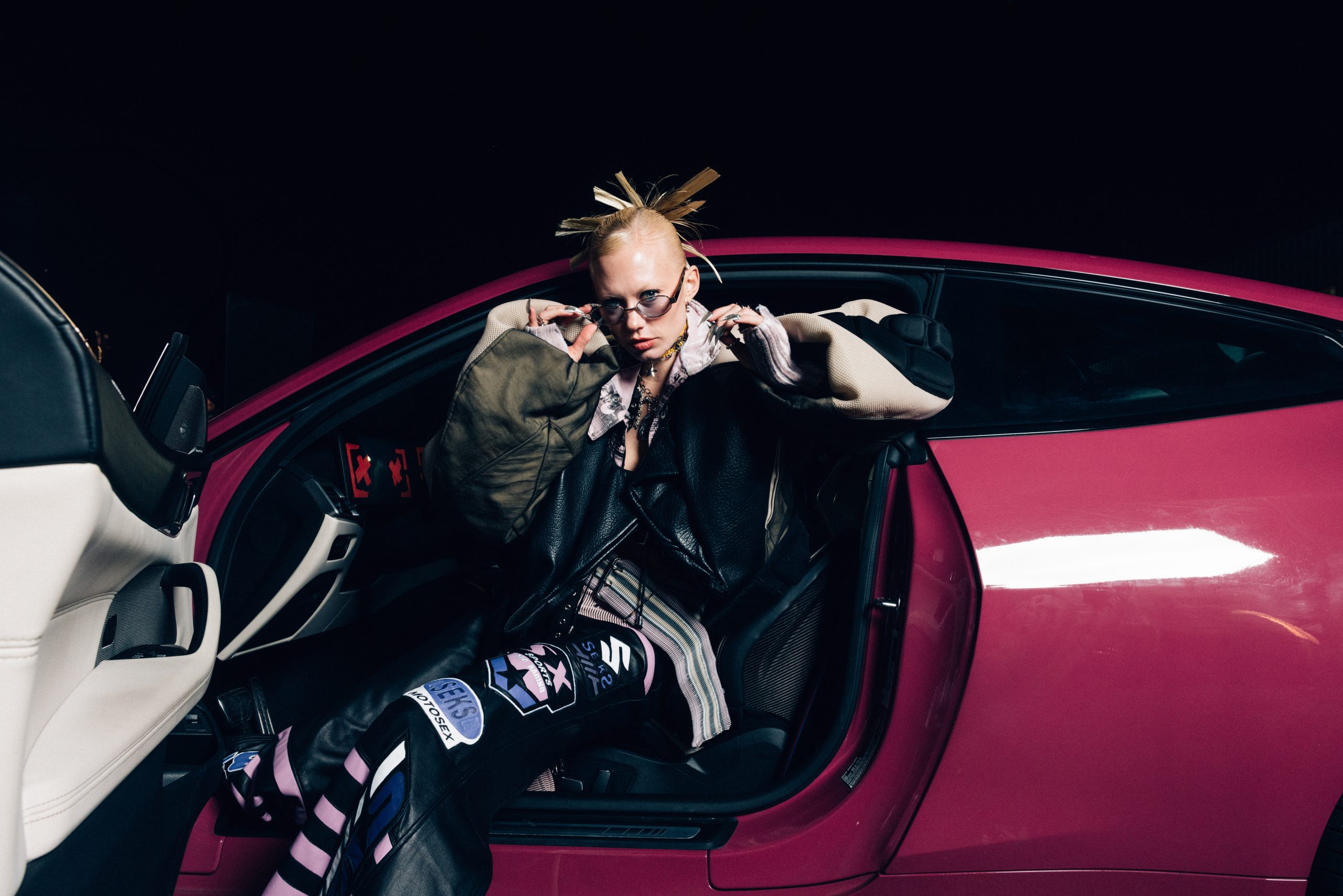
Kitty Lever, the lead actor, went further. She described the set as a small village, each sector operating within its assigned role, vibrant and alive. She wrote that if creative people were only motivated by money, there would be no art. Community creation purely for the sake of art and experience, she said, is what impacts culture.
Kayra Theodore, the hair artist, described it as an Avengers moment. A group of talented people who are striving to find their place in the creative world, coming together. She said the crew’s hearts alone made it impossible to say no.
Photograph by Phil Winter
When you hear this many people describe the same experience using the same emotional vocabulary, you stop looking for the strategy and start looking for the conviction. The conviction, in this case, lives in a question Bree carries into every high-pressure environment:
“Do I want to be right, or do I want to be kind?”
It is a deceptively simple question. On a set at three in the morning when things are going wrong and everyone is freezing, it becomes a leadership philosophy. Bree operates on good faith. She assumes the people around her are doing the best they can with the resources they have. She would rather work with someone who cares deeply and occasionally makes mistakes than someone who gets everything right but is not invested.
Passion, she believes, is infectious. She never wants to be the person who dims it in someone else.
Photograph by Sonia Broman
The Craft
The story the film tells is deceptively simple. A young woman behind the wheel. Cars moving through the night. Adrenaline and beauty and scale. But underneath the surface, there is something tender: a conversation between a person and the younger versions of herself who dreamed of being exactly here.
Bree and her co-writer Aathil Chaturvedi arrived at that emotional core through long phone calls that drifted between script work and their own lives. Aathil described the process as fluctuating between deep diving into work and sidebarring about personal experience. The writing sessions were not separated from life. They were life.
Aathil, in his crew questionnaire, captured the spirit of the entire production: “It is rare that working professionals who have all taken such tremendous risks to pursue creative careers come together to work on something out of love and nothing more. When you see someone with the tools, talent, and vision to execute their idea, your inner artist lights up and you cannot help but say yes.”

Drive it like You Stole It – Still
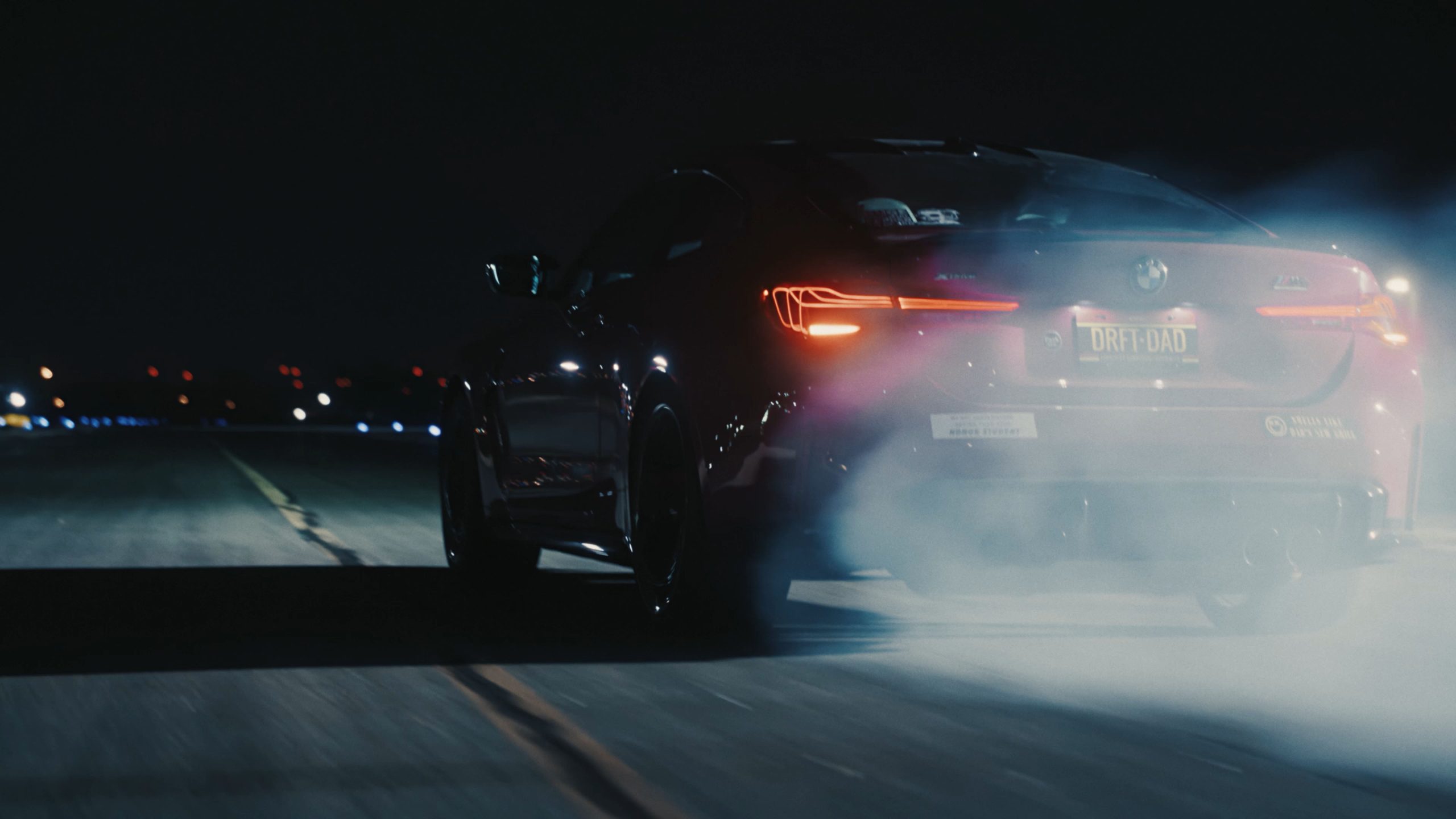
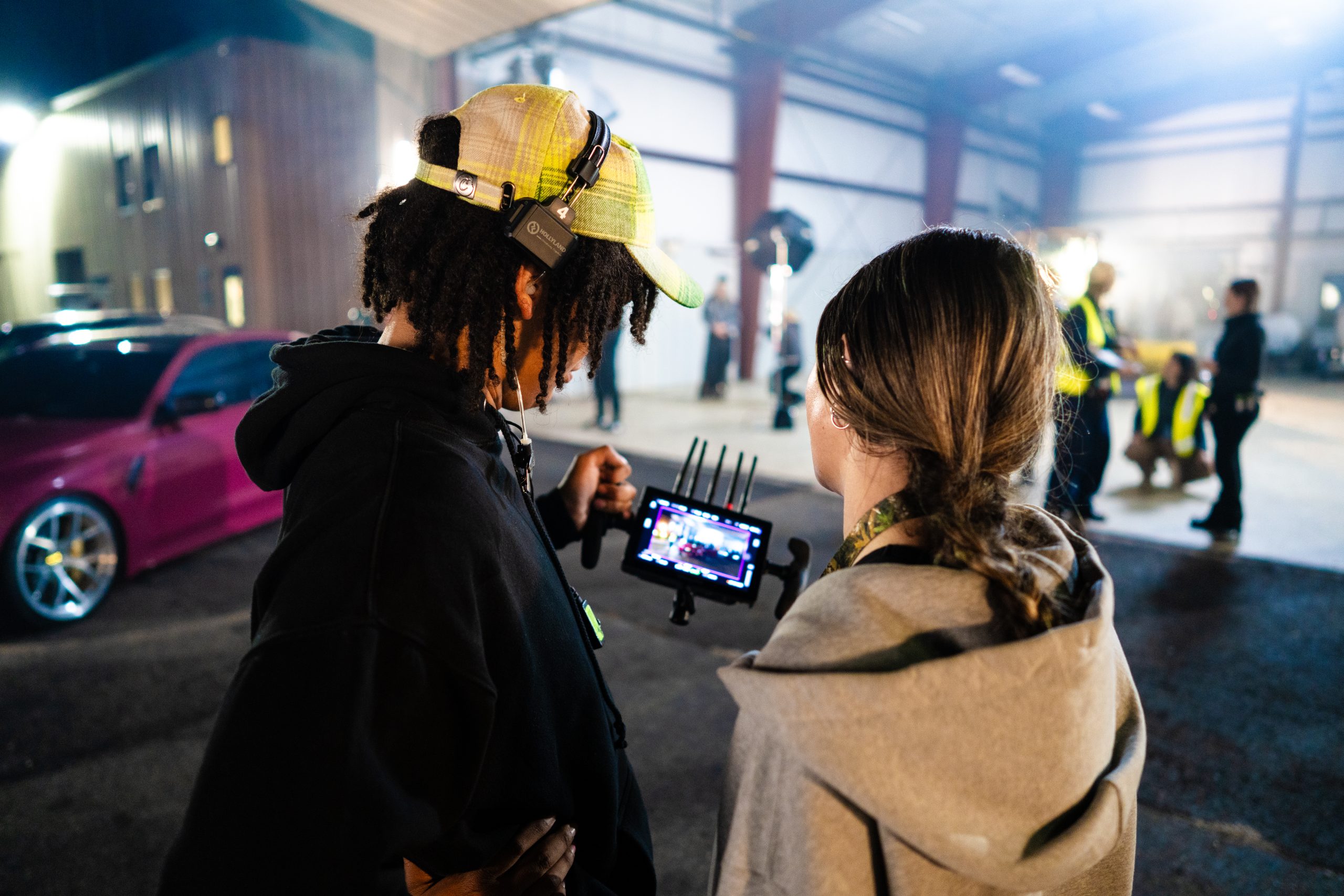
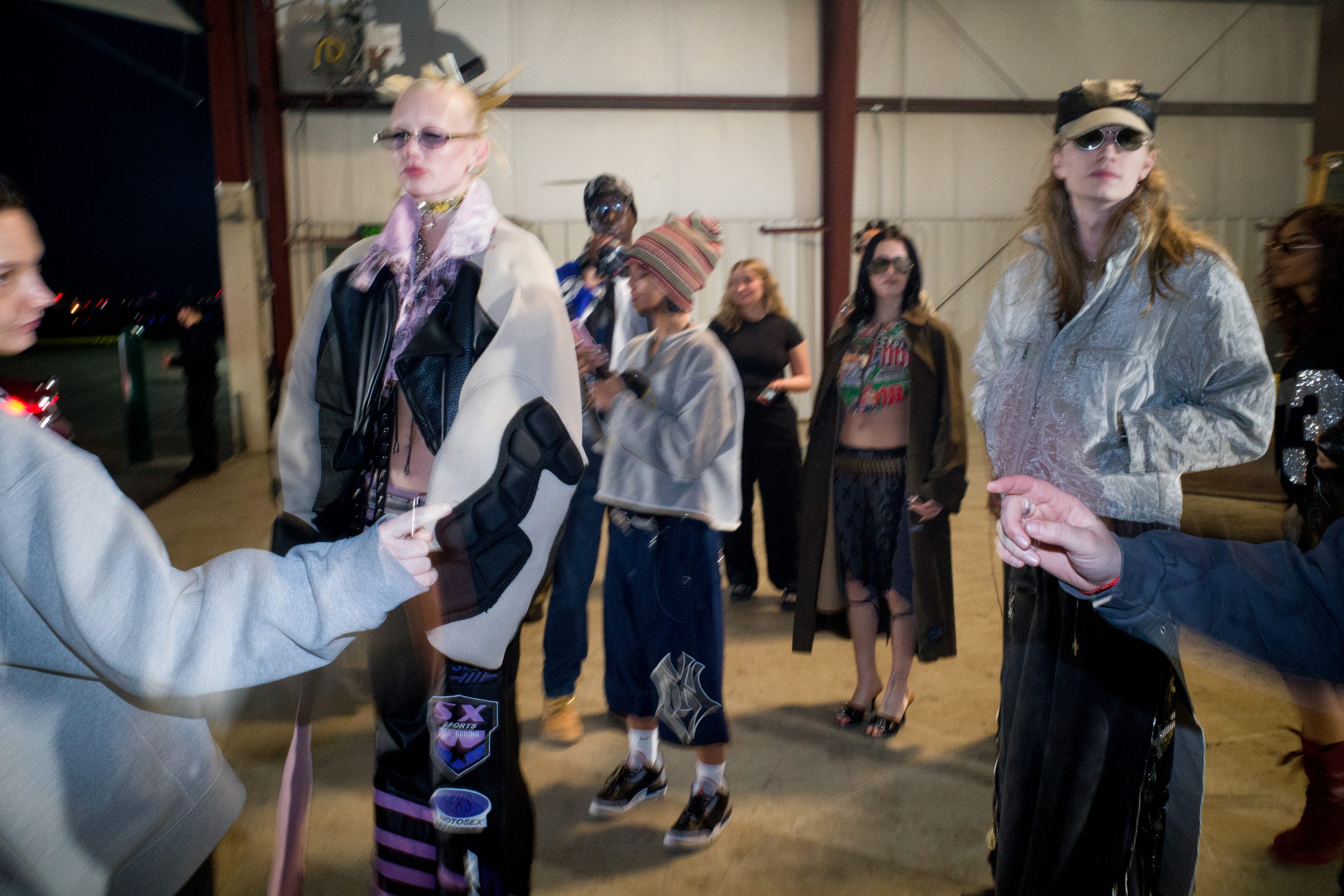
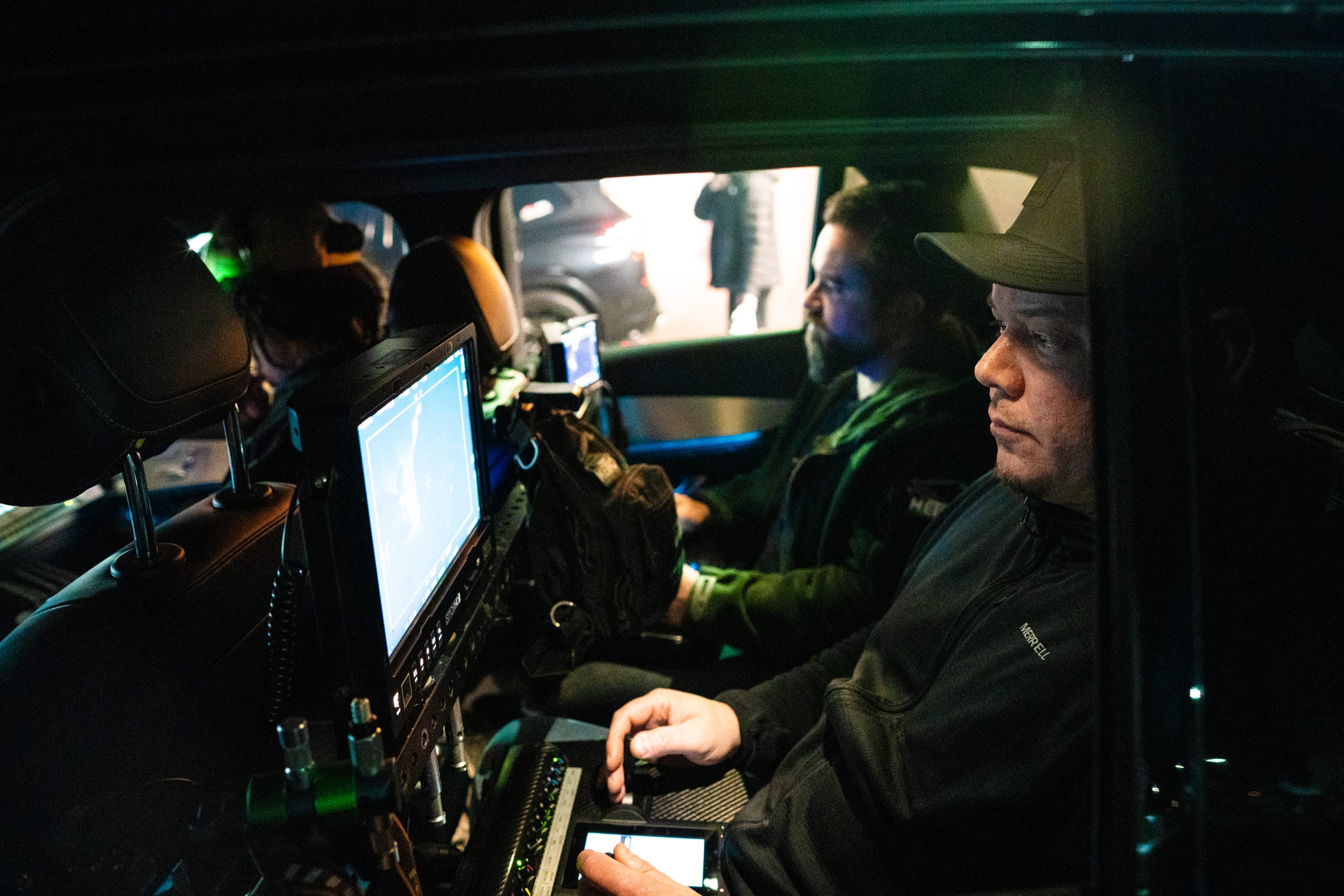
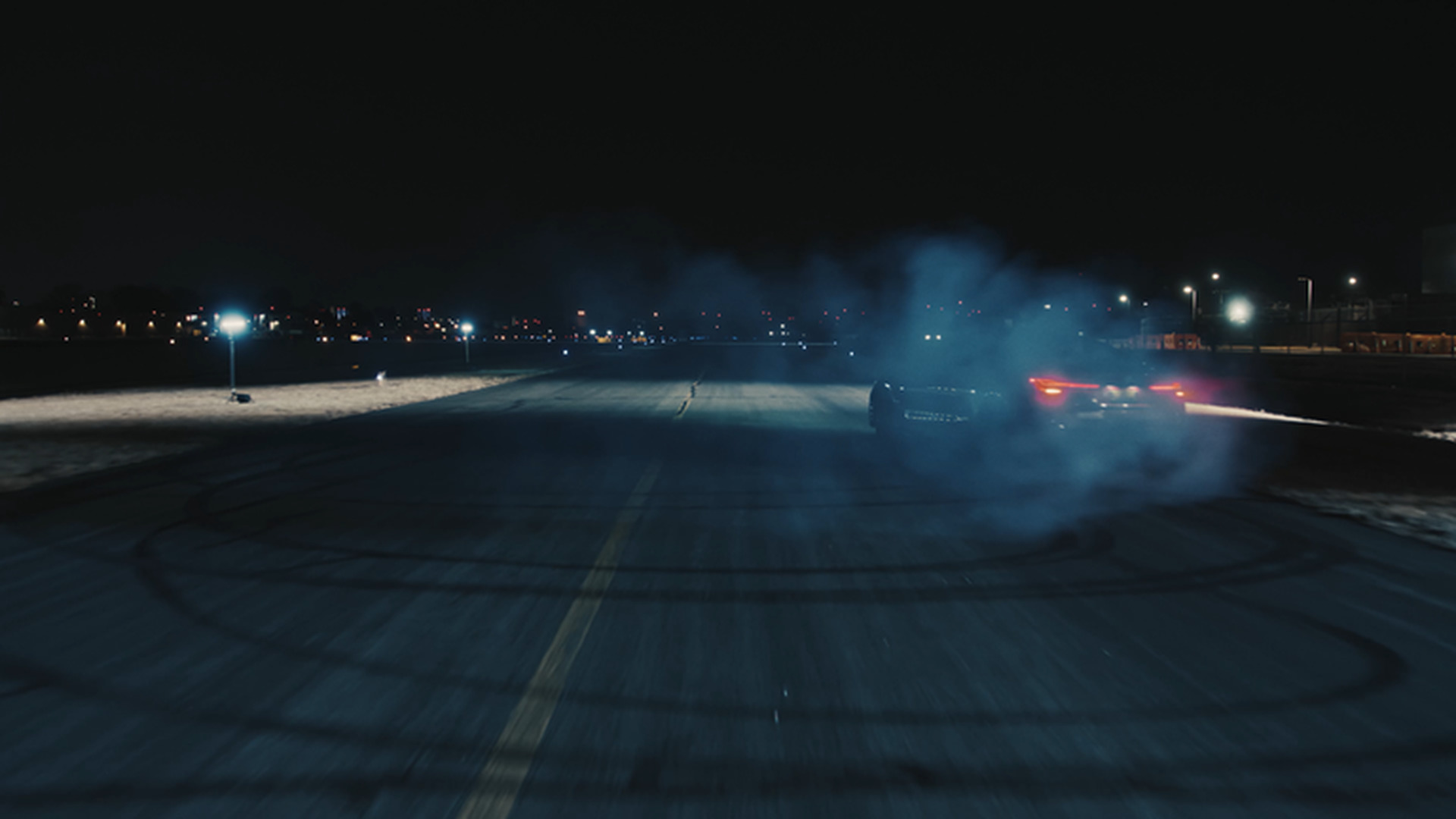
The production itself was a two-day sprint. Day one was the airport: an overnight shoot on the runway, the Russian arm car threading through picture cars, drifts and stunts choreographed by Casey Rutherford and Joey Bearse, FPV drones chasing BMWs past parked planes in the dark. Eric Wang, the drone operator, remembers pulling up, seeing the hangar and the arm car, and thinking he needed to bring out all the big toys. In the air they ran an Inspire 3 as the gimbaled drone and a RED Komodo on FPV for the racing scenes.
Day two was ARRI’s virtual production studio: all of the interior work, anything involving the child actor, the controlled shots that required a screen outside the car window simulating motion. Kitty Lever, the lead, did not know until that day that cars in commercials are not actually driving. She was delighted.
Post-production was months of editing on Logan Triplett’s couch, with Bree and Myles and the cat. Then color with Nick Daukas. Then the hardest part: sound design. Bree comes from music videos, where the sound is the starting point, the seed from which everything grows. In this project, sound had to be constructed after the fact. She spent long sessions in Theo Rogers’ studio building something that had never existed before.
Theo described the energy of the collaboration as being like starting an indie band with ambition to go all the way. How can we make this work with limited resources, lots of clever ideas, and how can we lean on our community to do it.
Photograph by William Rowan
The Fear
And then the film was finished. And the fear arrived.
Bree watched the final cut with sound design and color and titles and it was beautiful. She had never been prouder. And then a wave hit her. Eighty people had poured their hearts into this. The weight of that responsibility was suddenly near suffocating.
She froze. For about a month she avoided the project entirely. She threw herself into other work. The finished film sat there, waiting.
A close friend finally gave her the tough love she needed. The same advice Bree gives everyone else: you just have to start. Send the first email. Take the first step. The courage is in the beginning.
“No response can take away the experience we shared making it. So with that? We have already won.”
Photograph by Sonia Broman
What she had to work through was a final layer of expectations. She had to ask herself what the project was really for. And the answer kept coming back to the same place: eight-year-old Bree.
Eight-year-old Bree would be completely overwhelmed hearing that eighty people showed up to help bring her vision to life. She would lose her mind knowing they shot stunts on an airport runway with a Russian arm car. She would be sprinting to tell her stunt-driver uncles how cool it all was.
Perspective resets everything.

Drive it like You Stole It – Still
Younger Selves
There is a thread that runs through everything Bree does, and it is this: she is still making things for the younger versions of herself.
She writes it in her journal every day. She is doing this for eight-year-old her. For thirteen-year-old her. For every version of herself that once had a big dream and hoped she would be brave enough to chase it.
“I’ve always tried to be the person I needed when I was younger,” she says. “It’s a compass for how I live.”

Drive it like You Stole It – Still
A friend once showed her the idea that as we grow older, we still carry every younger version of ourselves inside us. She feels it constantly. Some projects bring up the thirteen-year-old obsessed with gritty stories and big emotional swings. Others bring out the five-year-old who believed everything was magic.
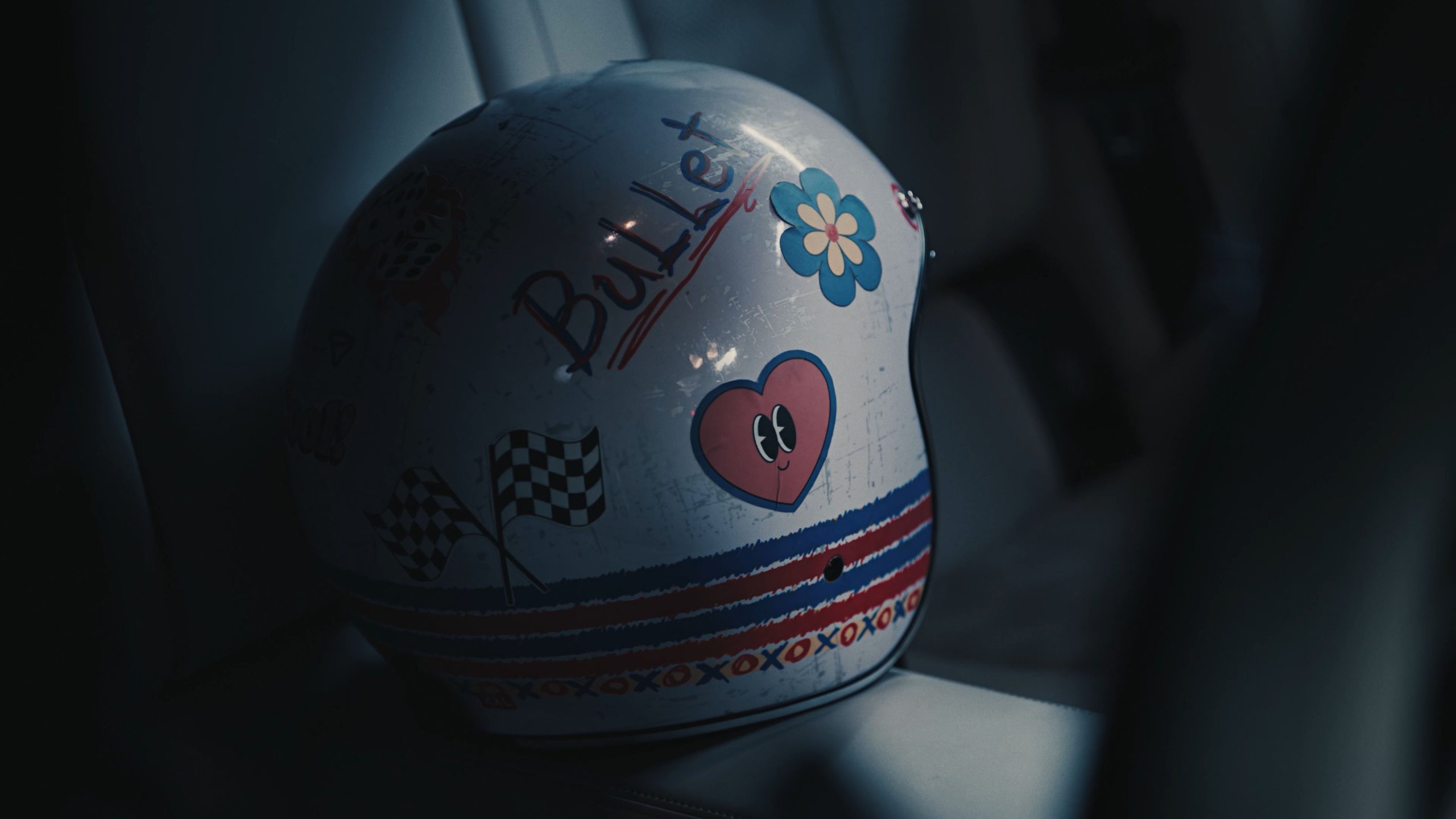
Late nights start to feel like slumber parties. Long shoot days start to resemble playing with an old Hi-8 camera in her mom’s art studio. Everything has more glitter.
This is not sentimentality. It is fuel. The film’s emotional center, that tender undertow beneath the adrenaline, comes from this place: the moment when your world suddenly gets bigger and all you can think about is the child who once dreamed of standing exactly where you stand now.
Drive it like You Stole It – Still
Radical Freedom
Bree has a philosophy, and she is not shy about naming it: radical freedom.
It means no one can tell you what you can and cannot do. It means your life requires your own permission. It means you might not be able to move the mountain, but you can find a new path around it, and you can make the conscious decision to enjoy the view.
This sounds like optimism. It is not. It is discipline.
She was clear that none of this happened magically. It came from late nights, hard work, and relentless effort. There were many nights during Drive It Like You Stole It when inspiration felt a million miles away. Just her, an ungodly amount of caffeine, and a phone screen reading 3:00 AM.
But she draws a distinction that matters: “There’s a difference between what we feel in a moment and what we truly want for our lives. The key is to zoom out.”
In the moments of clarity, she sets the plan. Then she follows the plan, not the feeling. Temporary comfort rarely compares to the satisfaction of building something meaningful.
It is a philosophy that extends to how she talks to young creatives who are talented but stuck. She does not mince words. If the day-to-day feels like a dull ache rather than a sharp sting, it might not be the right path. Life is short. We are on a spinning rock in the middle of space. Go find the thing that makes you feel alive.
Photograph by Phil Winter
Against Gatekeeping
There is a conversation happening in creative industries right now about access, about who gets in and who gets kept out. Bree’s answer is blunt: the industry keeps the path unnecessarily opaque. Information is guarded. Opportunities circulate inside closed circles. And the scarcity mindset, the idea that success is a zero-sum game, keeps people from reaching down to help the person just behind them.
Bree refuses to participate.
She shares budget templates. She takes coffee meetings with twenty-year-olds she has never met. She answers the DMs. Her logic is simple: if a younger producer takes a job that Bree might have gotten, it means that person is working harder, and Bree can learn from that. Competition is not a threat. It is fuel.
“Empowering younger people in the space makes the industry stronger. I would much rather work alongside brilliant people who inspire me to work harder than try to protect a smaller piece of territory.”
This philosophy is already becoming infrastructure. Bree is building a production company called Leverett, named for a word meaning a small, young hair. It grew directly out of the experience of making Drive It Like You Stole It. The idea is to give younger directors, especially young women, the scaffolding they need to accelerate: production insurance guidance, budgeting resources, executive producing support, the institutional knowledge that nobody teaches you and everyone assumes you already have.
The film became the proof of concept. The making of it started to feel less like a challenge and more like an invitation. And that is the energy she wants to carry forward.
Photograph by William Rowan
What She Tells Young Women
When younger women ask Bree for advice, she finds herself saying the same thing:
Never shrink yourself to make other people comfortable.
Women, she says, are often conditioned to avoid disappointment, to compromise, to people-please, to ask for less in order to maintain peace. The first step is getting past the fear of failure, the terror of not being exactly what everyone wants you to be. The second step is recognizing that the emotional intelligence you were taught, the ability to read a room, negotiate, understand what people need, is not a weakness. It is a superpower.
“Ambition isn’t something to apologize for,” she says. “It’s clarity. And it’s a gift. You can pursue that clarity while still leading with kindness, and that’s where the magic happens.”
Also, she adds, the people who truly care about you will celebrate your courage.
Photograph by Sonia Broman
Community as Practice
A lot of people talk about community. Bree is careful to point out that community is not branding. It is a practice. And practice means doing the hard thing when it is inconvenient.
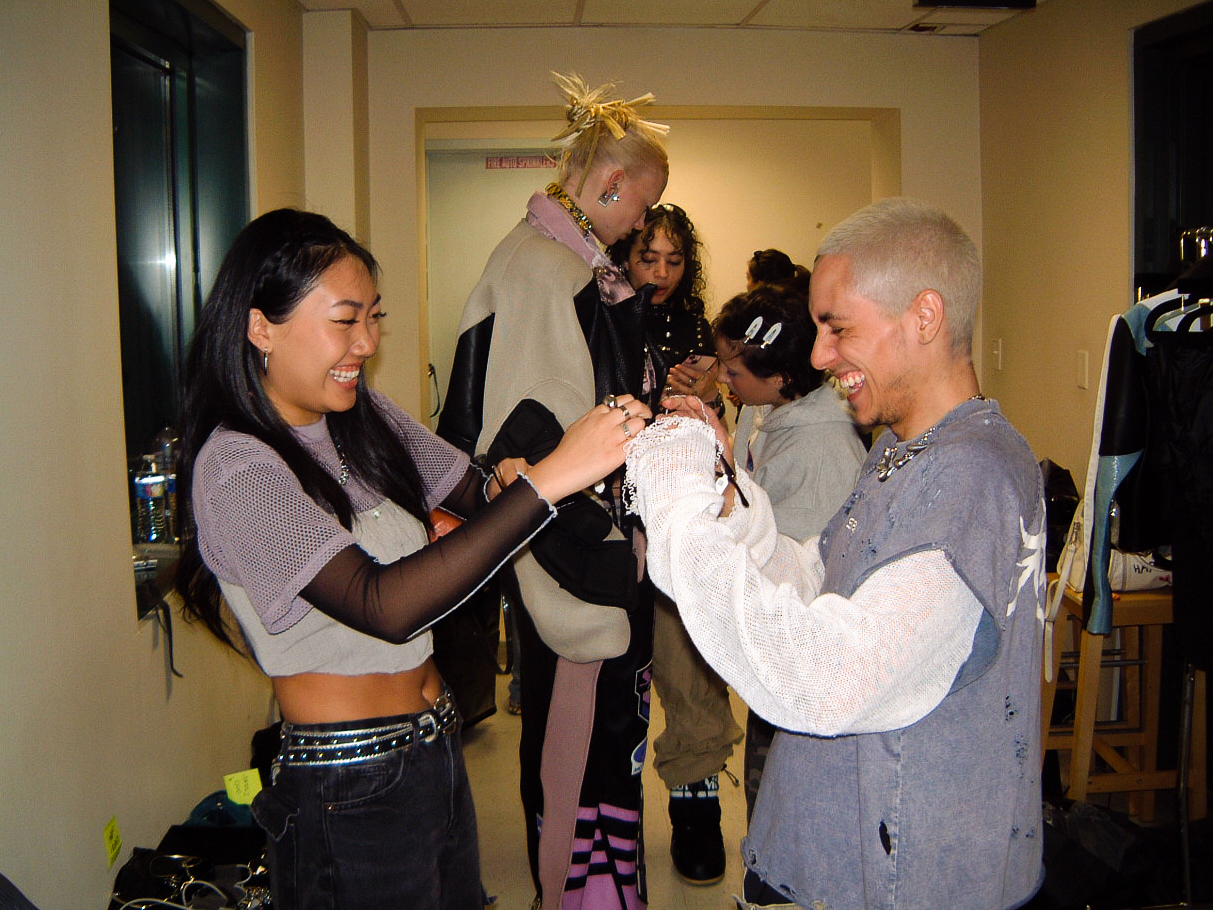
Community means remembering that the people around you are human beings who grew up with the same big dreams you did, and they are not just a means to completing a project. It means communicating clearly, respecting people’s time, feeding them well, acknowledging their contributions, and building environments where people feel safe enough to thrive. It means showing up for people even when you do not need something from them.
Photograph by Phil Winter
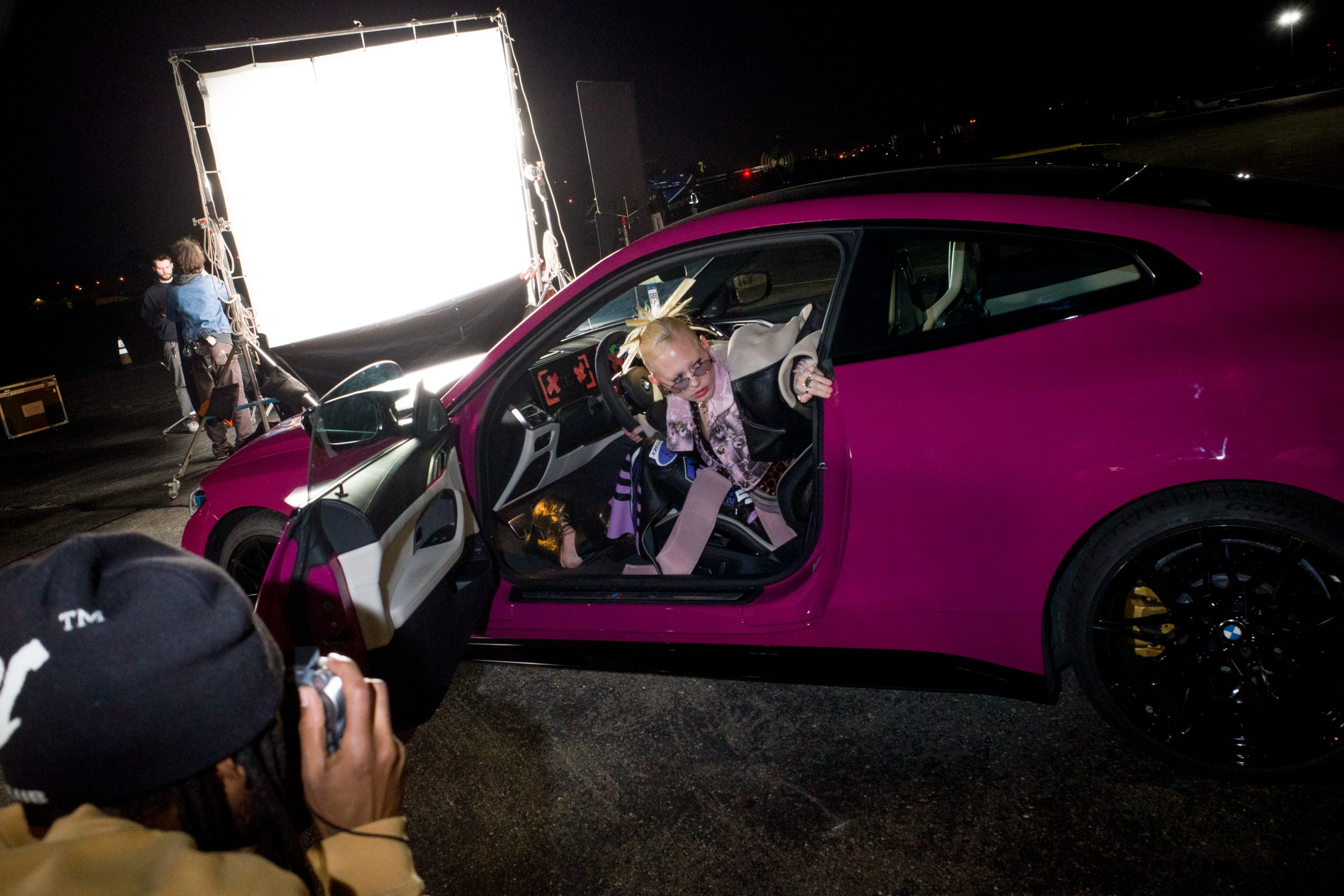
On the airport set, at three in the morning, in freezing temperatures, with the schedule behind and the picture cars leaving, community looked like Bree walking up to an eighteen-year-old kid and asking if he had friends. It looked like that kid nodding, picking up his phone, and delivering a line of BMWs within thirty minutes. It looked like a photographer who flew back from Paris that night and came straight to the set because the project mattered more than sleep.
Myles Caba, the DP, said it plainly: “It was like a breath of fresh air to be able to make something that truly felt like art.”
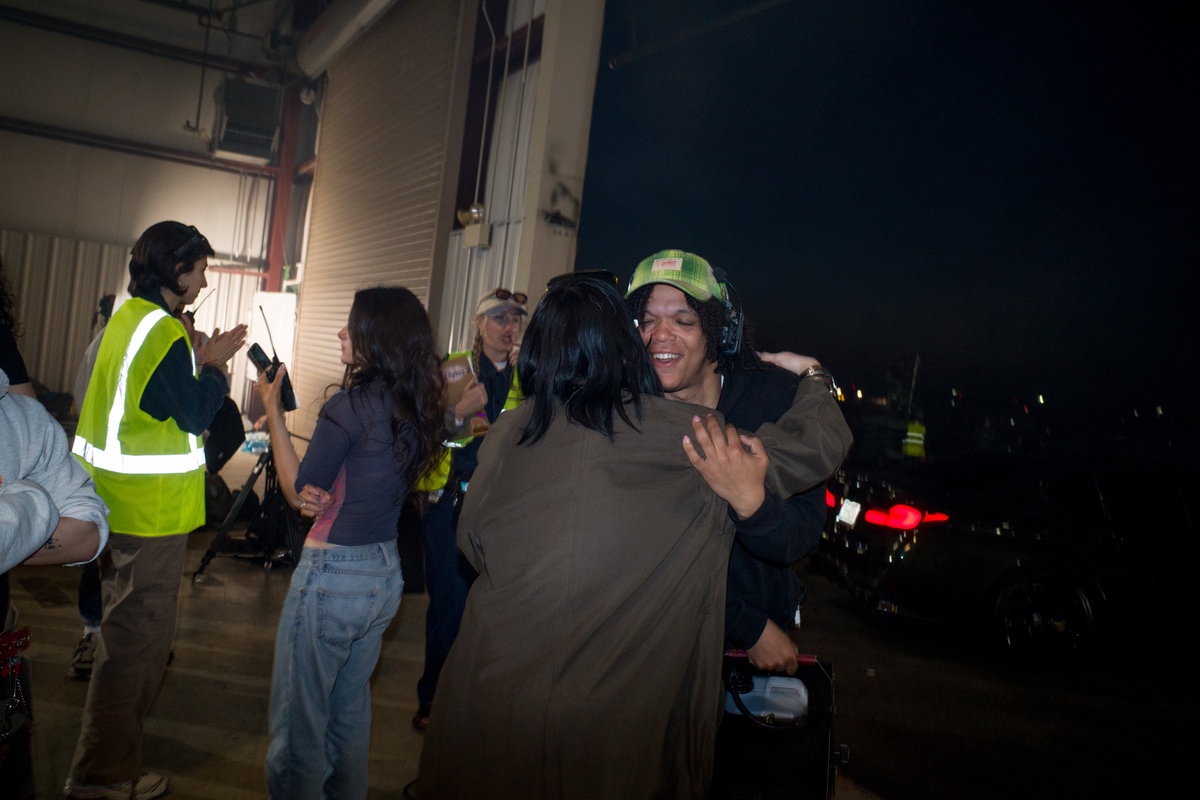
Everyone on the crew described the same thing in different words. The set was electric. The energy was infectious. People were excited to play. In an industry with a reputation for burning through crews, this shoot reminded everyone why they got into filmmaking in the first place.
Photograph by William Rowan
What This Project Proved
We asked Bree what Drive It Like You Stole It proved to her, not about the industry, but about herself.
“It reminded me that my belief is contagious,” she says. “When you commit deeply to an idea, the world rises to meet that energy.”
The project demanded she dig into the part of herself that always dreamed big, the instinct we try to dial down as we grow out of childhood, the one deemed a bit unreasonable. She let it shine. And it turned out that unreasonable belief, shared openly, was exactly the thing eighty people were hungry for.
Drive it like You Stole It – Still
The Invitation
For creatives contemplating their own labor of love right now, something ambitious, underfunded, irrational, and deeply personal, Bree has a message:
There is no such thing as being ready. Ambitious projects rarely arrive with perfect timing or resources. If artists waited for the most comfortable conditions to create, most meaningful work would never exist.
Make the big asks. Seek rejection like it is fuel. You will hear the word no so many times it eventually starts to sound like an amorphous, inaudible noise.
You only need the one yes.
Everything else is just character development.
And if this article reaches the exact young creative who needs it, here is what Bree wants to say directly to them:
“No idea is too big or too impractical. You don’t need permission to pursue something meaningful. You just need the courage to start.”
We are on a spinning rock in the middle of space.
You might as well enjoy the ride.
Drive it like You Stole It – Still
Pull Quotes
On work: “Life is meant to be enjoyed, and hard work starts to feel like play when you are chasing something that makes you feel more alive.”
On community: “Community is not branding but the practice of showing up for people even when it is inconvenient.”
On ambition: “Ambition is not something to apologize for. It is a rare gift of clarity.”
To her younger self: “Always choose the brave thing and have fun doing so.”
To someone waiting for permission: “If you are waiting for permission, you are going to have to give it to yourself.”
Drive It Like You Stole It was directed and produced by Breanna Lynn, written by Breanna Lynn and Aathil Chaturvedi, with cinematography by Myles Caba, editing by Logan Triplett, sound design by Theo Rogers, color by Nick Daukas, and stunt coordination by Joey Bearse and Casey Rutherford. Full cast and crew credits are available at gilbara.com.
