




Editor’s Note
There are festivals that produce content, and there are festivals that produce culture. The difference is not the lineup. It is the intention behind it.
OFFF Barcelona has been around for 26 years. It has outlasted the tools that named it, the platforms that inspired it, and the trends that tried to define it. It has survived a pandemic, a metaverse experiment it would rather forget, and the kind of growing pains that break most things. And yet every April, thousands of creatives from around the world board planes to Barcelona for it.
I wanted to understand why. Not the marketing answer. The real one.

So I sat down, twice, with Pep Salazar, the man who has been quietly running OFFF for over fifteen years. The conversation that follows is the kind Motionographer was built to have. What I found was not a festival director. I found a steward. Someone who thinks in circles, goes to dinner alone on opening night, and has spent a decade and a half polishing something he believes in without needing anyone to see him do it.
He talks about what OFFF got wrong, what he privately worries about, and what he hopes survives when he is no longer in the room. He talks about Motion Design not as a category but as electricity. And he talks about Barcelona not as a backdrop but as a collaborator.
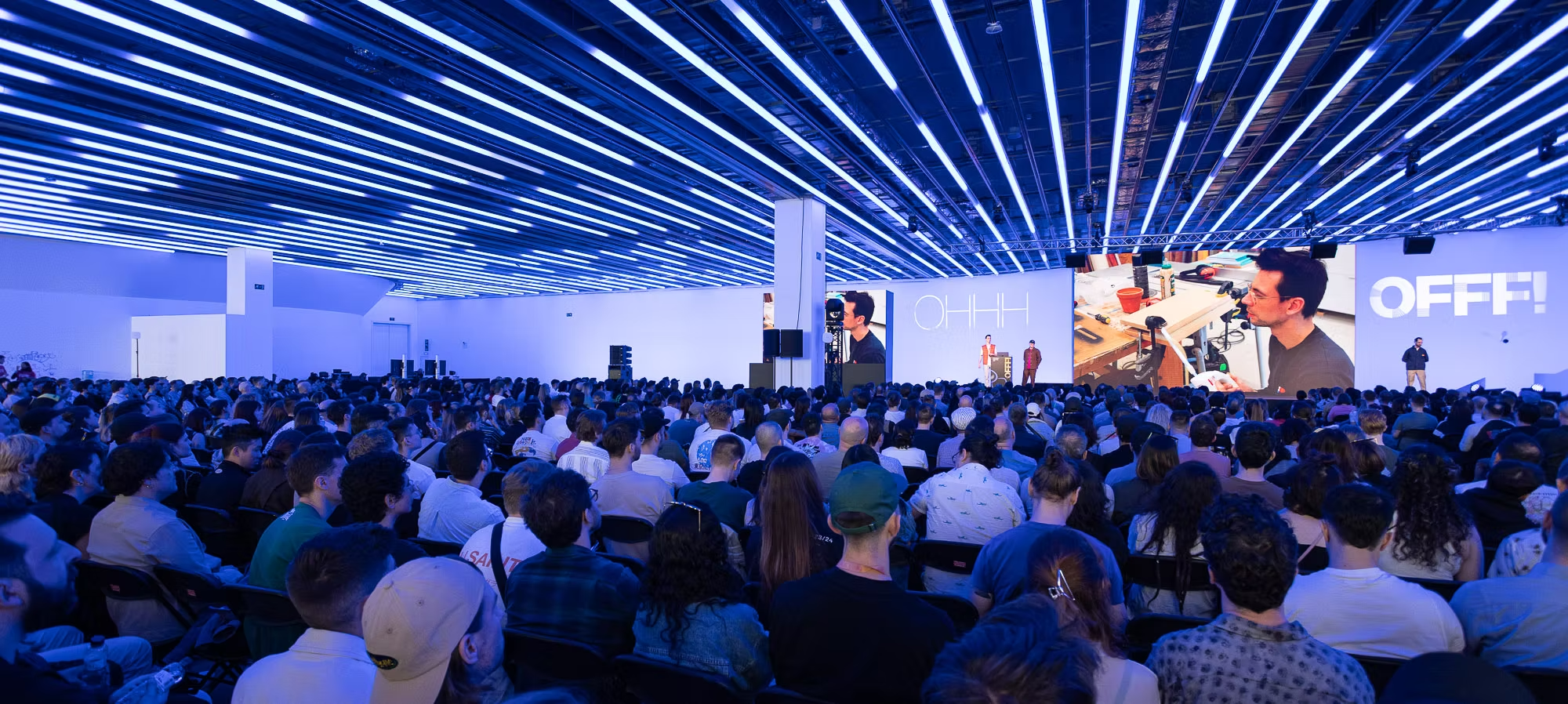
There is a moment, Pep Salazar says, that happens every year without fail. The festival ends. Three days of talks, late nights, thousands of creatives packed into the Disseny Hub Barcelona. And then, the week after, a wall.
“When you do the event, you are the most happy man on the earth. But the week after, it’s like, wow. I don’t want to do it again. I’m so tired.”
And yet, every year, he comes back. Not because he has to. Because he can’t imagine not.
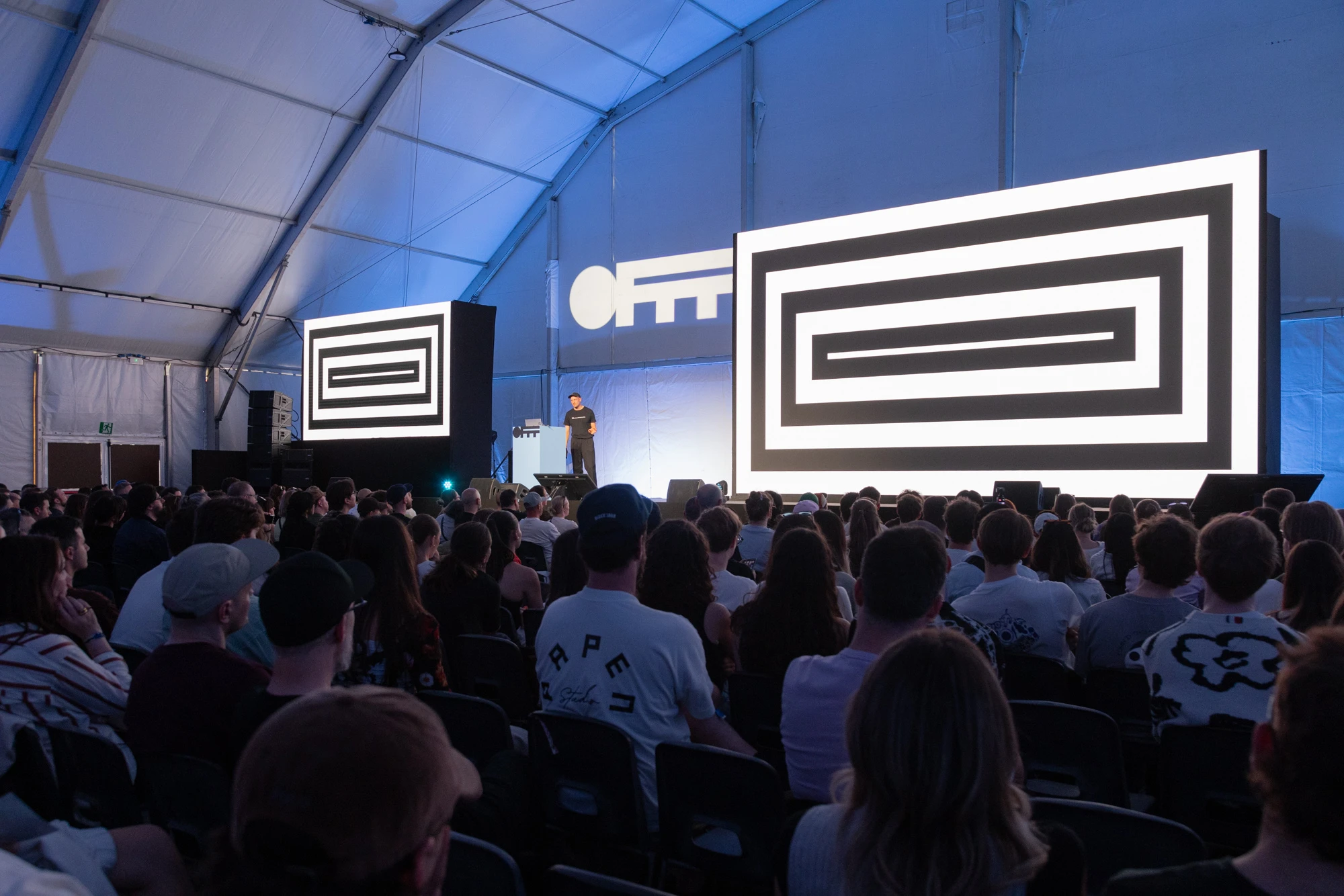
Pep Salazar has been running OFFF Barcelona for over fifteen years. The festival itself, which began as an Online Flash Film Festival at the turn of the millennium, turns 26 this April. What started as a local gathering for digital creatives who didn’t quite fit anywhere else has become one of the most respected meeting points in global creative culture, drawing Motion Designers, artists, architects, and thinkers from around the world each spring.
The name barely makes sense anymore, and Salazar knows it. “Flash doesn’t even exist today,” he says with a laugh. “And it was never about film. The only F remaining is the Festival one.” But what OFFF has become, a physical place where global creative culture meets itself, is something no acronym could contain anyway.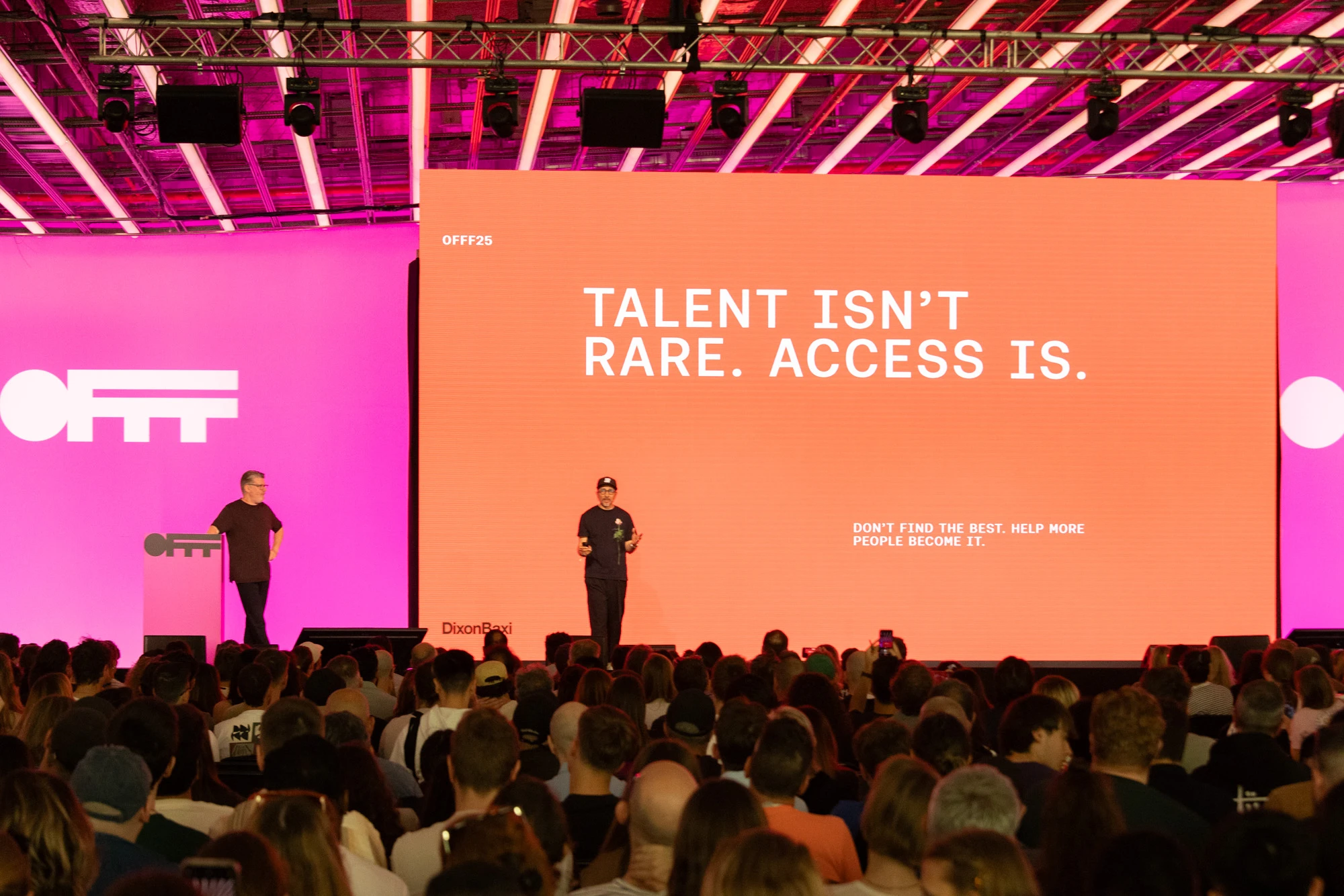
“OFFF is a peaceful place to meet. And we need these places, especially now.”
The Era We Are In
When pressed to name the distinct eras of OFFF, Salazar doesn’t reach for a tidy timeline. He reaches for something more urgent.
“Nowadays, we define OFFF as a peaceful place to meet,” he says. “I’m getting really worried because my audience is international, coming from all over the world. I have friends in the United States, Mexico, Russia, Ukraine, Israel. And I think OFFF is that. A welcoming place. That’s the era we are in now.”
It is a more political answer than it sounds. In a world fracturing along every possible fault line, Salazar is building something deliberately counter to that fracture. A room, three days a year, in Barcelona, where the only thing that matters is what you make and how you think.
“OFFF represents a space where the creative community can step out of routine, disconnect from the daily workflow, and reconnect with ideas, people and inspiration,” he says. And then, more quietly: “The world needs peaceful places to meet and be generous.”
He organizes it for a specific type of person. Not a real individual, but a composite built from years of watching the community move through the Disseny Hub. “I love this community because they are so critical, so highly positioned,” he says. “They are the people creating and shaping the visuals of the world. It’s a really nice responsibility to work for them.”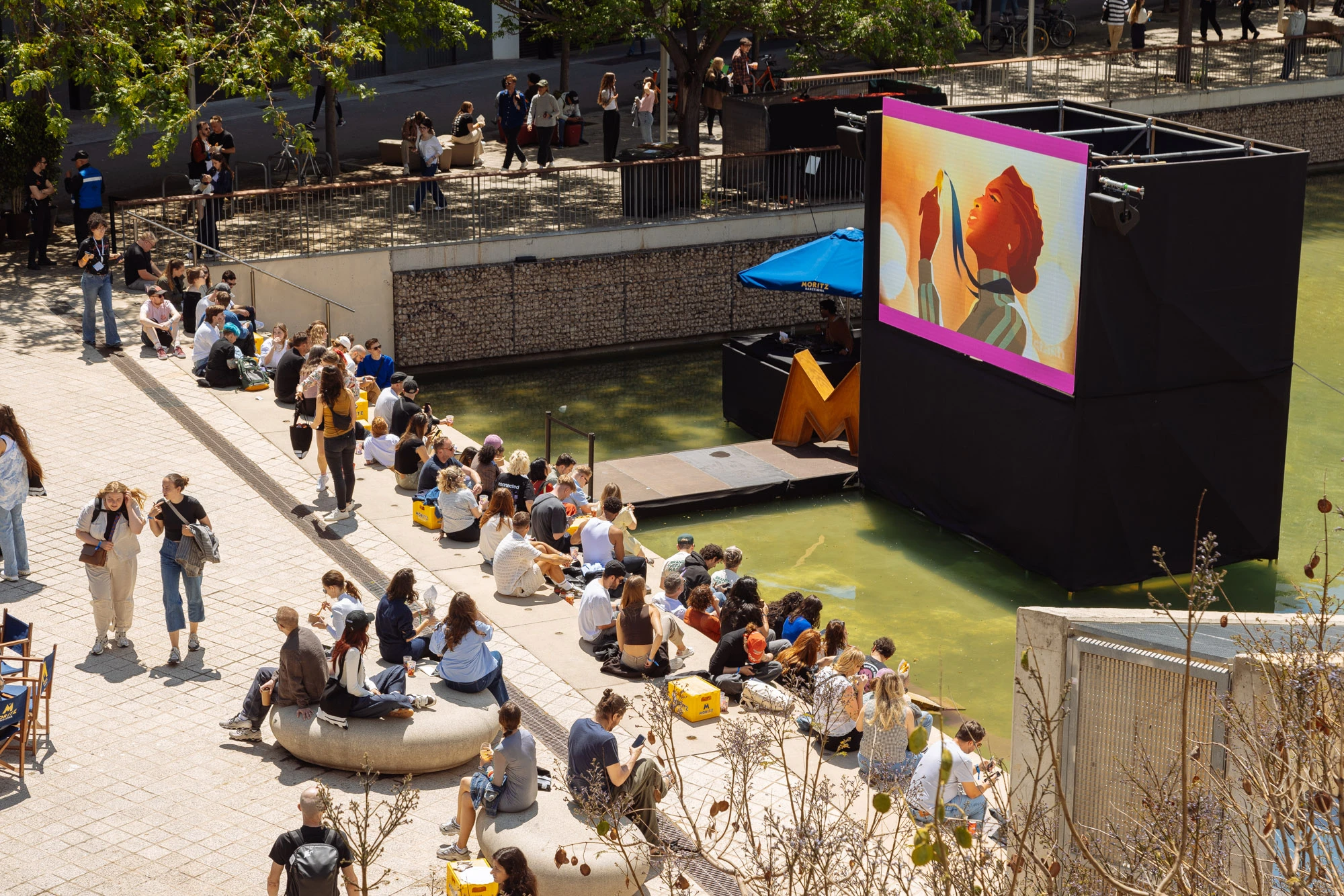
The Diamond
Salazar joined OFFF in 2007, during the festival’s nomadic years, when it was touring cities and reinventing itself away from its Barcelona roots. For years he ran things from the shadow, managing the team, the venues, the operations. When OFFF returned to Barcelona in 2010, Salazar stepped forward.
“I take the command,” he says simply.
He describes the feeling not as a dramatic handover but as a quiet internal shift. “Until that time I was always working for a third party,” he says. “From that moment, I was working for me. That’s a change.” He pauses. “It’s like a diamond you have to push. And we started polishing that diamond. I think now it’s still pushing, but more wider.”
What he protected immediately was something deceptively simple. “The spirit of openness and risk,” he says. “And the fact that OFFF has never been about VIPs or exclusivity. Speakers, studios and attendees are all part of the same ecosystem. That feeling had to remain intact even as the festival grew.”
The loneliness that comes with that role is something he speaks about with surprising candor. Not during the festival, when everything is electric. But in the long valley of the year surrounding it.
“Around summer it’s valley time,” he says. “You send an email and the answer takes three weeks. You send a WhatsApp and nobody answers. And it’s like, okay. Maybe I’m the one thinking about work.”
During the festival itself, he carves out one ritual almost nobody knows about. “OFFF takes three days and three nights,” he says. “At least one of those nights, I like to go to dinner alone. I need silence. I need to drink my wine and think about whatever.” He used to do it on Thursdays, the opening night.
“It’s like a diamond you have to push. And we started polishing that diamond. I think now it’s still pushing, but more wider.”
What OFFF Got Wrong
Every great institution has blind spots. The ones who know theirs are worth listening to. When asked directly what OFFF has gotten wrong over the years, Salazar doesn’t deflect.
“Repeating speakers too much,” he says. “I think it’s not good. We learned that from the community saying, we know this person’s work a lot. Maybe change.” He pauses. “But the bigger thing is not taking risks early enough. When you take a risk and it goes well, you think, if I had taken that risk before, it could have gone well many times. Not taking risk is something.”
The hardest decision, the one the public never saw, came during the pandemic. “We took the decision to turn OFFF into a metaverse,” he says. He is laughing, but there is real pain underneath it. “It was a real failure. A lot of people asked for refunds. We found the money. It was hard.”
The lesson was not subtle. OFFF only works when people are in the same room. The community it serves is not looking for a digital simulation of connection. It is looking for the real thing.
Looking ahead, his honest worry is not about logistics or ticket sales. “The technologies are in a war to see who has the most users,” he says. “It’s much more about numbers than quality. And that worries me. We need quality. And we have talent, always.”
On the bigger picture, he is clear-eyed. “What changed most radically over 25 years is the way we behave as humans,” he says. “We need to be present in a digital space, which is something quite new and completely insane in terms of how rapidly social networks are evolving. Because of this radical change, we also need to feel human, organic, alive. And we meet in events like OFFF.” He pauses. “Then we can talk about tools, AI, whatever. My answer is the same. Talent first, tool to serve.”
“Talent first, tool to serve.”
The Full Rock Band
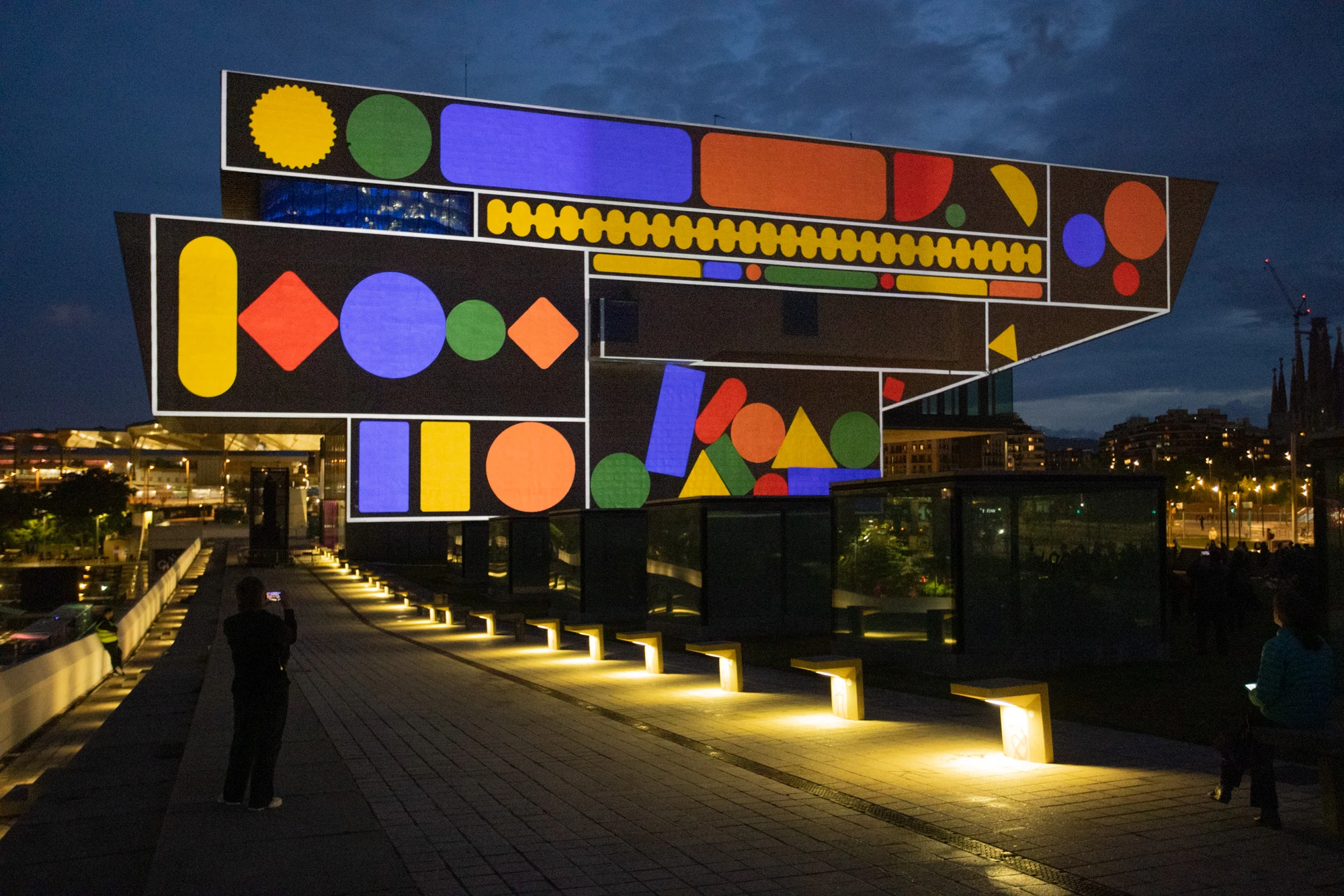
Ask Pep Salazar where Motion Design sits inside OFFF and he reaches for music.
“I organize a festival like a rock stage,” he says. “Motion designers are the full rock band. Five people playing guitars, double bass, drums. The graphic designer is more like Tom Waits. One man, one instrument, standing alone.” He grins. “Motion designers have the three screens and the power of the sound. That’s my real OFFF.”
It is an answer that says something about how he thinks, not in categories, but in energy. Motion Design is not a discipline at OFFF. It is the electricity.
“Even as we open to diverse disciplines,” he says, “Motion Design at OFFF is not a niche discipline. It’s a central thing. So visual, so exciting, so fun, and so nice to understand the journeys of the creators. Storytellings, technologies, sounds. Motion Design is all.”
“What would OFFF feel like without Motion Design?” I ask.
“It’s another conference,” he says simply. “You’d have to invent another one.”
On the evolution of the moving image, he turns philosophical. “All images are static by nature,” he says. “And then we have the chance to move them. Young people don’t think visually static anymore. They think moving, all the time. And I think we need movement to think as human beings. When we move, we think better.” He pauses. “Having said that, there are speeds on the moving image now that are too much for me. Two thousand million images in a film. That’s too much. But somewhere in between is the balance that shapes the world.”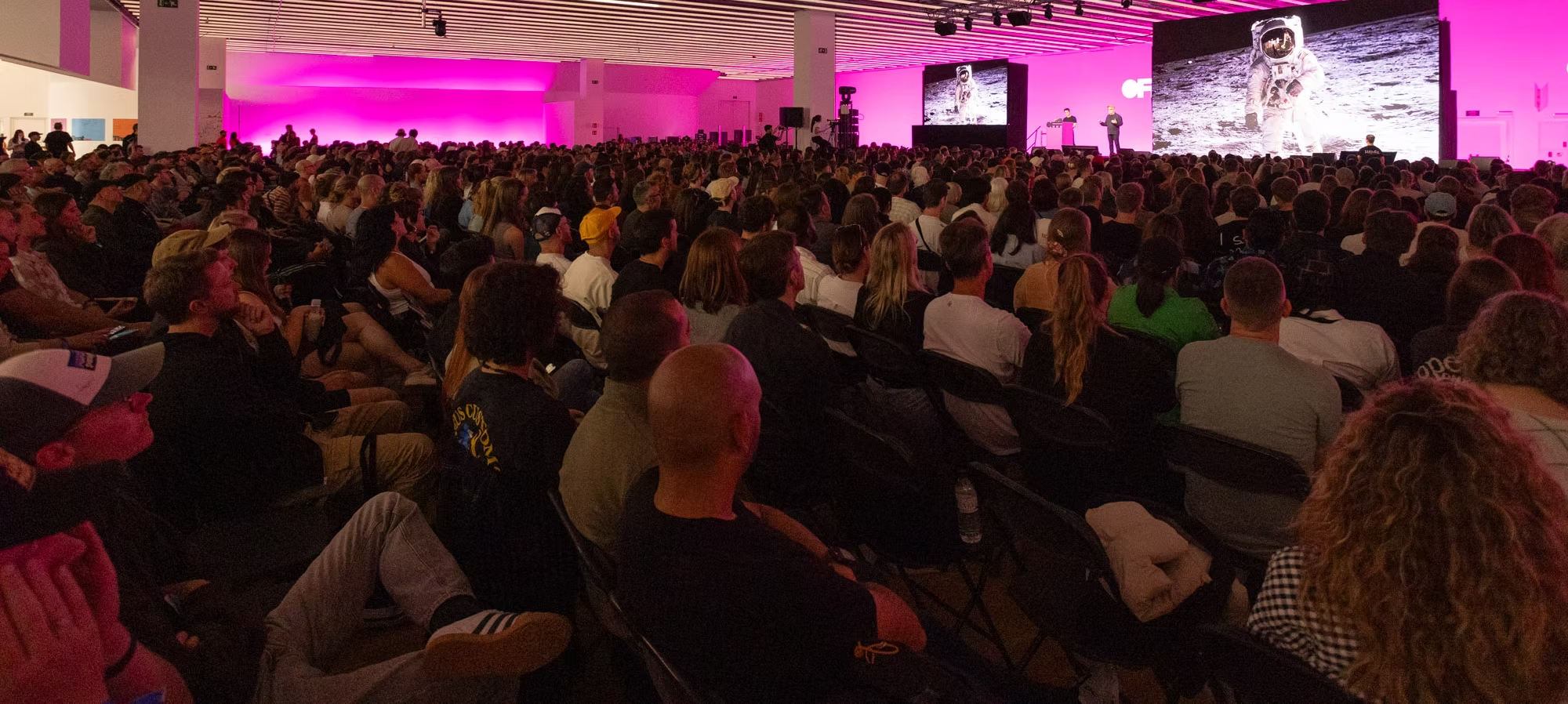
“Motion designers are the full rock band. The graphic designer is more like Tom Waits. One man, one instrument, standing alone.”
The Circles
One of the most original things Pep Salazar has ever said about curation is that he thinks in circles. An inner ring of past OFFF speakers. A second ring of their recommendations. And then, further and further out, voices that nobody has spotted yet. The further out you go, the harder the reach, and the more surprising the discovery.
“Sometimes the most interesting voices are not the most visible ones yet,” he says.
What he looks for in those outer circles is not a portfolio. It is something harder to quantify. “Honesty,” he says. “Curiosity. The ability to reflect on their own process. Great work is important, but the people who leave the biggest impact are those who can share their thinking openly.”
This year, the example he gives is Johanna Chopovska, a twenty-something designer who began making filters on Instagram. Salazar, 51, found her by searching the platform himself, without a recommendation, without an introduction. He sent her a direct message. She replied. He first invited her to OFFF Sevilla, the festival’s smaller edition, to get to know her before bringing her to the Barcelona stage.
“That’s the outermost circle,” he says. “You get there by risking. By taking the chance to invite somebody you don’t even know, whose work you’re still learning.”
He adds, almost as an aside: “I have no social media myself. But it’s surprising, because I connect with many people, and they answer.”
Barcelona Is Not the Backdrop
You cannot separate OFFF from Barcelona. Salazar does not try.
“Barcelona is part of the festival,” he says. “We are from here, we love Barcelona, and we love that people come to OFFF and discover Barcelona. The openness of the city, its design history, its cultural rhythm, its weather, all of it shapes the experience in ways that would be very difficult to replicate somewhere else.”
What does he tell visitors? The answer is characteristically simple. “Our visitors are sophisticated,” he says. “They will find all this in the city. You just need to walk across it. As a Mediterranean and European city, it’s walkable. Take advantage of this.”
This year, OFFF 2026 is taking place at Disseny Hub Barcelona, with the Main Titles by PJ Richardson projected as a mapping series onto the building’s facade, making the city itself a screen. It is the most literal expression yet of Salazar’s belief that OFFF belongs not just inside a venue but in the air of Barcelona.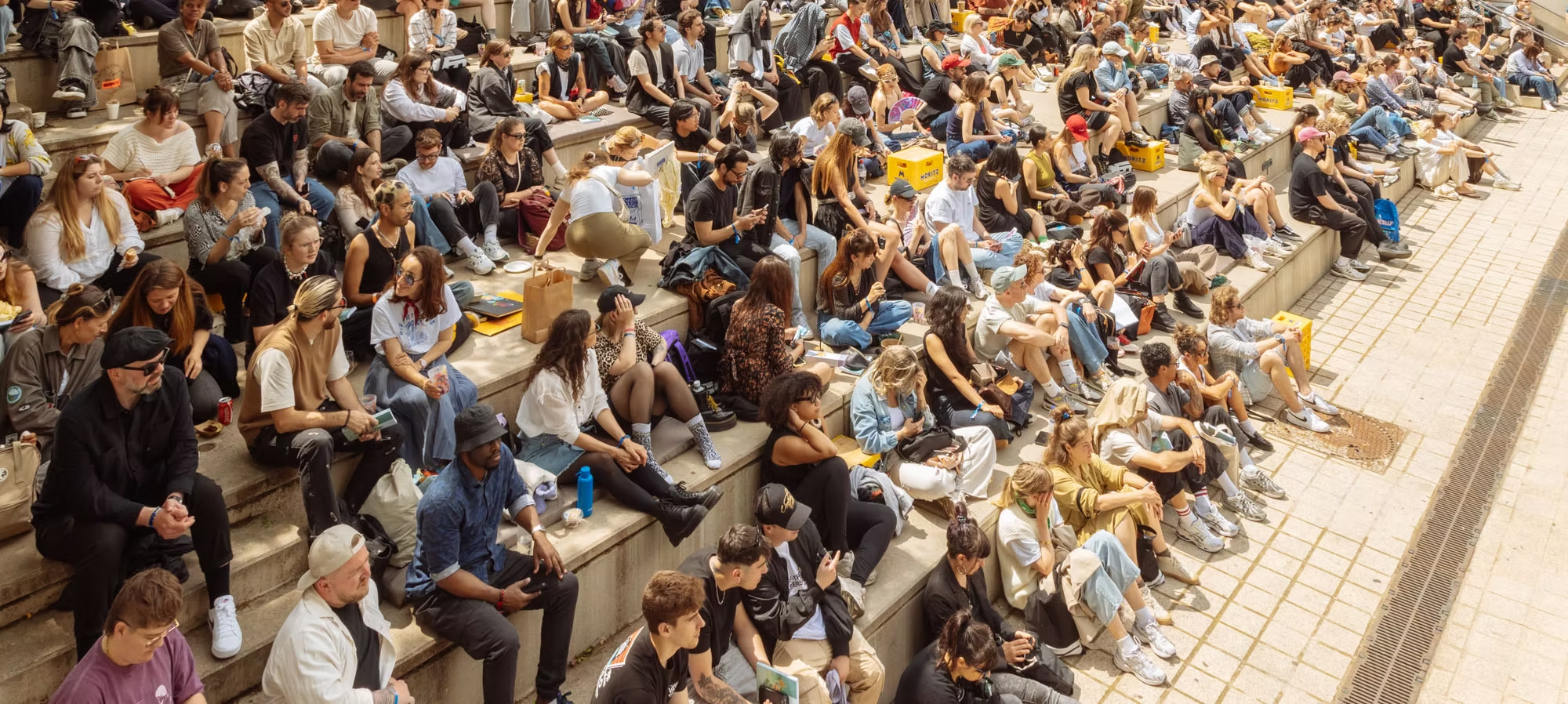
What Must Never Be Lost
When OFFF is 50 years old and Pep Salazar is no longer running it, what does he hope survives?
“That sense of discovering,” he says. “Making people feel new in the vision of discovering. If we don’t lose that, I think OFFF can last fifty years.”
It is a quieter answer than you might expect from someone who has spent a quarter century building something at scale. But it is exactly right. The discovery is the point. Not the lineup, not the venue, not the visual campaign projected onto the Disseny Hub facade. The feeling a person has when they see something for the first time and realize it changes what they thought was possible.
That is what OFFF has been protecting for 25 years, even when it didn’t know quite how to say it. And it is what Pep Salazar is still going to dinner alone on Thursday nights to defend.
“OFFF exists because creatives need places to meet and be curious,” he says. “Because we love to see, with our own eyes, how creativity is shaping our world.”
“OFFF exists because creatives need places to meet and be curious.”
Rapid Fire
A trend you think is overrated? AI, if AI is only AI.
A discipline outside design that inspires you right now? Music, dance, and opera.
The biggest mistake a young designer can make is… Rely on technology.
I knew OFFF had changed the world when... When we saw projects live that we had first seen at OFFF.
OFFF is not a festival. It is a… A place. A party. A mindset.
A creative belief you will defend forever. It’s based on talent. Whatever. Based on talent.
One word you hope people feel when OFFF ends each year. Excellent.
OFFF exists because… Creatives need places to meet and be curious. We love to see, with our own eyes, how creativity is shaping our world. The world needs peaceful places to meet and be generous.
Barcelona taught me… You can make your ideas happen and the city is your playground. The most beautiful city is ready for the most beautiful community.
The future of creativity depends on… Us being cultured.
OFFF Barcelona 2026 runs April 16-18 at Disseny Hub Barcelona. Tickets and full lineup at offf.barcelona.