




Sponsor
Cream O' the Crop
Sponsor
Quickies
Interview: Chatting with The Action Cats


Run Wrake: The Control Master

Legendary out-there animator Run Wrake partnered up with Veer and CSA Images to create “The Control Master,” a hilarious pastiche of retro illustrations and comic book storylines. Like much of Run’s work, this project is full of unexpected visual combinations and a deadpan weirdness held together by a familiar but twisted narrative. I love it.

Run Wrake first came to my attention when we posted “Rabbit” some time ago. I then learned that he’s been at the game for a long time and is responsible for some of my favorite MTV IDs from days of yore. Run appropriates found imagery and collages it with his own custom visuals while endlessly mixing animation techniques. He is a post-modern animator par excellence, but without all the stuffiness associated with that tag.

Big thanks to Mark Webster for the tip!

Book Review: Graphic Design: The New Basics

As promised, this is my review of Ellen Lupton and Jennifer Cole Phillips’ Graphic Design: The New Basics, published by Princeton Architectural Press.

Overview

Ellen Lupton and Jennifer Cole Phillips have set out to create a definitive book on the subject of contemporary graphic design theory and practice for students and new designers. In Lupton’s introductory essay, “Back to the Bauhaus,” she explains that the philosophical foundation for the book is squarely in line with the Bauhaus movement of the 1920s, which emphasized form as the primary means by which graphic design should be understood and practiced.

With this in mind, each chapter of the book presents a formal concept along with several examples, mostly student work from the Maryland Institute College of Art, where Lupton and Cole Phillips both teach. The concepts range from old standards like “Scale” and “Color” to the slightly sexier “Time and Motion” and “Rules and Randomness.”

Although the book is aimed mostly at graphic designers, its truisms ring true for anyone involved in design. The chapter on Time and Motion, for example, might just contain the best synopsis of the challenges facing motion graphics designers that I’ve ever read:

Film is a visual art. Designers of motion graphics must think both like painters and typographers and like animators and filmmakers. A motion sequence is developed through a series of storyboards, which convey the main phases and movements of an animation. A style frame serves to establish the visual elements of a project, such as its colors, typefaces, illustrative components, and more.

Such frames must be designed with the same attentiveness to composition, scale, color, and other principles as any work of design. In addition, the motion designer thinks about how all these components will change and interact with each other over time.

The Content

The introductory text for the book and for each chapter is concise, lucid and unpretentious. Lupton and Cole Phillips never lose sight of their audience and are careful to speak in well-planned, brief prose. This simplicity doesn’t compromise the depth of their discourse, though. They are aware of the ways in which concepts overlap, and while they present each as a discrete idea, they are keen to point out that interplay and tension between concepts is often what makes a particular design successful.

GDTNB is chock full of relevant, well-crafted examples. Many are real-world projects from former students, and several special sections throughout the book show work resulting from classroom assignments. The book also includes many examples made with Processing, and the authors seem keenly aware of the ever-shifting relationship between technology and design. In time, perhaps these Processing examples will appear dated, but at the moment they lend the book a forward-looking freshness without feeling trendy.

The Design

In keeping with classic design education books like Armin Hofmann’s Graphic Design Manual and Josef Müller-Brockmann’s The Graphic Artist and his Design Problems, GDTNB uses a clean grid for its layout. It works beautifully for both browsing and for research. Despite the plethora of images in the book, the spreads are spacious and the images are well-captioned.

The book is also beautifully produced. The image quality, paper weight and binding are all high grade, lending the book both a literal and a figurative weight that feels deeply satisfying. You get the sense that Lupton and Cole Phillips want you to hold onto this one for a while, and with construction like this, the book should be up to the task.

One Minor Complaint

One of the reasons I initially bought GDTNG was because of its incredibly useful companion website, which is a microcosmic representation of the book as a whole. I was a little disappointed, however, to discover that the “Design Problem” assignments on the website didn’t make it into the book. They’re fantastic exercises for teachers or for anyone serious about self-study, and I wish they would have been included in the printed version.

Bottom Line

If you’re at all interested in design education—either as a teacher or as a student—Graphic Design: The New Basics is required reading. Ellen Lupton and Jennifer Cole Phillips have made something more than a mere textbook; they’ve created an authoritative and thorough yet useful and inspiring companion for the successful practice of graphic design. I’m confident that I will happily revisit this book again and again during my never-ending journey as a student and teacher.

Fons Scheidon: Voicst “Feel Like a Rocket”

Fons Scheidon is one of those unique voices that comes jetting down from the mesosphere every so often with a project that could only come from his delightfully odd mind. For his latest gig, a music video for Voicst’s “Feel Like a Rocket,” Fons teamed up with some of the same crew that worked on the MTV Asia MobSquad series, including the bad-ass character animators at Brazilian studio Birdo.

At the risk of traipsing into pseudo-psychological territory, I think the reason Fons’ work speaks to me is because of the way it combines faded memories of Saturday morning cartoons with my current reality, one that is tinged with the grotesque and absurd commonalities of modern life. “Feel Like a Rocket,” for instance, has a Thundercats-ish retro warmth to it, but it’s about a dysfunctional band of intergalactic misfits getting together to rock the universe. It makes no sense. And yet it makes total sense.

Make sure to scroll down the project page for credits, boards and other goodies.

LeMob for IWC Watches

LeMob knocked themselves out for this 10-minute product film that tells the story of six different IWC watches. It’s a classy bit of work that I found compelling, despite its running time and the fact that I haven’t worn a wristwatch in the past ten years.

Visually, this project picks up where Benjamin Goldman’s “New York Divided” project leaves off. With only two 3D elements (the seashell and metal Da Vinci clockwork), everything else is 2.5D, consisting of footage provided by IWC, stock images, digital photos and some green screen live action. It all blends together perfectly and creates a mood befitting the subject matter. There’s a sensitivity to flatness vs. realism that gives the work a healthy dose of charm.

The film was originally intended for a presentation at the annual watch fair in Geneva, but it might be used in retail settings as well.

Dstrukt / DixonBaxi for Sci-Fi Channel

London based creative agency, DixonBaxi recently got together with Chris Hewitt to create a chaotic 60″ ident and graphics package for Sci-Fi Movies. I’d say the project looks very ‘Chris’, putting to good use techniques he experimented with in his various short personal projects.

I really like the fact they didn’t go overboard with glitchy motion tricks, keeping it much more restrained. Regular audio partner in crime Hecq took care of the sound with his usual panache.

The ident, graphics package and some behind the scenes photos can all be found on the Dixon Baxi project page.

Charlie Company for truTV

Way back in the Tween days, I made a post celebrating Charlie Co’s work for Court TV. Since then, Court TV has reinvented itself as truTV, but they haven’t forgotten how good Charlie Co’s work is.

These recent IDs (posted about a month ago on the Charlie Co site) are full of the same playful typography and slick camera work as the original series, but they push the illustrative tip a little further. (Make sure to hit the drop-down menu to see all the spots.) The voice acting is a bit uneven, but not to the point of distraction. The real star here is Charlie Co.’s design work.

Thanks to Nizam Mohammed for the tip!

Lovely Productions for Orba Squara

Orba Square Videoclip

Since I have moved to Ireland about 5 months ago, I’ve had the chance to meet incredible people here—friendly and talented folks. Lorcan and John were two of them, both involved in this project directed by Lorcan himself.

This very nice composition of cute graphics with simple movements proves the point that you don’t always need extreme explosions of 3D strokes or massive camera movements to get the message across. Check out the other works from the folks of Lovely Productions.

180Amsterdam vs. Koichiro Tsujikawa

A new advert for smartphone manufacturer HTC has been making the rounds lately. It’s a beautifully realized mini-narrative starring a pair of dexterous fingers as they walk, climb and skate through several lushly detailed miniature scenes.

I was pretty excited about sharing it with you, gentle readers, until I was shown this 2001 Cornelius music video from the amazingly talented Koichiro Tsujikawa:

I’ve rambled here on Motionographer plenty about the complexities of simultaneous invention and the dangers of over-applying the term “rip-off.” Usually, the accusation is delivered in black-and-white when the truth is a mottled mess of gray, especially when one’s perspective is enlarged to include the entire history of design and art—which, given a dash of cyncism, could be read as one long series of “rip-offs” following another.

A cursory search on YouTube turned up another finger-walking ad that contains a Billy Jean sequence with a lighted floor strongly reminiscent of the Saturday Night Fever sequence in the HTC advert.

I asked agency 180Amsterdam if Koichiro Tsujikawa’s video was an inspiration, but I haven’t heard back yet. His name isn’t mentioned anywhere in the press release or credits, despite many striking similarities. (There’s even a skating sequence.) I promise to relay anything I hear from them to you.

“Set Your Fingers Free” credits

Maxim Zhestkov for Advanced Beauty

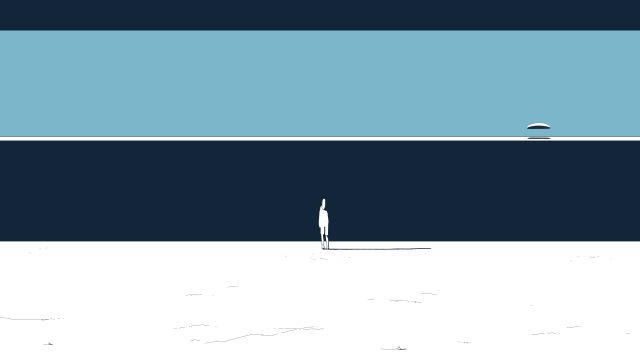
A new visual statement by Maxim Zhestkov comissioned for Advanced Beauty project. Maxim always has been a director who stands out from the crowd and this time he brings a beautiful snowy infinite space with a story of birth, life, agony and death. From nowhere to nowhere.

Molho for MaxHaus

This new project for modular living firm MaxHaus from Brazilian studio Molho brims with vivid colors, ethereal imagery and fluid animation. If the combination seems familiar, it might be because Molho’s founder and creative director, ex-Lobo designer Marcelo Garcia, has been featured here before.

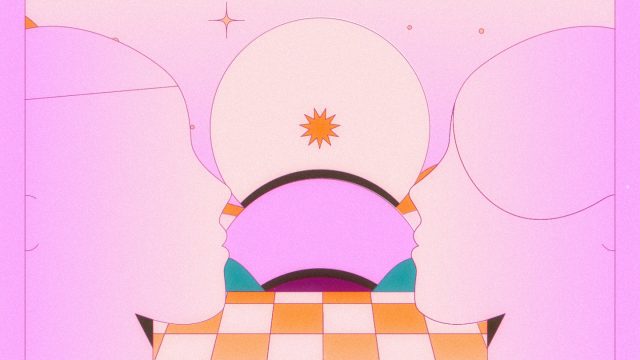
Agency W/Brasil gave Molho an open-ended brief for this two-minute project, and in turn, Molho pushed the envelope quite a bit. The piece is ostensibly centered on the concepts of “habitat, diversity, living, and taste,” but it goes beyond that into an abstract land of tangential connections and dream sequences. It’s an artistic, unexpected approach to what could have been a predictable discourse on architecture and design in another studio’s hands.

Molho is repped in the US by Pitch White and in Europe by El Niño.

« Previous Entries     Next Entries »