

RSS feeds provide an alternative way of keeping up with Motionographer's content. Using an RSS reader, you can add our feeds to your daily rounds and be sure to never miss a great post.
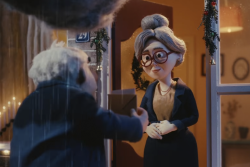
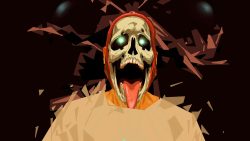
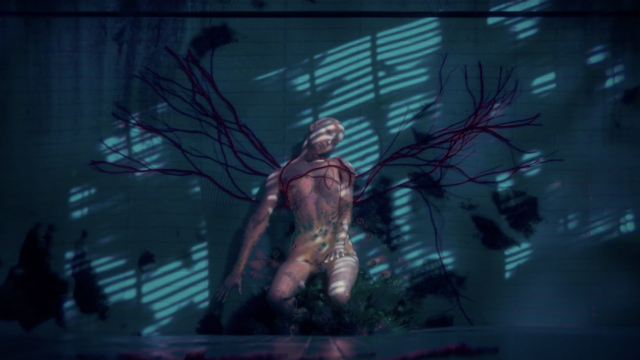

This short film directed by Marc Ruhl is a meditation on death, but it put a big smile on my face. (And I’m sure it will do the same for you). Find out why, here.
Good General is back with another impressive lo-fi piece that requires massive pre-planning. All shot with macbook pro cams of the band’s fanbase around the world. Directed by: Masashi Kawamura + Hal Kirkland + Magico Nakamura + Masayoshi Nakamura
Patrick Boivin’s latest stop-motion short—a comedic battle between Iron Man and Bruce Lee—burned up the interw3b as soon as it was released a few days ago. And for good reason. Boivin’s storytelling skills are matched by his spot-on stop motion work. Watch the making-of video to get a glimpse of Boivin’s meticulous process.
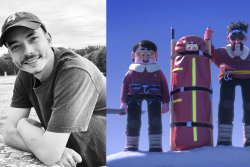
2D, 3D, stop-action, claymation, practical, digital—there’s just about everything in here. My favorite moments are the bursts of cheerful, hand-hewn type.

I’m fairly certain folks will be divided over this one: half feeling that it’s a happy ensemble of imagery, the other half feeling it goes a bit too far. Personally, I like it, and I think it works. It’s as if an entire morning of Saturday cartoons from my childhood has been condensed into an elaborate nugget. It’s warm, earnest and pure.
Leo Burnett Lisbon and one of my favorite Brazilian studios, Lobo, have teamed up to create this arresting spot for Amnesty International.
Based on the print campaign created by Leo Burnett Lisbon, the spot is a gripping journey through some of the darkest moments of modern history; from the brutal colonization of Africa and South America to the Bolshevik Revolution, from WWII to the latest battles in the Middle East—to name a few.
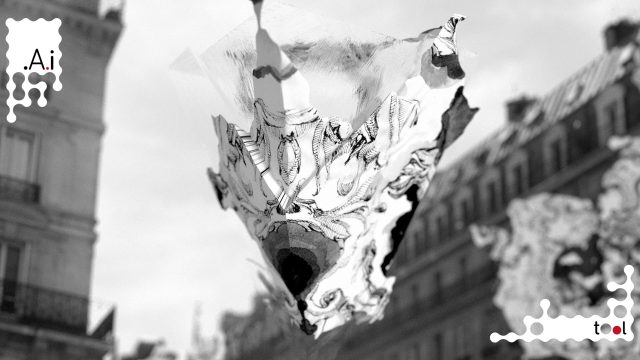
The hard-hitting script is backed by historic woodcut illustrations and b&w photographs that appear to have stormed off the pages of newspapers and broadsheets from years past. The ripped paper transitions give the piece a seamless flow and underline the violence running throughout the spot.
The Nina-inspired animation was handled by up-and-coming Brazilian animation studio Animatorio, with sound design by Lobo’s musical genius, Paulo Beto.
Spring is here, and I’m falling in love all over again with Motion Theory. They’ve recently released a bevvy of projects that show off their incredible diversity as image-makers and storytellers.
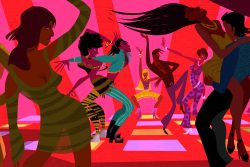
The spot’s seamless transitions are not only visually pleasing, they actually reinforce the underlying messages of interconnectedness and diversity. Coupled with the retro tinged palette and illustration work, the spot is smile-inducing even on the third or fourth viewing.
One of animation’s greatest strengths is its ability to simplify complex systems for digestion by the widest possible audience. This is something Montreal based Atelier Transfert understands implicitly.
Their approach is very specific: Using mostly stop motion, they “can take abstract concepts and bring them into the tactile world to illustrate a very simple message. Through simple and visually entertaining analogies, we can communicate complex features.”
Case in point is their recent video explaining how Email Center Pro software works. Atelier Transfert mixes metaphor and humor to keep things simple and engaging. It’s a technique that’s harder to master than it sounds, so I thought I’d ask them a few questions about their process. Atelier Transfert’s Christian Martel graciously responded.
If Google Translate can be trusted, “Atelier Transfert” roughly translates to “Transfer Workshop.” Why did you choose that as your studio’s name?
Yes, Google Translate is accurate. ‘Atelier’ in French often suggests an artist’s workshop or practice, and ‘transfert’ means transfer, which I sort of meant as in transport—intersecting various approaches, disciplines, and media through a design process.
These stop-motion tutorials we’ve been doing lately are still very rooted in design in that they attempt to reduce a message to its simplest expression.
AT has a very specific approach—namely, using stop-motion animation for “how-to” or expository videos. Why stop-motion? Why not, for the sake of argument, 3D animation?
London based Mainframe recently showed what they are capable of with an epic rebranding of Nickelodeon. Unusually for Nick, they let the design take the centre stage, with their flagship characters tagging along to enjoy the ride.
I had chance for a quick catch-up with Mainframe’s Managing Director Adam Jenn and team Mainframe for a little Q&A session:
What tools did you use to create the spots?
The main tool of choice was Maya for all the 3D modeling, rigging and animation. Each shot was tracked using SynthEyes and outputted to Maya for the main scene work and also to After Effects for the later compositing stages. Once the animation was completed, an average of 5-6 different render passes were outputted allowing a greater level of fine tuning within the composite. Final colour grading was all handled within After Effects.
On a project of this magnitude you must of had to please a lot of people. Could you please give us a little insight into the whole creative process?
Everybody’s favorite AENY guest, Andrew Kramer, is going to be presenting this Thursday at 6:45pm. I missed Andrew’s last standing room only presentation, so I’m definitely going to be at this one.
Andrew is the guy behind the wildly popular mograph tutorials at Video Copilot. He’s also created scores of stock assets, worked on loads of commercial projects and built a thriving community of learners. When he sneezes, valuable tips and tricks scatter everywhere. It’s nuts.
We’ll also give away two passes to F5—not to mention the landslide of other great prizes that AENY regularly delivers. Full details on the AENY site.