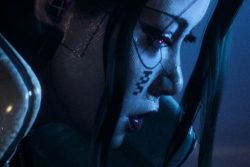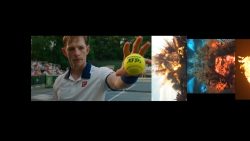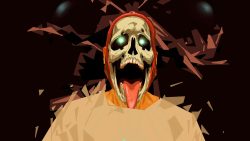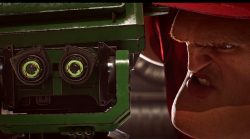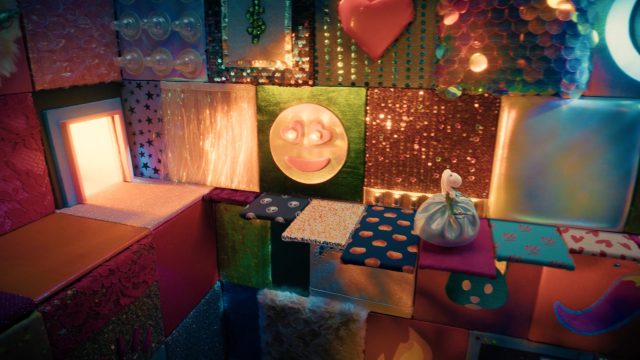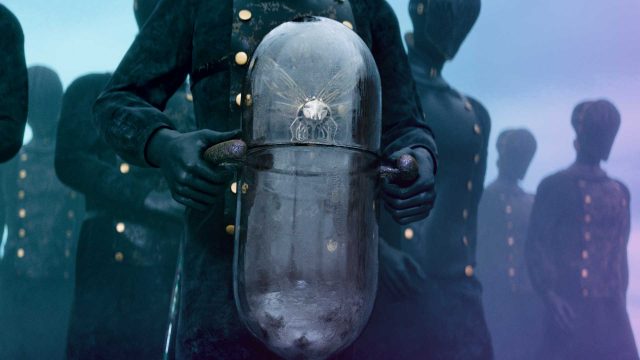






Back in April, when Adobe and Cut&Paste announced the winners of the See What’s Possible Challenge, one entry really stood out to me. "The Experiment" was created by a mysterious group called The Action Cats, who I later learned were actually an in-house group of designers and animators at ad agency Goodby, Silverstein & Partners.
That piqued my curiosity. An agency made this?! So I called them up and we chatted for almost an hour.

Created for auto shows promoting Lexus’ new Hybrid cars, the film tells a beautiful and poetic tale of synergy, love and transformation. It is filled with engaging, mysterious moments, backed up by an amazing soundtrack that gave me goose bumps.
Make sure to check out the rest of Barbecue’s work. Some top notch stuff in there!
UPDATE: One of our readers found a quick little behind-the-scenes at the Trapcode Gallery page, apparently the only 3D generated image is the reveal of the drivetrain and the packshot of the cars, the rest was entirely done in After Effects 2.5D using Trapcode Particular and Shine, WTF?! (Thanks, Lex!)
Client: Lexus - Lexus Hybrid Drive
Agency: Deri Design
Directorial Studio: Barbecue design
Music: Michael Kadelbach
In partnership with the Executive Producer of OFFF NY, I’m pleased to announce F5, a two-day festival of creativity taking place in New York City. Although the event won’t be until the spring of 2009, I want to put it on your radars now and encourage you to subscribe for updates on the F5 site. In addition to getting F5 news before everyone else, subscribers will get advanced access to ticket sales, which will be limited.
I’m not going to say anything more about the event right now, except that it’s going to be amazing. F5 goes beyond just motion graphics into the fields of filmmaking, photography, graphic design, art, music, interactive design, advertising and experience design. The goal of F5 is to change the way you look at creativity, and in so doing, change the way you look at your work and your life.
“Costs of War” is exactly the kind of thing that makes me believe in motion graphics. For the moment, put the subject matter aside. Maybe you agree with its message, maybe you don’t. Regardless, the method of communication is undeniably powerful. Let’s try to break down why this—and other visual essays like it—are such powerful creations.
Unity. The visuals, soundtrack and writing are united as one. Each is not there to bolster or decorate the other; they are interdependent and inextricably linked. The iconic graphics are instantly recognizable, allowing us to divvy up our remaining perceptual resources between the text and the animation.
Brevity. Two minutes or less. Our world is full of distractions and obligations. Motion designers are among the most attention deficit disordered people on the planet, so they understand this reality all too well. Motion design, in turn, should be short and sweet—or sour, in the case of this particular project.
Intensity. Despite what Michael Bay might think, intensity has nothing to do with NPM (Number of Explosions per Minute). Nor does it have anything to do with the number of elements in a scene or the gusto with which they enter/exit. Intensity increases as complexity decreases. Like any good essay, “Costs of War” focuses on one central argument and then pummels viewers with data to support that argument.
The project was created by Bran Dougherty-Johnson, who has a personal connection to the United States’ ongoing overseas conflicts. There are several startling statistics relating the costs of war available here and here.
But without the all important element of time, statistics alone feel disposable, ineffectual. By bringing them into the fourth dimension, Bran made them undeniable and real. You can feel the money draining away as the video marches purposely forward. The playhead becomes a slow-motion guillotine, along with all its attendant anxieties and urgencies to do something. Now.
Motion +61 DVD: Volume 2 has been released, and it looks promising. The showcase of Australian talent includes work from Collider, CO-OP, Monkeylab, Qube Konstrukt, Sopp Collective and XYZ Studios (among others).
There’s one free copy available to the first Motionographer reader who emails me at justin@motionographer.com with their name and mailing address. Be quick!
Really great copywriting and a friendly hand-made feel make this spot for Luft Logistics by Brazilian collective Monsta one of the most enjoyable commercials I’ve seen in a while. Like their previous spot for Luft, this one takes us on a whirl-wind ride through the reasons behind a scientific measurement that has it’s origins routed in some really basic and seemingly ridiculous history. The whole thing has the feeling of one of those “Did you know?” historical / factual books I read as a kid (some time in the early 1800s).
I love the fact that this spot all lives in its own space (a packing box), and the jerky, sticky-back tape feel of the motion is really endearing. I’m not in love with the heavy spot-lighting, but it does its job nicely of pulling our attention from one place to the next.
Monsta looked after art direction, illustration, filming (all done in one take) and post. The whole project took around 2 months to complete. Post was completed using AE, Poser and Cinema 4D.
Oh, and thanks to Boca for translation services. Cachaça are on me ; )