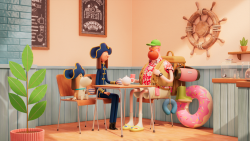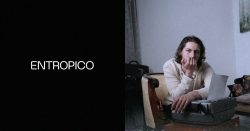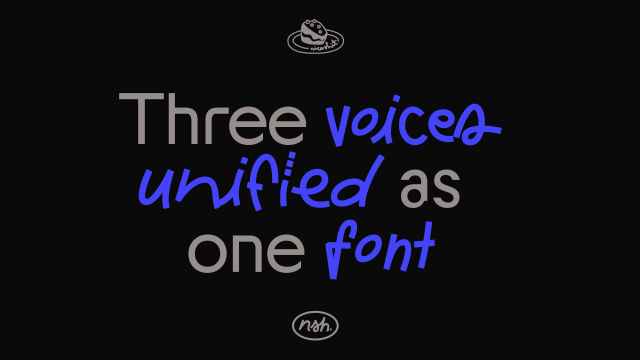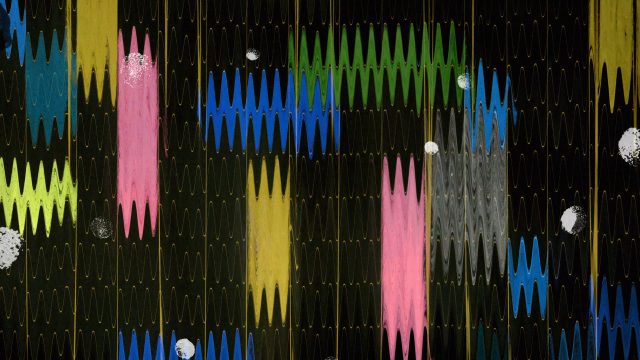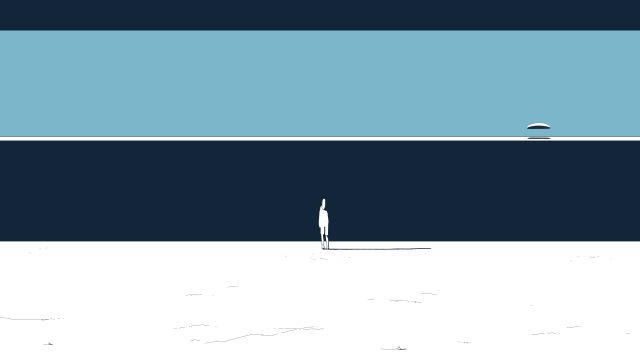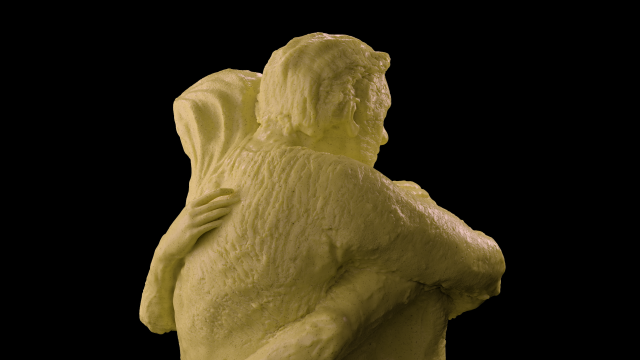





If you love typography, look no further. Handmade by students and faculty at Brigham Young University (BYU), the opening-title for the 5′th annual Typophile Film Festival, is a bona fide type de force. Uniquely inspired by the 5 Senses, the designers stir up a theme that describes how sight, hearing, taste, smell, and touch inform human creativity. Like a game of dress-up, each of the senses is visually fitted in it’s own swathe of tactility – thumbing their nose at squeaky-clean CG, and relying entirely on raw materials. Its means are thrifty, but in scope, ambitious. The result is authentic.

Naturally, the common denominator is typography, and like a buffet of sorts, there is something here for everybody. From sans serifs to scripts, the contrast of typefaces are strung together so cannily that the graphical mishmash makes you feel like you’re staring into a bowl of alphabet soup. Devoid of superficial extravagance, the whole piece has a sense of frugality about it; an economy of form, that with such wide eyed (student) endeavors , makes you feel warm and fuzzy, or genuinely, proud to be a designer. Easily, that’s as good as it gets.
True, that for all its inherent qualities, a piece of such prudent and exceptional means is sure to inspire. False, that for all its inherent, accessible qualities, a work like this is a piece of cake. Frankly, in the nature of great work, the many designers who created this opening title made it look easy. In honesty, this piece is a labor of love, and born from the passion, grunt work, and elbow grease of Brent Barson (Creative Director, Faculty member), and over a dozen young designers. The team made a conscious decision to avoid CG, and in turn, conceive a work on the flip side of high-end. When the dust settles, the effect, with all the Astroturf, Play-Doh, and Jell-O bouncing typography, is unabashedly innocent, and playfully inviting; coming home to what Motion Graphics used to be all about; pure, unadulterated fun.
Credits

Like a bat out of hell, Asif Mian laces up, and breaks away with ReRun. Hatched straight from the lab at 1st Ave Machine, ReRun is an abstract film with a nitty-gritty fusion of cinematography and top-notch CG. While not overly conceptual, the film follows a slum-dwelling basketball player who weaves through the streets of a desolate ghetto. In his wake, and with every passing step; a shoe is left behind in suspended animation. Amid the course, the ball dribbling night-walker takes a spill, and with him, one by one, the trail of shoes come crashing down. Brushing himself off, the main character rises, and so too do the shoes. With the shoes now serving as a path, the man soldiers on, and continues along his shady trek of personal discovery.
Undeniably, ReRun is an odyssey of visual and audio. The Sound Design of the film is particularly electronic, with an ebb and flow that chauffeurs the narrative along at a fluctuating tempo. The visual, or CG for that matter, is done in good taste, and does not overshadow the plot, however ambiguous in nature it is. With its world premiere at OneDotZero_Adventures in Motion 2009, the film will fit snugly into the catalog of hits for both 1st Ave Machine, and Director Asif Mian.
Credits

You have to really admire the Japanese and their animation. They can take something as mundane as how Google Street View works, and transform it into something so quirky and charming! I really enjoy all the contraptions employed to get the job done, it stokes that little fire in my heart that Wallace and Gromit sparked as a child.
Unfortunately my ability to read Japanese is about on par with my Chinese, so I’ve no idea who created the animation. If you do know, then please let me know.
Made by Pangra!

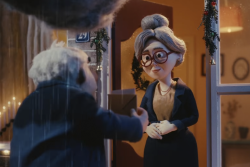
Mild mannered animation studio, Tiny Inventions, have lifted the veil on their latest opus and introduced Electric Car – a stop-motion style music video for the sugary children’s band, They Might Be Giants (TMBG). Showcasing a foxy sense of craftsmanship, Tiny Inventions is true to form, and has a knack for detail that’s put up for show in each one of their rustic-themed characters and makeshift environments.
The aesthetic here is homestyle – nothing too pretentious or embellished in flowery trimmings. Instead, Electric Car is a throwback to the good ol’ days of educational shorts; when Saturday mornings were for play; when School House Rock was a staple. Electric Car keeps it simple, but does it in a big way – a watermark to their authenticity, and a badge of honor for the studio.
“Making of”

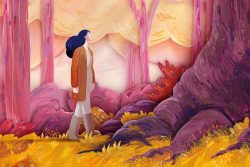
Michele D’Auria’s ambitious mini-bio of Soichiro Honda is full of jewel-toned palettes and beautiful illustrations that relate the genesis of the Honda brand with heart-felt enthusiasm and surprising artistry.
Michele’s approach is anything but literal, using for the enchanted dreamland of young Soichiro’s mind as the film’s stage.
The slow and steady pace of the narrative is punctuated by clever transitions and unexpected camera work. Simone Prisco’s lush, painterly backgrounds are wonderfully offset by the hybrid 2D and 3D animation.
Don’t miss the making-of video on Michele’s site.

The Mill’s renowned directing trio, Bif, has conceived a dark and eerie short-film in Dix. Dix, which is French for “ten,” highlights Mark, a tortured man who suffers from an obsessive-compulsive disorder that forbids him from physically stepping on lines beneath his feet. In many ways, the main characters unnerving anxiety is reminiscent of the childhood mantra that, “If you step on a crack, you break your Mother’s back.” Modernized by Bif, the directorial threesome makes certain to inject their own personal flavor, and does so in a way that is both startling and sobering. Indeed, Marks thoughts become so chilling that, when venturing into his psyche, viewers can fully experience the hellish agony of its main character, and witness a ghastly account of his volatile journey to recovery.
With accolades galore, and enough industry awards to shake a stick at, the appeal of Dix comes from it’s harmonious marriage of storytelling and CG. Incubating within the creative hothouse of The Mill, Bif exemplifies a knack for storytelling that is only matched by their technical savvy, and accentuates The Mill’s loyalty to producing non-commercial, and experimental ventures.
Update: Despite coming across this undeniable gem a bit late, we have, after thoughtful consideration, decided to post it, and even upgraded this former Quickie to a Main course. Better late than never! Bon appétit!
Credits
Motionographer reader Chino tipped us off to “Tower Bawher”, a stirring salute to Russian Constructivism by Théodore Ushev from way back in 2006. The visuals are brilliantly synced to the locomotive music, building an abstract mechano-utopian vision of civilization that’s full of energy but poignantly lacking warmth.
For more excellent work of this caliber, browse the impressive NFB archives.

1st Ave Machine’s Asif Mian, in association with Warm & Fuzzy, captured the dark fantasy of a Victorian nightmare in his latest music video for Emilie Simon’s “Dreamland.”
As usual in Asif’s work, the VFX work never gets in the way of the storytelling, letting the strange logic of the video unfurl like, well, a dream.

One our favorites, Arno Salters, just dropped this Paris-shot, low-budget banger for General Elektriks to lighten the mood on your Friday. The piece employs a few lo-fi, surreal effects including a clever “stereo-camera rig” built by DP Thomas Letellier. The music transmission device was inspired by the work of sculptor Jean Tinguely.
Credits

The karmic balance of the creative universe has just been pushed a small degree out of the black with the creation of Michael Langan’s recent spot for Skoda. The piece is well executed and charming, however the real impact was made for me in the way the project materialized.
We posted Michael’s hugely successful, undergraduate thesis-film, Doxology, almost a year ago. About a month later, Michael was approached by Puente Aereo (a Barcelona-based production company) to adapt the car tango scene from Doxology for Skoda.
So often, agencies are inspired by non-commercial work, include these references in their creative briefs and then go to a much more established or safe director to execute an often watered-down version of the original. On this occasion, the student film from 2007 became a paying commercial homage a year later. Not only should this be the ethical standard amongst the advertising community, but this is proof to production companies that personally initiated work can be a commercially viable investment — something the innovators have always understood.
Michael is currently a director and creative at SF-based Mekanism.
Credits
|